Rutte Attempts to Reassure Allies Amid Pete Hegseth’s Forceful Critique of NATO
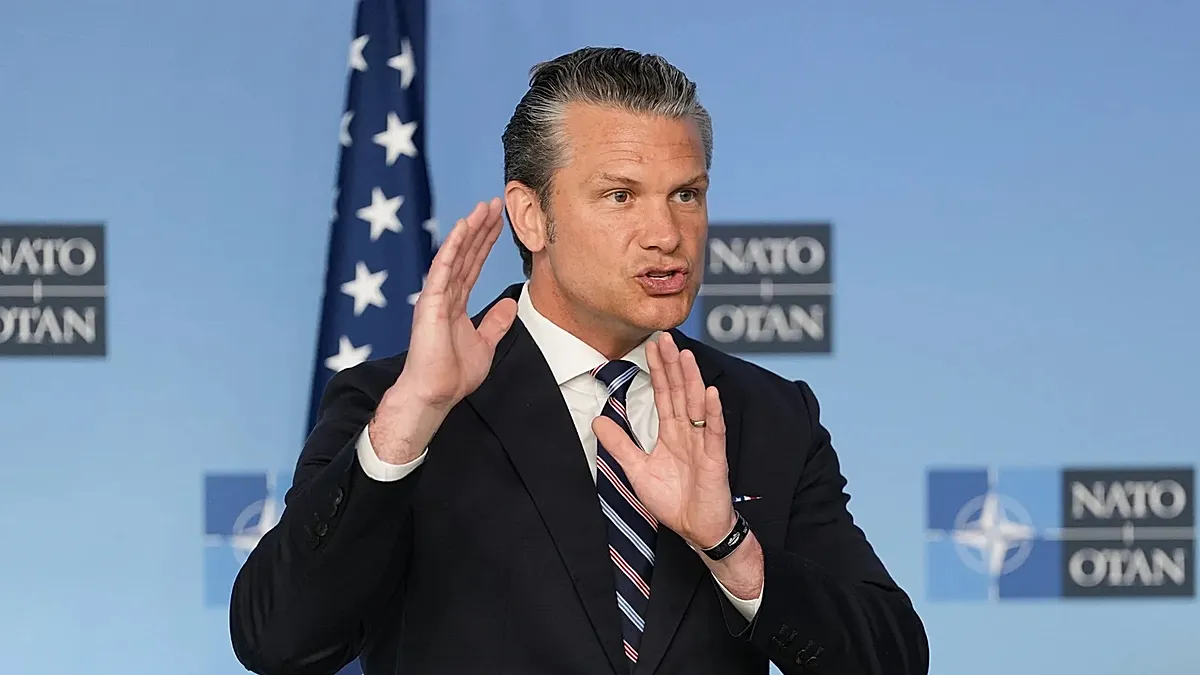
Rutte tries to downplay Pete Hegseth – Mark Rutte, the current NATO Secretary General, attempted to minimize the intensity of a recent sharp critique delivered by U.S. Secretary of War Pete Hegseth during a summit of alliance defense ministers in Brussels. Hegseth, known for his assertive stance on American military priorities, accused European partners of failing to support the United States in the Iran conflict, calling their actions “shameful.” This exchange has sparked renewed debate about the evolving dynamics within the transatlantic alliance, particularly regarding shared responsibilities and strategic alignment.
Hegseth’s Remarks and the Shift Toward NATO 3.0
During the meeting, Hegseth outlined a proposed restructuring of NATO, which he referred to as “NATO 3.0.” This framework, he argued, would require member states to significantly increase their defense spending, with the U.S. threatening to reduce its financial contributions to the alliance if countries did not meet a 5 percent GDP target by 2035. The Pentagon chief emphasized that the U.S. would maintain its commitment to the alliance only if allies demonstrated “urgency” in fulfilling their financial obligations.
“Our annual NATO dues will be contingent on other countries meeting their defence spending targets,” Hegseth stated. “Where other allies do not spend with urgency our due contributions will go down.”
This warning comes as the U.S. continues to push for greater European involvement in global conflicts. Hegseth also highlighted the need for more robust military cooperation, noting that nations like Spain, Italy, and France had been slow to provide the U.S. with strategic bases and airspace during the Iran war. While Germany granted full access to its Ramstein airbase, Trump’s administration took exception to German Chancellor Frederic Merz’s criticism of the war strategy, leading to the decision to redeploy 5,000 troops from the country.
Reactions and the Role of the Force Model
Before the summit, NATO members had anticipated a more conciliatory tone from the Trump administration, following the White House’s endorsement of a memorandum of understanding to end hostilities in Iran. However, Hegseth’s remarks quickly shifted the focus to a more confrontational stance, labeling NATO as a “paper tiger” and accusing European nations of prioritizing domestic issues over collective security. His critique echoed similar sentiments from U.S. Vice President JD Vance, who had previously criticized European societies for their alleged lack of focus on military readiness.
“Instead of tanks and fighters and air defences, the focus has been on gender equity and climate change and defence austerity,” Hegseth remarked. “Europe’s borders flew wide open, welfare states expanded, defence budgets cratered. Along with Europe’s belief in itself and its civilisation.”
This argument has reignited discussions about the European Union’s emphasis on social and environmental policies at the expense of military preparedness. Hegseth’s statements suggest that the U.S. is seeking a recalibration of the alliance’s priorities, with a focus on reducing reliance on European contributions and increasing American strategic dominance. The Force Model, a U.S. initiative to streamline the alliance’s military capabilities, is central to this effort. Euronews reports that under this model, the U.S. would cut access to critical wartime resources, including long-range bombers such as the B-2 and B-52, and naval assets like missile-launching submarines and aircraft carriers.
Rutte’s Defense and the Historical Context of NATO Spending
Reacting to Hegseth’s remarks, Rutte emphasized that European allies had made significant strides in bolstering their defense budgets. During a press conference, he noted that NATO members had collectively allocated over €90 billion in additional spending in 2025 alone, a figure that reflects a renewed commitment to security. “But you’ll still find some allies holding back a bit,” Rutte acknowledged. “What Hegseth tried to do today was keep the pressure on, and that’s good.”
“I’m happy he does this, Because we need to speak the truth to each other.”
Rutte’s defense of the allies’ efforts highlights a broader tension between the U.S. and European members over the balance of responsibilities within the alliance. While the Trump administration had advocated for stricter financial commitments at the 2022 summit, Rutte’s comments suggest that the current U.S. approach is more about applying pressure than outright punishment. The secretary general argued that the U.S. has always played a pivotal role in shaping NATO’s policies, and its current demands are part of an ongoing dialogue rather than a unilateral imposition.
The Strategic Implications of U.S. Actions
Analysts within NATO circles agree that the U.S. is using Hegseth’s comments as a tool to reinforce its strategic leverage. The proposed reductions in military support for Europe are seen as a calculated move to compel allies to meet their financial obligations. This strategy aligns with recent U.S. efforts to shift the burden of defense spending onto European members, including the introduction of the Force Model, which aims to optimize the alliance’s military resources by reducing reliance on less committed nations.
Rutte assured that any force reduction plan would be implemented through a structured process, with full consultation between the U.S. and European allies. He emphasized that the decision to cut military capabilities would not be made in isolation but would involve input from NATO military planners, including the Supreme Allied Commander Europe. This collaborative approach is intended to prevent the alliance from fracturing under the weight of Hegseth’s demands.
A Legacy of Pressure and the Path Forward
The fallout from Hegseth’s remarks underscores the challenges of maintaining unity in NATO. While the U.S. has historically held a dominant role in shaping the alliance’s direction, European members are now pushing back against what they perceive as growing American impatience. The debate over defense spending and strategic priorities is likely to continue as the alliance navigates the complexities of a rapidly changing geopolitical landscape. For now, Rutte’s efforts to highlight European progress may help temper the sharp tone of Hegseth’s critique, but the underlying tensions remain.
As the U.S. and its European partners grapple with these differences, the focus will remain on how to balance shared goals with individual national interests. Hegseth’s comments have set the stage for a more assertive U.S. stance, but the success of this approach will depend on the willingness of allies to meet the new expectations. With the upcoming 2035 spending targets looming, the alliance faces a critical juncture in its history, one that will test its resilience and adaptability in the face of shifting priorities.