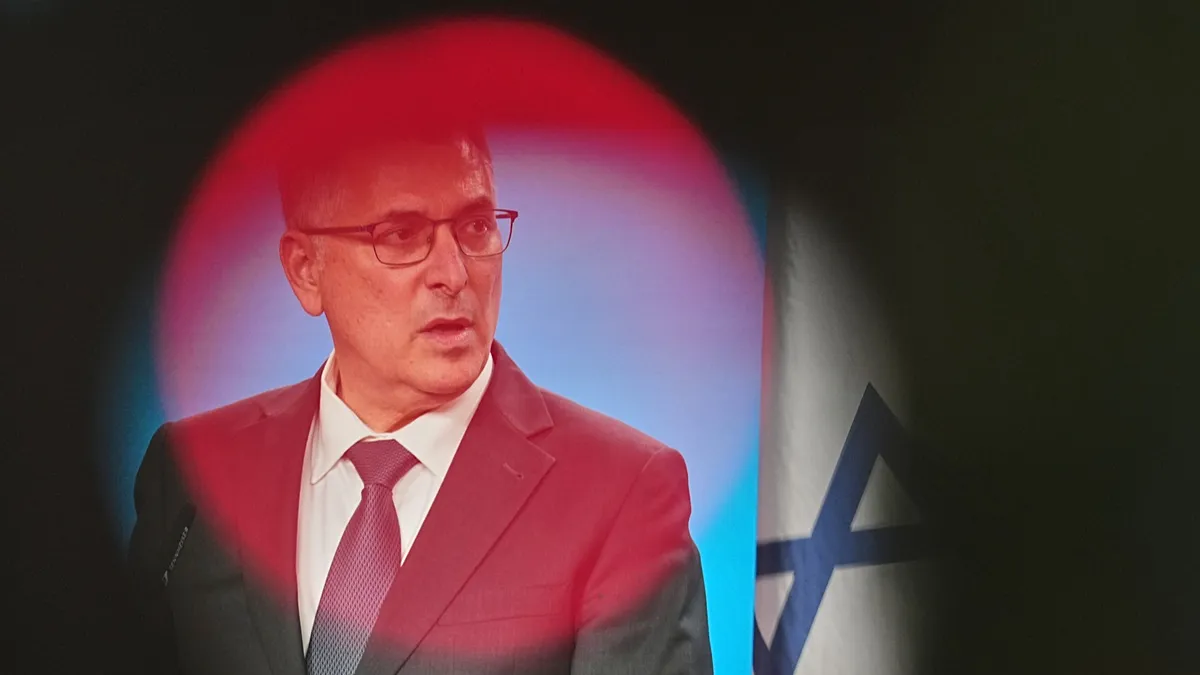
Israel FM Urges EU Dialogue, Rejects ‘Dictated’ Positions After Kallas Row
Israel FM urges EU dialogue rejects – On June 22, 2026, Israeli Foreign Minister Gideon Sa’ar emphasized the importance of fostering open and mutual communication with the European Union during a visit to Jerusalem. His remarks, delivered in the presence of European Commissioner for the Mediterranean Dubravka Šuica, came in response to recent tensions between Israel and the EU, particularly following a controversial statement attributed to EU foreign policy chief Kaja Kallas. The diplomatic rift, which has sparked debate within European circles, has led Sa’ar to call for a more balanced approach in bilateral discussions.
Calling for Honest Exchange
Speaking during a press conference, Sa’ar highlighted the necessity of “comprehensive, honest, and open dialogue” with the EU. He argued that such dialogue should not be one-sided, with one party imposing its views on the other. “It is unacceptable for political positions to be dictated without room for discussion, especially on matters central to our national identity,” he said, suggesting that the EU’s recent criticisms of Israel’s policies were perceived as unilateral.
“We believe in the importance of comprehensive, honest and open dialogue with the EU. But dialogue cannot just be one side dictating its political positions to the other side. Certainly not when it comes to issues at the very heart of our existence.” – Gideon Sa’ar
Sa’ar’s comments were seen as a subtle critique of the EU’s foreign policy leadership, particularly Kallas, whose remarks about Israel’s treatment of Palestinians had ignited controversy. During her visit to Mexico last month, Kallas reportedly described Israel’s policies toward the Palestinians as comparable to South Africa’s apartheid regime. This statement, shared privately with EU officials, has since become a focal point of the ongoing disagreement.
Kallas’s Apartheid Allegation
Kallas’s assertion that Israel’s actions mirror the apartheid system in South Africa has drawn sharp reactions from Israeli representatives. Sa’ar, who cut off all diplomatic contact with Kallas until an explanation is provided, accused her of adopting a rigid stance that overlooks the nuances of the Israeli-Palestinian conflict. The incident has raised questions about the EU’s internal dynamics, with some officials expressing concern over the lack of consensus on the issue.
“We will continue saying this respectful and constructive dialogue and engagement is important with all our partners, even more so when there are differences.” – Commission spokesperson Markus Lammert
While Kallas has not formally withdrawn her remarks, she has reiterated her commitment to engaging with Israel. In a recent statement, she acknowledged the value of “dialogue and engagement” with the Jewish state but did not address the apartheid comparison directly. This has led to speculation that the comment was meant to provoke a reaction rather than be a definitive position.
Meeting in Jerusalem
Sa’ar’s remarks were delivered alongside Šuica during a two-day visit to Israel and the occupied West Bank. The European diplomat, speaking to Euronews under anonymity, noted that the absence of direct reference to Kallas during their joint appearance was notable. “It is not a good look for Šuica to stand next to Sa’ar and not address ‘the boycott of her colleague’,” the diplomat remarked, highlighting the tension that remains between the two sides.
Šuica, who is part of a broader tour of the Middle East, was expected to meet Israeli President Isaac Herzog in Jerusalem to discuss bilateral relations. The agenda also included discussions on the Gaza situation, as well as the EU’s ongoing support for Palestinian initiatives. Meanwhile, in Ramallah, Šuica will engage with Palestinian leaders to explore collaborative opportunities, underscoring the EU’s interest in maintaining a multifaceted relationship with both Israelis and Palestinians.
EU Trade Restrictions Under Scrutiny
Amid these diplomatic tensions, the European Commission is preparing to unveil proposals aimed at curbing trade with Israeli settlements. Member states have intensified pressure on the EU executive to take action, with the issue gaining momentum during a recent meeting in Brussels. The settlements, classified as illegal under international law, have been a recurring point of contention, and the Commission’s options paper has yet to be finalized.
Despite the informal 13 July deadline for action, the EU has not yet committed to specific measures. Commission spokesperson Paula Pinho confirmed that Šuica’s visit was part of a coordinated effort to strengthen ties with Middle Eastern partners. “The EEAS is fully aware of the ‘long-planned’ meeting, and we remain dedicated to fostering respectful and constructive dialogue,” she stated, offering a cautious defense of the EU’s approach.
Bilateral Relations and Regional Context
The dispute over Kallas’s remarks has underscored the broader challenges in EU-Israel relations. While the bloc has historically supported Israel’s security concerns, its growing focus on Palestinian rights has created a rift. This has been evident in the EU’s stance on settlements and its willingness to criticize Israel’s actions, even as it seeks to maintain a strategic partnership.
Sa’ar, representing Israel’s position, has called for a dialogue that respects both sides’ perspectives. He stressed that the EU’s recent criticisms risk alienating Israel, particularly if they are perceived as imposing their own narrative without considering the complexities of the situation. “Our relationship with Europe is important to us both, but it must be built on mutual understanding,” he said, emphasizing the need for a more inclusive approach.
As the EU and Israel navigate these tensions, the outcome of Šuica’s visit could influence future diplomatic strategies. The European diplomat’s observation that the absence of addressing Kallas’s comments during the joint appearance was significant adds another layer to the evolving narrative. The situation remains fluid, with both sides vying to assert their positions in the ongoing dialogue.