Hungary’s Paks Nuclear Plant Faces Shutdown as Danube Levels Hit Record Low
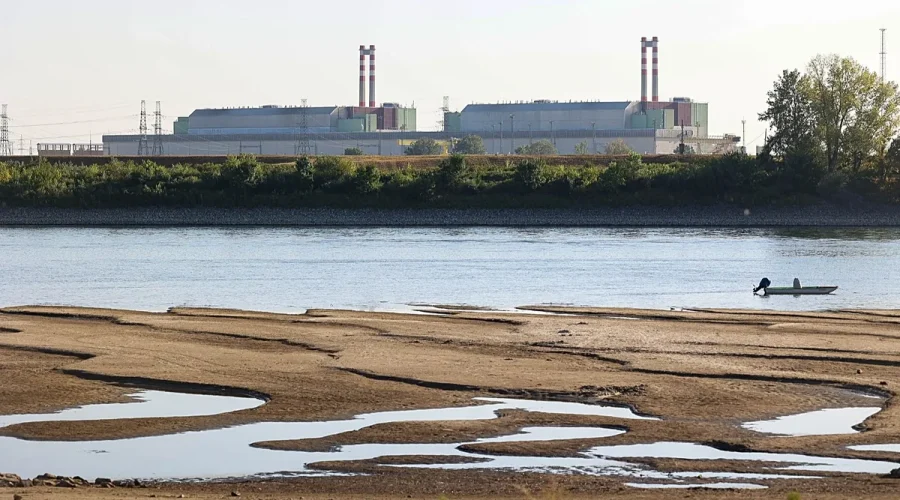
Usagevpn.com – Hungary’s energy sector is confronting an unprecedented challenge as the Danube River reaches its lowest water levels in recorded history. The Paks nuclear plant, which serves as the nation’s primary nuclear facility, may soon be compelled to implement a complete shutdown. This critical development comes amid an intense heatwave that has severely impacted water availability across Central Europe. The facility generates approximately 2,000 megawatts of electricity and provides nearly half of Hungary’s power needs, making any potential closure a significant concern for both commercial enterprises and residential consumers.
Government Response and Immediate Actions
During a press briefing held in Budapest, Prime Minister Péter Magyar addressed the growing concerns alongside his Bavarian counterpart. The Hungarian leader explained that the critically low water levels could necessitate a gradual, scheduled closure of the facility. “It seems, at this point, that the complete shutdown of the Paks power plant could take place today, or perhaps tomorrow,” Magyar stated to reporters. Compounding the situation, the Dunamenti Power Plant—a secondary energy provider—had already been removed from service following a technical malfunction. This additional outage removed another 400 megawatts from the national grid. According to Magyar, repair crews were actively working on the issue, and normal operations were anticipated to resume later on Thursday.
“The complete shutdown of the Paks power plant could take place today, or perhaps tomorrow.” — Prime Minister Péter Magyar
Energy Security and Infrastructure Capacity
Despite these challenges, the Prime Minister emphasized that Hungary’s energy supply remained fully secured for both commercial enterprises and residential consumers. He noted that the country’s import infrastructure possessed the capacity to handle between 3,600 and 3,800 megawatts of additional power if needed. This substantial import capability provides a crucial buffer during periods of domestic production shortfalls. Under typical circumstances, Paks relies on drawing water directly from the Danube to cool its nuclear reactors. Over the past several years, the facility has frequently been required to reduce its output during summer months due to elevated water temperatures and diminished river levels. However, this represents the first time in the plant’s history that a complete shutdown has become a real possibility.
International Context and Historical Background
The crisis extends beyond Hungary’s borders. Romania announced on July 29 the shutdown of both of its nuclear reactors, citing the same low water levels at the Danube as the primary cause. This week, meteorological officials recorded a historic low for the river, with the Danube’s gauge level standing at just 23 centimeters on Wednesday. Paks utilizes Russian-built technology, and the previous administration under Viktor Orbán reached an agreement with Moscow to expand the facility as a means of safeguarding the country’s long-term energy security. Construction on this expansion project commenced in 2026. Since assuming office following the April election, Magyar has not provided any updates regarding the current status of this ambitious project.
Contingency Planning for Extended Drought
The Hungarian government has initiated the development of comprehensive contingency plans to ensure energy stability should the drought conditions persist or worsen. Officials are currently preparing a detailed crisis strategy designed to identify which major public-sector entities and industrial consumers would need to temporarily reduce their energy consumption if circumstances demanded it. Magyar clarified that the proposed measures would not impact community service providers, healthcare facilities, or social institutions. The restrictions would apply exclusively to large, energy-intensive industrial sites that could absorb temporary reductions without disrupting essential services. This targeted approach aims to minimize economic disruption while ensuring the grid remains stable during the critical summer period.
Frequently Asked Questions
What is causing the shutdown at Hungary’s Paks nuclear plant?
The primary cause is record-low water levels in the Danube River, which reached just 23 centimeters on Wednesday. The nuclear plant requires adequate water flow to cool its reactors, and when levels drop too low, operations must be reduced or halted entirely to prevent overheating.
How long might the shutdown last?
According to Prime Minister Magyar, a complete shutdown could occur within 24-48 hours. However, the duration depends on whether rainfall increases Danube levels or if additional cooling measures can be implemented at the facility.
Will Hungarians experience power outages?
While some reductions are possible, Hungary’s import infrastructure can handle 3,600-3,800 megawatts of additional power. Community services, healthcare facilities, and social institutions are exempt from any consumption restrictions.
Is this a new problem for Paks?
No. Over the past several years, the facility has frequently reduced output during summer months due to elevated water temperatures and diminished river levels. However, this represents the first time a complete shutdown has become a real possibility.
What is the status of Paks expansion project?
Construction on the expansion project, which utilizes Russian-built technology, commenced in 2026 under the previous Orbán administration. Prime Minister Magyar has not yet provided updates regarding the current status of this ambitious energy security project.