EU Leaders Signal Shift in Moldova’s Accession Strategy
EU sets stage for decoupling Moldova – At a recent summit in Brussels, the European Union took a significant step toward decoupling Moldova’s membership bid from Ukraine’s, following the removal of Hungary’s long-standing obstruction. The bloc’s leadership indicated that the two nations, once linked in their pursuit of EU integration, may now proceed independently. This development comes after both countries successfully navigated Hungary’s two-year block on their accession talks, allowing the first cluster of negotiations to commence. While the initial phase has been completed, the question of whether Moldova should continue as a partner to Ukraine remains unresolved, with political considerations shaping the next moves.
The Path to Membership
Moldova and Ukraine have been closely aligned since the early stages of Russia’s invasion of Ukraine, which catalyzed their simultaneous applications for EU membership. The war created a shared sense of urgency, prompting both nations to present themselves as ready to meet the bloc’s requirements. However, the decision to pair them has sparked debate over whether Moldova should remain tethered to Ukraine’s progress or advance on its own. Despite this, the EU’s initial approach to both candidates has remained unified, with Hungary’s resistance to Ukraine’s process ultimately overcome, paving the way for Moldova to begin its formal negotiations.
The accession process comprises 33 chapters organized into six thematic clusters. The first cluster, termed “Fundamentals,” addresses core areas such as rule of law, human rights, anti-corruption measures, and judicial reforms. While Moldova and Ukraine are technically prepared to open all clusters, only the first has been activated. This cluster serves as a foundation, and its completion has allowed the EU to reassess the pace and direction of future negotiations. The bloc’s leadership now appears open to allowing Moldova to progress independently, though the exact timing and method of decoupling are still under discussion.
A Delicate Balance
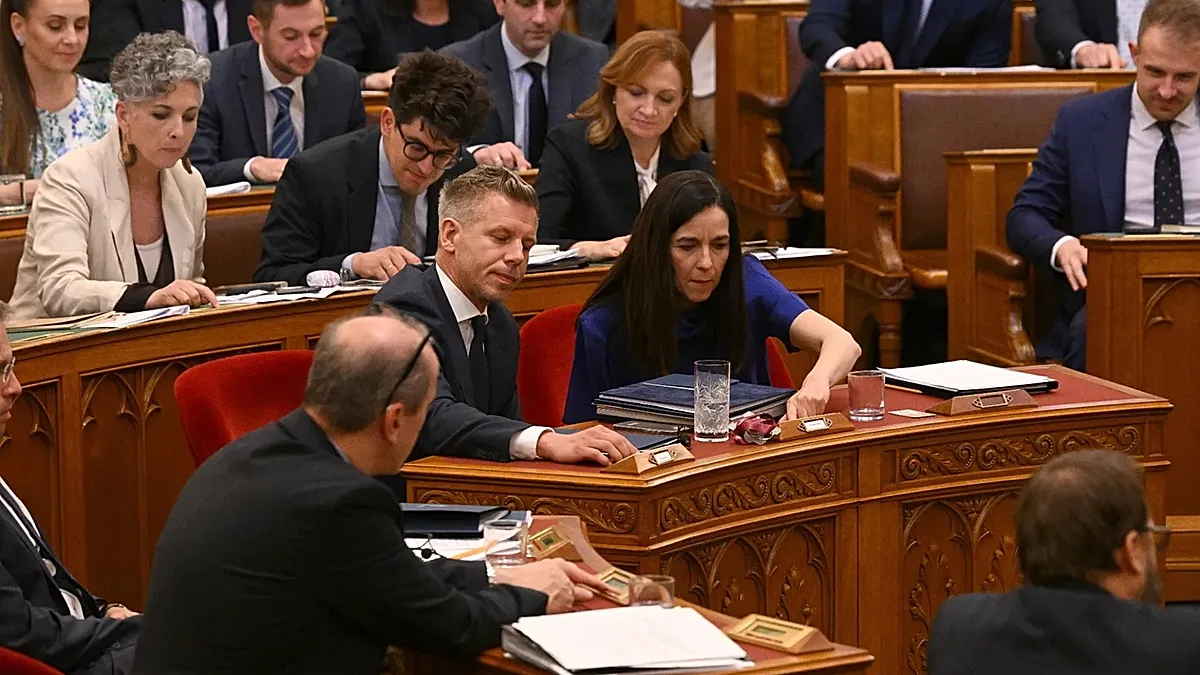
During last week’s EU summit, Hungary’s new prime minister, Péter Magyar, voiced concerns about the joint conclusions that called for Ukraine to open all clusters “as soon as possible.” While Magyar opposed the phrase in Ukraine’s section, he did not raise similar objections for Moldova. This discrepancy led EU leaders to revise the document, removing the same wording from Moldova’s part to maintain consistency. The decision reflects a broader effort to treat both countries equally, even as the EU weighs the merits of proceeding separately.
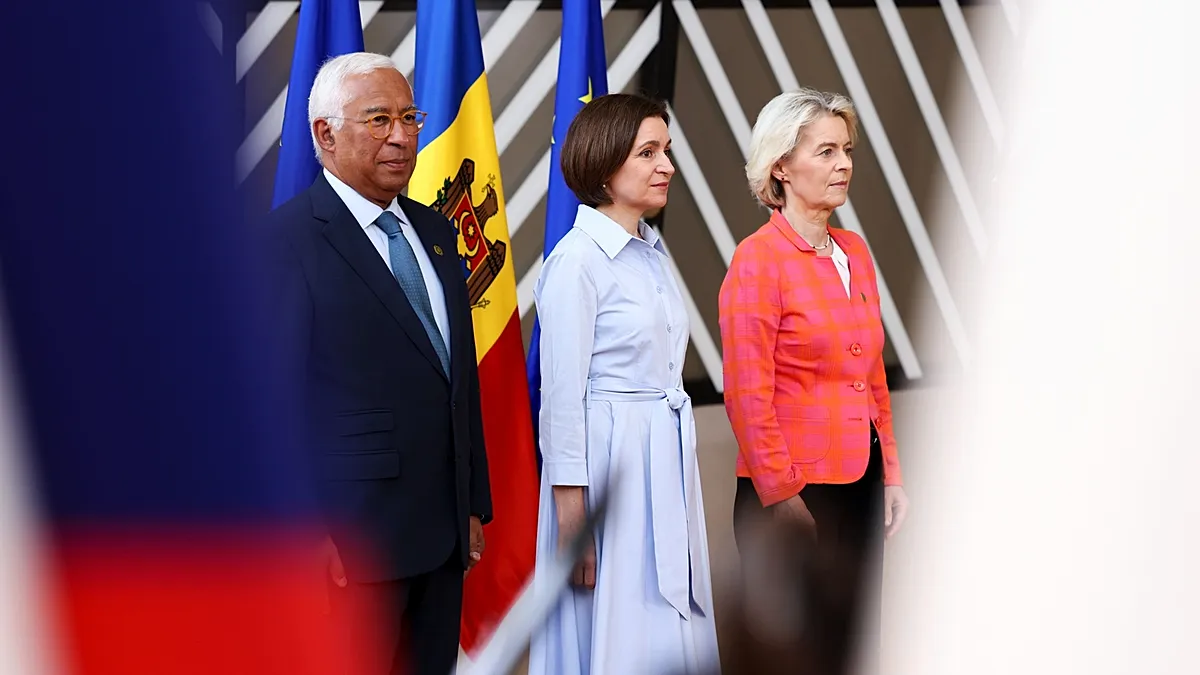
“Once the first cluster is open, every candidate country is responsible for itself,” emphasized Ursula von der Leyen, president of the European Commission. She argued that the merit-based approach to enlargement ensures fairness, as each nation must demonstrate its own readiness. “Moldova’s performance has been commendable, and it deserves to move forward,” she added, underscoring that the process does not require haste but rather a balanced evaluation of reforms. António Costa, president of the European Council, echoed this sentiment, praising Moldova’s swift approval of necessary changes and predicting a rapid acceleration in unlocking the remaining clusters. “The pace of progress is encouraging,” Costa noted, suggesting that Moldova could soon complete its path to EU membership.
Voices from the Frontlines
Moldova’s President, Maia Sandu, also participated in the press conference, advocating for immediate action on the remaining clusters. “We are fully prepared, and there is no reason to delay,” she stated, expressing confidence in the country’s ability to meet EU standards. Her remarks highlight the government’s determination to capitalize on the momentum created by the removal of Hungary’s veto. Meanwhile, Ukrainian President Volodymyr Zelenskyy attended the summit to stress the importance of maintaining a unified front. “The first cluster was rightfully opened, and it is deserved for both Ukraine and Moldova,” he said, emphasizing the need for continued collaboration despite the potential for divergence.
“When a candidate country performs the way Moldova does, it merits to move forward. A merit-based process does not mean slow. It means fair. And the fairness is (that) if you deliver, we have to deliver.”
Zelenskyy’s comments reflect the delicate balance the EU must strike between supporting Ukraine’s war efforts and allowing Moldova to advance independently. While some analysts argue that keeping Moldova linked to Ukraine creates a false equivalence, others believe it is crucial to avoid perceptions of bias. “Brussels is keen to avoid a scenario in which Chișinău advances effortlessly and Kyiv is held back for political motives,” noted diplomats in the capital. A single veto from a member state, like Hungary’s, can still halt the process, even as the bloc moves forward with Moldova.
The Future of Enlargement
The EU’s decision to decouple Moldova’s accession from Ukraine’s marks a pivotal moment in the bloc’s enlargement strategy. With the first cluster now open, the focus shifts to how the remaining clusters will be handled. While the political dynamics between the two countries may evolve, the EU remains committed to a structured approach. “Enlargement is the most important geopolitical investment,” Costa reiterated, highlighting the strategic value of integrating new members. However, the process is not without challenges, as Hungary’s initial resistance underscores the potential for future disputes.
Some within the EU argue that Moldova’s progress should not be contingent on Ukraine’s delays. “It is unfair to keep Moldova tied to Ukraine’s situation, especially since the country has not faced the same level of conflict,” one official remarked. This perspective challenges the notion of pairing the two nations, suggesting that Moldova’s unique circumstances warrant a separate path. Yet, others warn that decoupling could risk sending mixed signals to Ukraine, potentially undermining its resolve. “For Kyiv, the unity of candidates is a symbolic shield,” another diplomat explained, “and any separation might be seen as a lack of solidarity.”
As the EU navigates this complex landscape, the focus remains on ensuring transparency and fairness. The removal of Hungary’s veto has opened new possibilities, but the final decision on decoupling will depend on the outcomes of ongoing discussions. The bloc’s leaders are now tasked with determining whether to proceed with Moldova’s accession independently or maintain a unified approach for both countries. This choice will shape not only Moldova’s and Ukraine’s futures but also the EU’s broader strategy in Eastern Europe.
Implications for the Region
The decoupling of Moldova’s bid from Ukraine’s could have significant implications for the region’s political and economic dynamics. Moldova, a smaller nation with a more stable government, may gain momentum in its negotiations, while Ukraine, still grappling with the war, could face extended delays. However, the EU’s emphasis on merit-based reforms suggests that both countries will be evaluated on their own merits, regardless of their current status. “The goal is to ensure that each candidate demonstrates its commitment to the values of the EU,” von der Leyen said, framing the process as a test of readiness rather than a political alliance.
Despite the focus on Moldova’s progress, Ukraine remains a central figure in the EU’s enlargement agenda. The bloc’s leaders recognize that Ukraine’s accession is a key component of their geopolitical strategy, particularly in the context of the ongoing conflict. “Ukraine’s membership is not just a legal process—it is a symbol of resilience and a guarantee of security,” Zelenskyy asserted, reiterating the importance of maintaining the connection between the two nations. This sentiment may influence the EU’s approach, as they seek to reconcile Moldova’s rapid advancements with Ukraine’s continued struggles.
As the formal negotiations begin, the EU will closely monitor the reforms implemented by both countries. The first cluster’s completion serves as a benchmark, but the remaining five will determine the final trajectory. With the potential for decoupling on the horizon, the next steps will be critical in defining the future of Moldova’s and Ukraine’s memberships. The bloc’s leadership aims to ensure that the process remains transparent, equitable, and aligned with the broader goals of European integration.