10 Years of Brexit: Which Campaign Claims Have Come True?
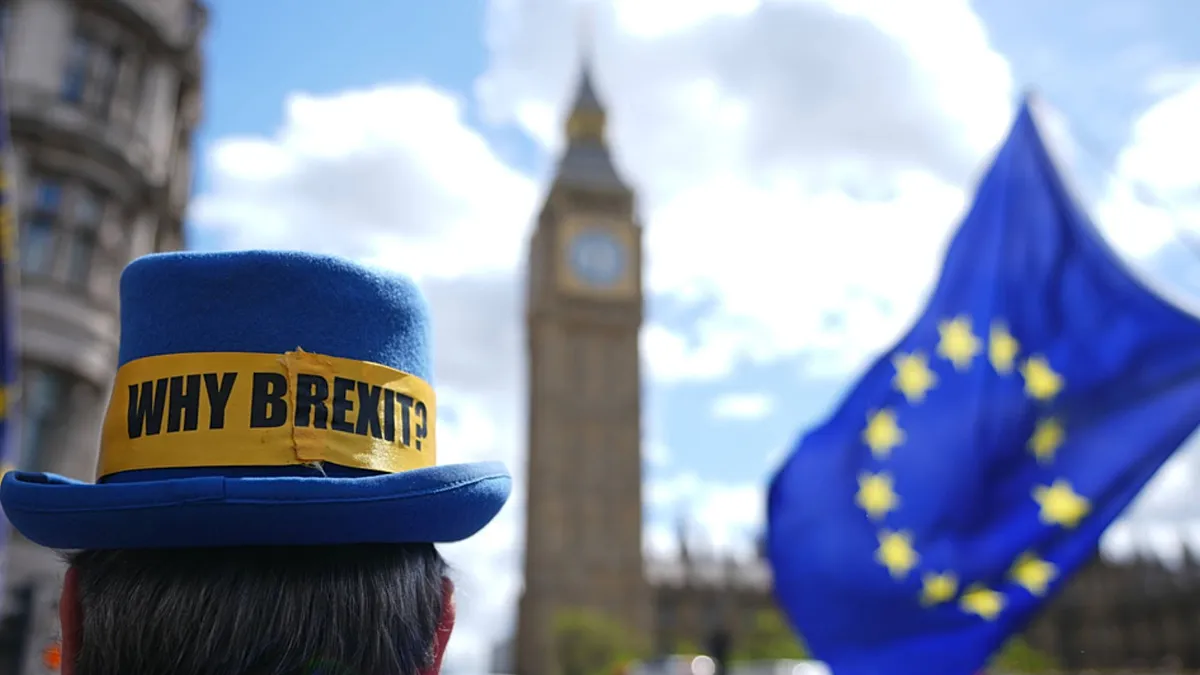
10 years of Brexit – Exactly a decade has passed since the pivotal referendum that prompted the United Kingdom to exit the European Union. On 23 June 2016, 52% of voters chose to leave, while 48% opted to stay. This decision set off a prolonged process of negotiation, political upheaval, and uncertainty, culminating in the UK’s formal departure from the bloc in early 2020. As the years have turned, the debate over Brexit’s impact remains as fierce as ever, with conflicting narratives about its economic, social, and political consequences. The Cube, Euronews’ fact-checking initiative, revisits the core promises and projections from the 2016 campaign to assess their validity in the present day.
The Economic Promise and Its Disappointment
One of the most prominent arguments during the Brexit campaign was the claim that leaving the EU would bolster the UK’s economy. The Remain coalition, however, consistently warned of potential economic setbacks. Then-Chancellor George Osborne, a key figure in the pro-Remain movement, asserted that a Brexit vote would trigger an “immediate and profound shock” to the country’s financial health. He predicted that the UK would fall into recession, with unemployment rising by approximately 500,000 and GDP shrinking by 3.6% compared to a scenario where the UK remained part of the EU.
“A vote to leave would represent an immediate and profound shock to our economy. That shock would push our economy into a recession and lead to an increase in unemployment of around 500,000,” Osborne said in May 2016. “GDP would be 3.6% smaller, average real wages would be lower, inflation higher, sterling weaker, house prices would be hit, and public borrowing would rise compared with a vote to remain.”
A decade later, the economic consequences of Brexit are evident, though not as dramatic as initially feared. The Office for Budget Responsibility (OBR) has reported a 4% decline in UK productivity and a 15% reduction in EU-related trade over the long term. While these figures may not match the sharp predictions of 2016, they still underscore the economic costs of the decision. Mark English, a policy advisor with the European Movement UK, emphasized that the consensus among experts is clear: Brexit has “definitely harmed the UK economy, and it’s done so very badly.”
English noted that while some Brexiteers might acknowledge the economic toll, they often frame it as a necessary sacrifice for greater autonomy. “Even many Brexiteers would recognise that, although they say it’s a price worth paying,” he remarked. “I’m not sure why.” Jonathan Portes, a professor at King’s College London, echoed this sentiment, stating that economists’ earlier warnings have largely been confirmed. “The consensus among economists was that Brexit would harm the UK economy, and that has proved to be correct,” Portes said. “There are a variety of estimates for how large that damage has been, but there is a consensus that the damage has been significant and long-lasting.”
Despite these negative outcomes, some analysts suggest that Brexit has brought limited advantages. One such benefit is the UK’s ability to secure a free trade agreement with India, a major economic power, before the EU. However, the OBR and other institutions have pointed out that this advantage has not translated into substantial economic gains. Portes acknowledged that while such deals are valuable, they have not offset the broader costs of Brexit. “Estimates have ranged up to 8% of GDP, although my personal view is that that’s rather implausibly high,” he said. “But certainly, it’s plausible to say that Brexit has cost the UK economy perhaps 3% to 5% of the GDP.”
Immigration and Sovereignty: A Key Campaign Focus
Another central issue in the 2016 campaign was immigration. Prominent Leavers argued that leaving the EU would grant the UK greater control over its borders, ending the automatic flow of migrants from the continent. This promise of sovereignty over immigration became a rallying cry for many voters, particularly those concerned about the pressure on public services and the workforce.
However, the reality has proven more complex. While the UK has regained control of its immigration policy, the number of arrivals has not dropped as significantly as predicted. The OBR noted that EU-related trade has declined, but the impact on migration has been uneven. Some argue that Brexit has allowed the UK to tighten its rules, while others point out that non-EU migration has surged to fill the gap. “The idea of having full control over the border is a compelling one,” said one analyst. “But it’s not clear that this has translated into the desired outcome of reducing migration pressures.”
Additionally, the Irish border issue has remained a contentious point. The original campaign promises often overlooked the delicate balance between Northern Ireland and the Republic of Ireland, leading to the introduction of the Northern Ireland Protocol as a solution. While this arrangement has maintained the border’s openness, it has also sparked political tensions, particularly within the UK. The Cube’s analysis highlights that the protocol has become a focal point of ongoing debate, with some critics arguing it undermines the UK’s ability to fully control its trade relationships.
Political Turmoil and the Path Forward
The Brexit process has been marked by years of political instability, with multiple governments, referendums, and shifting alliances. This turmoil has tested the resilience of the UK’s institutions and has led to questions about the long-term implications of the decision. While the campaign claims about economic and immigration outcomes have largely been substantiated, the political cost of Brexit has been equally significant. The Cube’s investigation reveals that the initial optimism has given way to a more nuanced understanding of the UK’s position in the global economy.
Experts acknowledge that while Brexit has had measurable effects, it is difficult to isolate its impact from other global events. The COVID-19 pandemic and Russia’s invasion of Ukraine, for instance, have created economic shocks that complicate the analysis of Brexit’s role. “We don’t have an alternative counterfactual world in which Brexit did not happen,” Portes explained. “But we can be reasonably certain that Brexit has done significant economic damage.”
As the UK continues to navigate its post-Brexit landscape, the debate over its success or failure remains unresolved. While some campaign promises have materialized, others have not. The remaining question is whether the UK can adapt and mitigate the challenges of its departure from the EU, or if the initial costs will persist as a defining feature of the country’s economic trajectory. The Cube’s findings suggest that, despite the uncertainties, the evidence points to Brexit being a significant, if not entirely positive, shift for the UK’s economy and political structure.
In the end, the 10-year anniversary of Brexit offers a chance to reflect on the promises made and the realities faced. While the UK has achieved certain goals, such as greater control over its borders and trade policies, the economic and social costs have also been substantial. The journey of the past decade underscores the complexity of the decision, highlighting that the impact of Brexit is multifaceted and continues to shape the nation’s future in unpredictable ways.