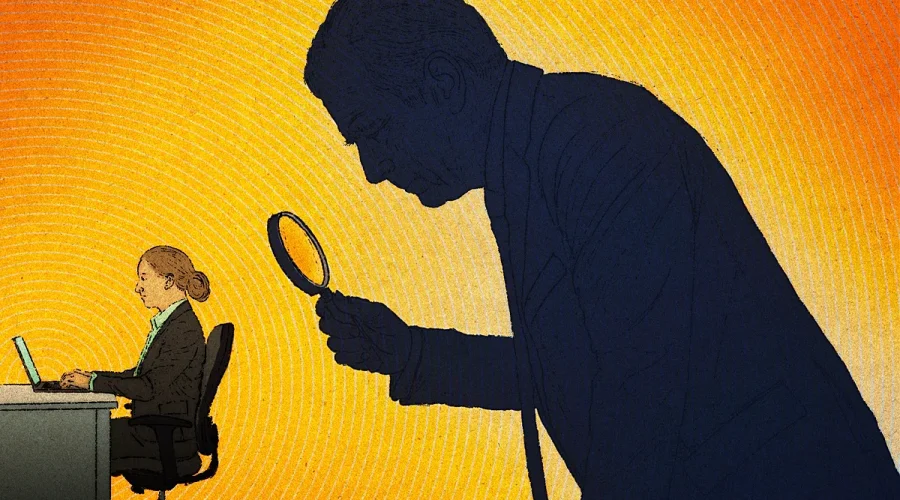
Unstable Hours, Unequal Health: Work’s Hidden Toll
Usagevpn.com – For years, occupational-health research has fixated on how many hours a person logs per week. A new study published in SSM – Population Health redirects that gaze toward something subtler: the erraticness of the schedule itself. Analyzing linked Current Population Survey records for over 61,000 working-age Americans, the authors demonstrate that unpredictable week-to-week swings in labor time carry a measurable physiological cost — a cost that persists even after total hours are held constant. The finding lands squarely in the era of algorithmic shift-assignment, gig-platform on-call rotations, and seasonal labor spikes, where timetable chaos has become the default rather than the exception.
What the Numbers Reveal
Participants were grouped by the degree of month-to-month fluctuation in their reported work hours. A worker alternating between 20 and 60 hours across consecutive months — then collapsing back to 20 — sat at the volatile extreme. A worker holding a steady 40-hour week formed the stable reference. The distinction is not about volume; it is about the whiplash of alternating extremes.
Among men who remained continuously employed, that volatility produced a statistically significant penalty. The modeled probability of self-rated health deterioration climbed to roughly 38 percent at the most erratic end of the spectrum, compared with about 28 percent for the steady-40-hour group. Simultaneously, the likelihood of remaining in stable health eroded from approximately 46 percent down to 38 percent, while the chance of health improvement barely shifted.
“It’s quite loud and clear that it’s not about the absolute amount of work hours,” said study author Sinyee Qianyi Lu. “The problem is more with the proportional change — one week up, next week down. Perhaps people can adjust to the total amount of change, but not to the sudden ups and downs. That’s a different story.”
A Gendered Pathway
The pattern for women diverged sharply. Within the subset of women who stayed on payroll, no robust association emerged between schedule volatility and worsening self-rated health. Yet when the analytic frame widened to include women who cut back hours, paused employment, or exited the workforce altogether because of health strain, a distinct signal surfaced. As work-hour volatility rose from its lowest to its highest observed level, the predicted probability of a health-related work limitation jumped from roughly 2.5 percent to nearly 8 percent.
In practical terms, men tend to absorb the damage while still on the job — their bodies deteriorate in place. Women are more likely to respond by stepping out of or scaling back their employment. The two sexes appear to metabolize timetable instability through different physiological and behavioral channels.
“The gender-stratified modeling we created in this study confirms sharp differences in the health pathways for men and women: volatility in employees’ work hours is reflected in on-the-job health deterioration among men — especially at higher weekly work hours — and in health-related work limitations or withdrawal from active employment by women,” Lu said. “Instability in work hours is not merely a scheduling inconvenience but a gendered, population-level health risk, and that’s why we should care about it.”
Why Earlier Studies May Have Missed the Point
A well-known methodological trap in occupational-health literature is the “healthy worker survivor effect.” When a study samples only those still employed, it implicitly excludes the workers whose conditions worsened enough to force them out. The remaining pool skews healthier, making workplace hazards look milder than they truly are. By deliberately retaining participants who reduced hours, interrupted work, or terminated employment for health reasons, this study pulls that excluded population back into view.
“Expanding the sample beyond the continuously employed ‘survivors’ brings into focus the broader population that is also at risk,” Lu noted.
Policy and Practical Implications
If the destabilizing factor is the variance in hours rather than their mean, then interventions aimed solely at capping total weekly hours may leave the principal mechanism untouched. Regulators debating algorithmic scheduling in platform work, rotating-shift retail, and seasonal labor arrangements now have empirical grounds to treat timetable predictability as a distinct occupational-health variable — one that interacts differently across gender and employment status.
The study does not prescribe a single regulatory fix. It does, however, supply the evidentiary basis for asking whether existing labor protections — which address pay floors, benefits eligibility, and maximum-hour caps — adequately cover the dimension of when work happens, not just how much.
Frequently Asked Questions
Does working long hours automatically mean my schedule is unhealthy?
No. The study isolates volatility from total volume. A worker who consistently logs 50 hours a week faces a different risk profile than one who swings between 10 and 70 hours across consecutive months. The destabilizing mechanism is the unpredictability, not the duration alone.
Can I reduce my personal risk if my employer controls the schedule?
Practical steps include negotiating advance notice of shift changes where contractually possible, building buffer days into personal routines to absorb short-notice adjustments, and tracking your own sleep and recovery metrics across weeks so you can identify deterioration patterns early. If your role involves algorithmic assignment, ask your employer whether a minimum-notice window exists.
Why do men and women show different health responses to the same schedule chaos?
The authors attribute the divergence to a combination of physiological stress-response differences and labor-market behavior. Men in the sample tended to remain employed while their health declined; women were more likely to reduce hours or exit employment once health strain appeared. Both pathways represent genuine harm, but they surface in different data categories.
Does this finding apply to self-employed or gig workers?
The study’s sample draws from the Current Population Survey, which captures employed individuals across sectors. The authors note that platform and gig workers — whose schedules are often set algorithmically with minimal advance notice — sit at the volatile extreme of the distribution and therefore face the highest modeled risk. Direct measurement of that subgroup remains a stated limitation.