Recognizing Eclipse-Related Eye Damage: What to Watch For After Viewing the Sun
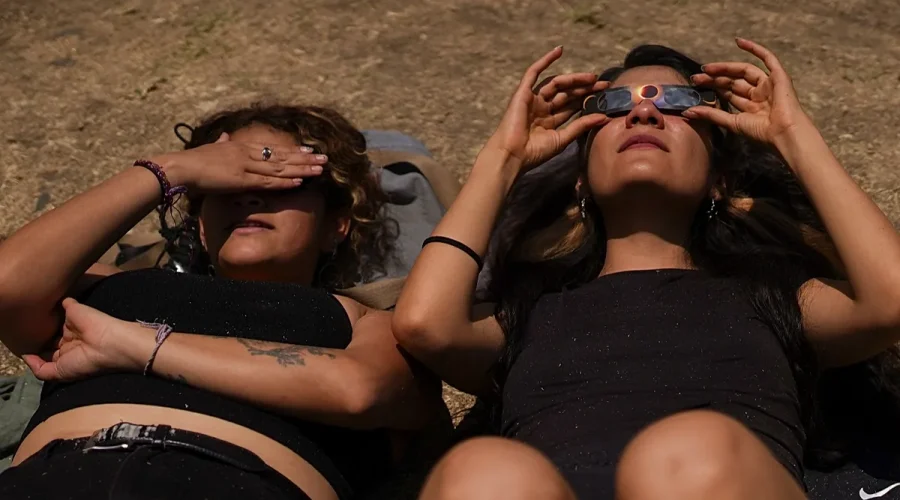
Usagevpn.com – Millions across Europe recently witnessed a remarkable celestial event—the first solar eclipse visible from the Iberian Peninsula in over a century, since 1912. While many enjoyed this rare phenomenon through proper protective eyewear, some inadvertently exposed their eyes to direct sunlight without adequate shielding. Medical professionals are now advising the public on how to distinguish between minor, temporary eye irritation and potentially serious retinal damage.
Understanding Different Types of Eye Discomfort
According to Dr. Laura Sararols, who leads the Retina Unit at Granollers General Hospital and serves as head of service at OMIQ within the Hospital Universitari General de Catalunya, observers should recognize two distinct categories of post-eclipse symptoms. The first category involves temporary discomfort that requires no medical intervention.
There are two things we need to distinguish, Sararols explained to Euronews. On the one hand, spending a long time staring at the eclipse, even when using protective glasses correctly, can make us blink less and cause dry eyes, a feeling of grit or a foreign body, and other temporary discomfort.
This type of irritation mirrors what many experience after extended screen time. The sensation typically resolves within several hours and can be alleviated using artificial tear drops. Sararols emphasizes that such symptoms are completely harmless and should not cause concern.
Solar Retinopathy: A More Serious Condition
The second category involves solar retinopathy, also known as solar maculopathy—a condition resulting from direct solar radiation exposure that damages the retina. This injury particularly affects the macula, the critical region responsible for sharp, central vision.
Solar retinopathy or solar maculopathy is a very different matter. It is an injury caused by direct exposure to solar radiation that affects the retina and can particularly damage the macula, the area responsible for central vision.
One of the most concerning aspects of this condition is that it often presents without pain.
At the moment when you are looking at the light, you do not feel anything. There is no pain, you have no sensation of anything, Sararols explains.
Key Warning Signs to Monitor
Medical experts highlight specific visual changes that warrant attention following eclipse viewing. The primary symptom requiring particular vigilance involves alterations in central vision.
The symptom that requires particular attention after the eclipse is a change in central vision, according to Sararols. The patient may notice that in the central area there is a kind of dark zone, an area that will not focus or a greyish patch that is always in the same place.
Additional concerning symptoms include blurred vision, distorted images, and difficulty distinguishing between colors. The Soria Healthcare Management Board, which operates under the regional government of Castilla y León, has compiled a comprehensive list of warning indicators that patients should monitor. The distinction between mild and serious symptoms proves crucial. While a sensation of grit or dryness may simply result from reduced blinking during prolonged observation, a persistent spot in the center of your visual field demands significantly more attention.
Delayed Onset of Symptoms
Perhaps most importantly, individuals who feel perfectly fine immediately after viewing the eclipse should not assume they are safe. Solar maculopathy symptoms do not always manifest within hours of exposure.
Feeling perfectly fine immediately after the eclipse does not completely rule out an injury. According to Sararols, the symptoms of solar maculopathy do not necessarily appear in the hours immediately after exposure. Sometimes it is not in the hours that follow, but it can be the next day or two days later, she says.
This delayed presentation means anyone who observed the Sun directly without proper protection should remain vigilant for visual changes over the following forty-eight hours.
Special Considerations for Children
Pediatric patients require particular attention from parents following the eclipse. Children may experience vision problems without immediately understanding the cause.
The specialist places particular emphasis on children. If a child starts complaining of vision problems after the eclipse, parents should consider the possibility that they may have looked directly at the Sun even if the child does not admit it. Children are not going to tell us that they were looking at the eclipse and did what they had been told not to do, Sararols warns.
When symptoms emerge, consulting an eye specialist becomes essential to determine whether retinal injury has occurred.
Duration and Risk Factors
Contrary to popular belief, extended exposure is not required for damage to occur.
It is not necessary to look at the Sun for minutes to be at risk. A few seconds of direct viewing can be enough to cause damage, Sararols confirms.
The intense radiation can create a phototoxic lesion within the fovea, the central portion of the macula responsible for our sharpest vision. This reality underscores why medical professionals strongly recommended using specifically certified eclipse glasses during solar observation. The most hazardous periods occurred immediately before and after totality. During the brief interval when the Moon completely obscured the solar disc, direct observation was safe. However, the rapid reappearance of sunlight created a dangerous window for those who removed their protective eyewear too soon.
Sararols explains that this transition in particular could lead to accidental exposure among those who took off their glasses during totality and then carried on looking as the Sun reappeared. The Sun’s light quickly becomes visible again and that is the most dangerous moment, she says.
Regarding modern viewing habits, capturing the eclipse through smartphone cameras does not inherently endanger eyesight. The critical factor remains whether the viewer’s eyes were directly exposed to unfiltered solar radiation during the most vulnerable moments of the event.
Related Reading
Frequently Asked Questions
What is How to tell if the eclipse?
How to tell if the eclipse is the main topic of this guide. The article explains the context, practical details, and next steps readers should understand.
Why does How to tell if the eclipse matter?
How to tell if the eclipse matters because readers are looking for a useful answer, not just a short summary. Good content should match search intent and help them decide what to do next.