Attacks on Health Workers in DR Congo Complicate Ebola Fight
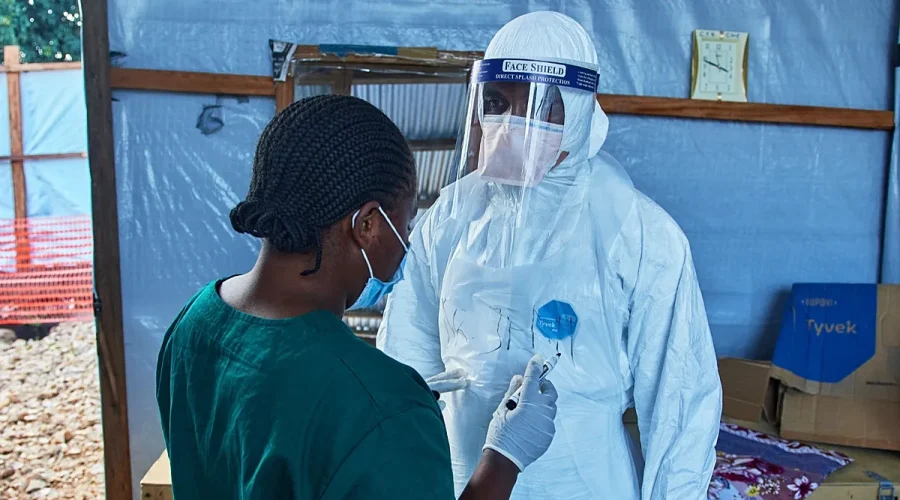
Usagevpn.com – Attacks on health workers in DR Congo have turned an already catastrophic Ebola outbreak into a far more dangerous operation for the people tasked with containing it. In a single week in late August 2026, six humanitarian personnel were wounded in separate incidents across the Democratic Republic of the Congo, ambulances were stoned and vandalised, and essential response gear was destroyed. Since the epidemic was formally declared on 15 May, the cumulative toll now reaches 12 injured volunteers, multiple damaged vehicles, and lost equipment spread across 11 violent episodes.
The International Red Cross and Red Crescent Movement, alongside the national Red Cross societies of the DR Congo and Uganda, released a joint statement on Monday expressing deep alarm. The organisations characterised the incidents not as scattered acts of vandalism but as a systemic threat to epidemic control in a country whose health infrastructure is already stretched thin by decades of armed conflict in the north and east.
Three Consecutive Days of Violence
The latest surge of attacks unfolded over three straight days. On 17 August, a Ugandan Red Cross convoy carrying supplies and personnel to support the Ebola response was struck in Ituri province, the geographic epicentre of the outbreak. One convoy member sustained serious injuries, and two ambulances were pelted with stones and left vandalised.
The next day, two volunteers in Haut-Uele province were injured while performing a supervised burial of an Ebola victim. Both were evacuated for medical treatment, and two vehicles were damaged during the operation.
By Wednesday, the violence had reached Beni in North Kivu province, where three volunteers were attacked and wounded. Equipment essential to the Ebola response was destroyed in that incident.
How Violence Undermines Containment
The Red Cross organisations argued that every act of violence directly erodes the ability to deliver emergency health services to communities already under siege from the virus.
“Every personnel injured and every ambulance, vehicle, or piece of equipment damaged reduces the capacity to provide emergency health and humanitarian services, putting more lives at risk and making the epidemic harder to contain.”
The statement called on local communities, traditional leaders, and all relevant stakeholders to actively support and protect humanitarian operations.
“Volunteers, health workers, and humanitarian staff must be able to carry out their work in complete safety, without fear of violence, intimidation or threats.”
The organisations added that respect for humanitarian activity is not optional but a prerequisite for effective crisis response.
“Respect for humanitarian personnel and humanitarian activities is essential to ensuring that communities affected by epidemics and other crises continue to receive the assistance and services they urgently need.”
The Outbreak Behind the Violence
The Ebola epidemic now ravaging the DRC is driven by the Bundibugyo strain — a subtype for which no licensed vaccine or specific antiviral treatment currently exists. That absence of proven medical countermeasures makes containment reliant almost entirely on rapid case detection, contact tracing, safe burial practices, and sustained community engagement. Each of those activities demands personnel physically present in affected areas, often in remote settings with limited road access and no reliable security.
According to the World Health Organization, the outbreak has produced 2,557 deaths from 5,375 confirmed cases, making it the largest Ebola epidemic in the country’s recorded history. The virus transmits through direct contact with bodily fluids, meaning a corpse remains contagious until proper burial protocols are followed. Those protocols — supervised, carefully managed interments — are precisely the activities during which volunteers have been targeted in recent weeks.
Friction between response teams and local populations has grown over questions of how Ebola victims’ remains are handled. In communities where traditional burial customs are deeply embedded, the requirement for supervised, protocol-driven interments can feel like an imposition, particularly when trust in outside agencies is already thin. Decades of armed-group activity across the north and east have left many residents wary of any organised presence moving through their territory, and that wariness has, in some cases, curdled into hostility toward health workers.
Frequently Asked Questions
Why are attacks on health workers in DR Congo especially dangerous right now? Because the Bundibugyo strain has no licensed vaccine or specific antiviral, containment depends entirely on people being on the ground for contact tracing, safe burials, and community outreach. Removing even a small number of workers or vehicles from the field slows every one of those activities simultaneously.
Which regions have seen the most recent incidents? The three-day surge in mid-to-late August touched Ituri province (17 August), Haut-Uele province (18 August), and Beni in North Kivu province (19 August). All three areas sit within or near the outbreak’s geographic footprint.
What is the Red Cross asking of local communities and authorities? The joint statement urges traditional leaders, local communities, and all stakeholders to protect humanitarian personnel and allow them to work without fear of violence, intimidation, or threats. It frames that protection as essential to keeping epidemic services running.
How large is the current outbreak? As reported by the WHO, the epidemic has produced 5,375 confirmed cases and 2,557 deaths, making it the largest Ebola epidemic recorded in the Democratic Republic of the Congo.