Second World War ‘Hell Ship’ Unearthed in Philippines with Over 1,000 Prisoners
Second World War hell ship found – In a breakthrough that has rekindled interest in one of World War II’s lesser-known tragedies, the wreck of the Hofuku Maru has been located off the western coast of Luzon in the Philippines. This discovery marks the culmination of a decades-long search, as the ship—once a symbol of suffering and despair for its 1,289 British and Dutch prisoners of war—has finally been identified after remaining hidden beneath the ocean for eight decades.
The Journey to the Wreck
Researchers and explorers, including television adventurer Josh Gates, underwater imaging expert Evan Kovacs, and maritime archaeologist Calvin Mires, played pivotal roles in unearthing the ship. After cross-referencing a digitised Japanese document with historical data from the USS Bunker Hill, the team pinpointed the wreck’s location more than 50 kilometers south of previously searched areas. The coordinates, now carefully guarded, reveal a site where history and tragedy converge beneath the waves.
The Hofuku Maru was part of a Japanese convoy in September 1944, a time when the empire was actively transporting Allied prisoners across Southeast Asia. Many of these captives had endured the grueling conditions of the Burma–Thailand Death Railway, a construction project that claimed thousands of lives. The ship’s unmarked hull and the harsh treatment of its passengers were consistent with the grim reputation of “hell ships”—vessels used to carry prisoners during the war.
A Catastrophic Sinking
The attack on the convoy by US Navy Task Force 38 was a decisive moment. Aircraft targeted the formation, and a torpedo struck the Hofuku Maru, causing it to split in two within minutes. Survivors, many of whom were already weakened by weeks of labor and deprivation, scrambled to reach the surface. However, those who managed to escape were swiftly recaptured by Japanese forces. The toll was devastating: 1,047 prisoners lost their lives, with over 1,000 still trapped in the ship’s holds as it sank.
Conditions on board the Hofuku Maru were deplorable. The ship was packed with prisoners, offering no respite from the stifling darkness, poor ventilation, and lack of sanitation. Food and water were scarce, barely enough to sustain the crew. The absence of clear identification markers made it easier for the attacking forces to mistake the ship for a military target, a decision that would cost hundreds of lives.
Historical Context and Forgotten Victims
For years, the exact location of the Hofuku Maru’s wreck remained a mystery. Post-war records were incomplete, with conflicting accounts of the attack’s coordinates and details. Survivors’ testimonies varied, making it difficult to pinpoint where the ship had gone down. This ambiguity left the families of the 1,047 victims without a clear place to honor their loved ones.
The Hofuku Maru was not an isolated case. During the war, the Japanese Empire converted over 130 cargo vessels and passenger liners into prisoner transport ships. These vessels carried nearly 125,000 Allied prisoners across the region, with approximately 20,000 perishing during the treacherous journeys. The term “hell ships” was coined by the prisoners themselves, a testament to the brutality they endured.
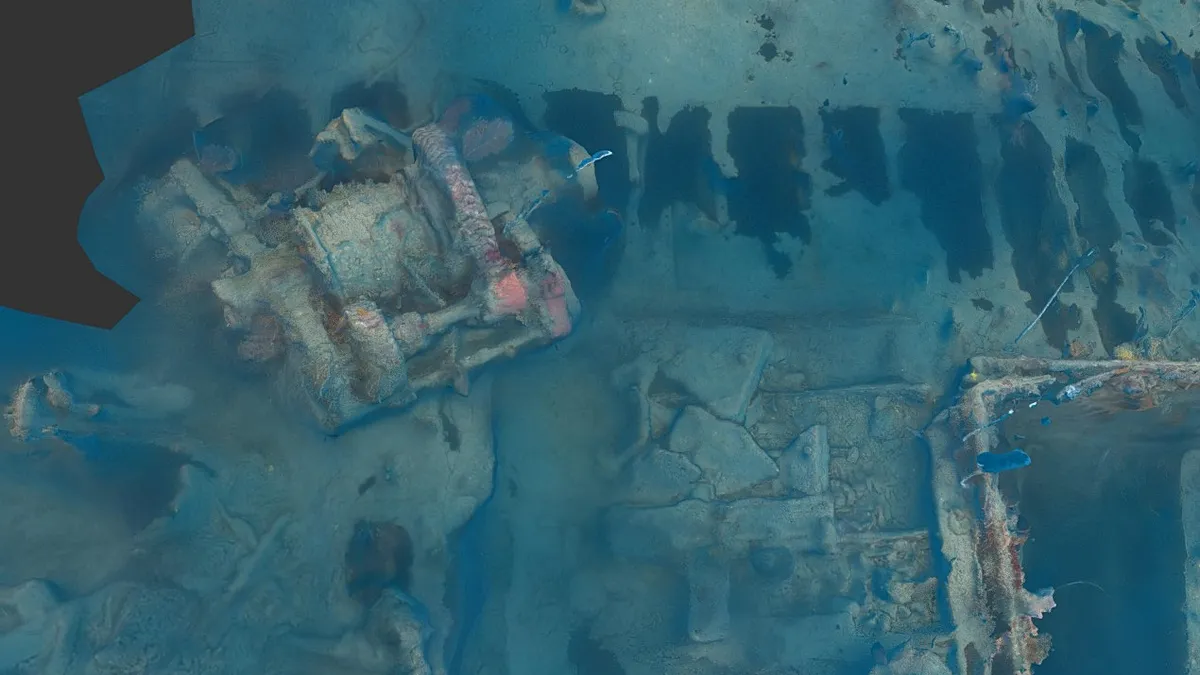
The discovery of the Hofuku Maru’s wreck has provided closure for many families. With its location confirmed, the site now serves as a solemn war grave, protected under international conventions. The team’s exploration revealed human remains among the debris, a haunting reminder of the lives lost. The ship’s structure, including its split hull and masts, aligns perfectly with original blueprints, validating the accuracy of the findings.
A New Chapter in Historical Memory
John Duresky, a researcher affiliated with the Hellships Memorial Foundation, was instrumental in uncovering the ship’s fate. His analysis of a previously overlooked Japanese document provided the critical evidence needed to reorient the search. “We were absolutely stunned to discover that Japanese sources held precise information about the attack and which ships were hit,” said Randy Anderson, founder of the foundation. “It was the smoking gun that finally connected the dots.”
The expedition to locate the wreck involved cutting-edge technology and meticulous planning. Using sonar equipment, the team mapped the ocean floor near Zambales province, where the Hofuku Maru now rests at a depth of approximately 50 meters. Volcanic ash from Mount Pinatubo, which erupted in 1991, partially obscured the site, but the team captured hundreds of images to create a detailed 3D photogrammetric model. This model not only confirmed the ship’s original design but also highlighted the wreckage’s significance as a historical artifact.
Despite the overwhelming evidence of its destruction, the Hofuku Maru’s story had long been overshadowed by more prominent events of the war. The ship’s sinking, however, stands as a poignant example of the human cost of Japanese wartime strategies. The tragedy has now been immortalized, offering a glimpse into the suffering of Allied prisoners and the enduring legacy of their ordeal.
The Netherlands has announced plans to collaborate with other nations in commemorating the victims, while the Hellships Memorial Foundation aims to reach out to the families of those who perished. This effort underscores the importance of preserving historical memory and ensuring that the sacrifices of these prisoners are not forgotten. With five other hell ship wrecks still to be found, the discovery of the Hofuku Maru is a milestone, but not the end of the story.
As the ship’s wreck is now acknowledged, the families of the 1,047 victims can finally find solace. The site, resting in the Pacific Ocean, holds the remains of those who once traveled in its holds, their fate sealed by the torpedo’s strike. The Hofuku Maru’s rediscovery serves as a powerful reminder of the resilience of the human spirit and the enduring need to remember the past. Eighty years after its sinking, the ship’s legacy lives on, now etched into history through the efforts of those who sought to uncover its secrets.