AI Helps Scientists Decipher Papyrus Scroll Burnt in Vesuvius Eruption
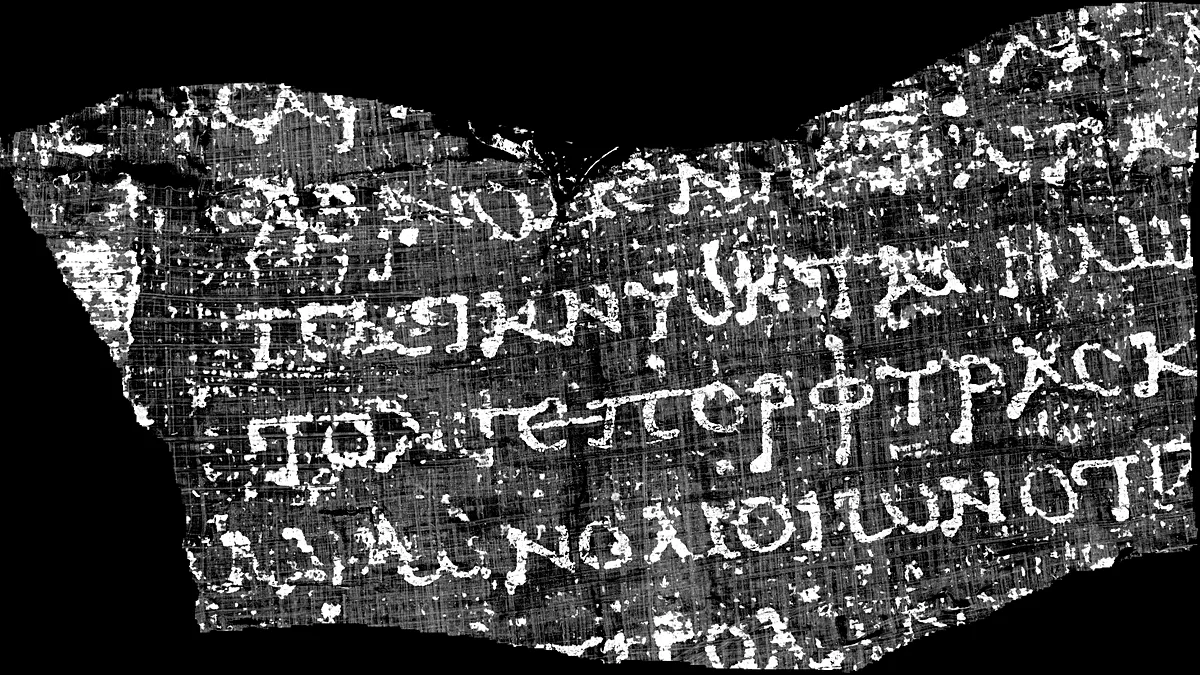
AI helps scientists decipher papyrus scroll – In a remarkable feat of modern technology, a papyrus scroll that endured the catastrophic eruption of Mount Vesuvius in 79 AD has finally been decoded. The document, which was preserved for centuries under volcanic ash, has revealed its content through artificial intelligence, bypassing the traditional method of unrolling. This breakthrough marks a significant milestone in the study of ancient texts, as the scroll’s message—surprisingly focused on ethics, human behavior, and moral development—has emerged from its millennia-long slumber.
The Library of Herculaneum
The scroll, cataloged as PHerc. 1667, is part of a vast collection of carbonized manuscripts discovered in the 1750s in the Roman city of Herculaneum. Unlike the better-known ruins of Pompeii, Herculaneum was buried more deeply by the eruption, preserving its library in a near-perfect state. Among the thousands of papyrus fragments recovered, PHerc. 1667 stands out as a key piece of the Greco-Roman world’s only fully intact library. These remnants, some 18,000 in total, were found in a lavishly adorned villa, their survival a testament to the power of volcanic preservation.
Despite their remarkable condition, the scrolls posed a unique challenge. For centuries, scholars struggled to access their contents without risking damage. Unrolling them could cause the fragile papyrus to disintegrate, as the heat and pressure of the eruption had left them brittle. This dilemma persisted until the advent of advanced imaging techniques and AI, which offered a non-invasive way to unlock their secrets.
A Breakthrough in Preservation
Historians have long viewed PHerc. 1667 as a puzzle. Its carbonized state made it impossible to read with the naked eye, and its rolled form suggested it was meant to be unrolled. However, the Vesuvius Challenge, a global initiative launched in 2023, transformed this mystery into a competition. By leveraging computer vision and machine learning—branches of artificial intelligence—researchers and enthusiasts collaborated to decode the scroll without physical intervention. The contest, which awarded cash prizes, spurred innovation and brought unprecedented attention to the project.
The breakthrough came when a team of scientists from European and American institutions successfully deciphered the full text of the scroll this month. Their success was not just a technical achievement but a symbolic victory over time itself. “PHerc. 1667 started as a dark, compact bundle of charred papyrus,” stated the Vesuvius Challenge, a collective effort led by experts in the field. “Instead of unrolling it, we used high-resolution X-rays to capture its internal structure, then reconstructed and flattened the document digitally, allowing machine learning algorithms to enhance the faint traces of ink.”
The Human and Machine Collaboration
Earlier attempts to open the scroll had left it in a damaged state, with only a portion of its original 19–24cm height intact. This limitation made the recent success all the more impressive. The team’s process involved multiple stages: first, scanning the scroll to create a detailed digital model, then applying algorithms to simulate its unrolling. This method not only preserved the physical integrity of the papyrus but also allowed for precise analysis of the text. The result was a complete reading of the scroll’s content, revealing a philosophical treatise that delves into ethical principles and human nature.
The treatise, attributed to Aristocreon, is described as a nephew and student of the Stoic philosopher Chrysippus. Scholars believe the text dates back to the 2nd century BC and reflects Stoic teachings on moral progress and the role of reason in guiding human actions. The discovery of the word “purple” by a 21-year-old computer science student in 2023 was a pivotal moment, earning the young researcher a $40,000 prize and proving that the scroll’s message could be accessed without destroying it. This achievement demonstrated the potential of AI to bridge the gap between ancient knowledge and modern interpretation.
Unlocking the Past with Precision
The Vesuvius Challenge’s approach exemplifies the fusion of interdisciplinary research. By combining high-energy imaging with machine learning, the team overcame the limitations of traditional methods. This strategy not only protected the scroll but also enabled the recovery of text from its carbonized layers. The process involved scanning the document to detect ink patterns invisible to the human eye, then using algorithms to simulate the unrolling and reading of the papyrus. The outcome was a seamless reconstruction of the scroll’s content, allowing scholars to analyze it without physical contact.
Researchers now face the challenge of interpreting the philosophical insights within the text. The treatise’s themes of ethics and moral progress suggest a deep engagement with the Stoic philosophy of the time. However, the scroll’s content also hints at broader intellectual currents, as it references the arts and human behavior—indicating a cross-disciplinary interest that may have been common in Herculaneum’s library. The identification of Aristocreon’s work has opened new avenues for studying Stoic thought, while the discovery of a previously unknown text by Epicurean philosopher Philodemus from another scroll highlights the library’s diverse collection.
Historical and Cultural Implications
The Vesuvius Challenge has reignited interest in the Herculaneum library, a treasure trove of ancient knowledge. For nearly two millennia, these manuscripts remained untouched, their physical form preserved but their meaning obscured. The use of AI has not only made the text readable but has also provided a new lens through which to examine the Greco-Roman world. “For centuries, these scrolls were like locked doors,” said Brent Seales, co-founder of the Vesuvius Challenge. “Today, we’ve turned the key, and the voices of the past are finally speaking to us.”
The project’s success underscores the transformative power of technology in archaeology. By digitizing the scrolls and employing AI, researchers can now analyze their contents without the risk of degradation. This method has the potential to revolutionize the study of other fragile manuscripts, offering a blueprint for preserving and interpreting ancient texts. The team’s achievement also marks a turning point for the Herculaneum library, which has long been a focal point for historians and linguists. With hundreds of additional scrolls still sealed, the future of this project is as promising as its past breakthroughs.
Seales emphasized the importance of this discovery in making the scrolls accessible to both scholars and the public. “We’ve not only revived the text but also reconnected it with the intellectual traditions of the ancient world,” he noted. The philosophical treatise on ethics, for example, provides a rare glimpse into the moral concerns of a civilization that shaped Western thought. Its mention of Aristocreon’s Stoic lineage suggests a link to the broader philosophical movements of the Hellenistic era, adding depth to our understanding of how ideas were transmitted and preserved.
As the Vesuvius Challenge continues, the team plans to expand their efforts to other sealed scrolls in the Herculaneum collection. Each new deciphering brings the potential to uncover lost wisdom, from historical records to literary works. The project’s interdisciplinary nature—blending archaeology, computer science, and ancient studies—has set a new standard for collaborative research. With the aid of AI, the scrolls may soon reveal their full potential, offering a wealth of knowledge that could reshape our view of ancient philosophy and daily life.
The journey of PHerc. 1667 is a story of perseverance and innovation. What began as a blackened, unopened bundle of papyrus has now been transformed into a living document, its message echoing through the ages. The Vesuvius Challenge’s success is a reminder that even the most fragile relics can be revived through modern tools. As Seales reflected, “We are not just reading the past; we are engaging with it in a way that was once unimaginable.” The scroll’s contents, preserved for two millennia, now stand as a bridge between ancient wisdom and contemporary understanding.
“For nearly two millennia, many of these texts have been physically preserved but intellectually inaccessible,” said Brent Seales. “Today—after years of interdisciplinary work combining advanced imaging, artificial