Spain Launches Historic Push for European Central Bank Leadership
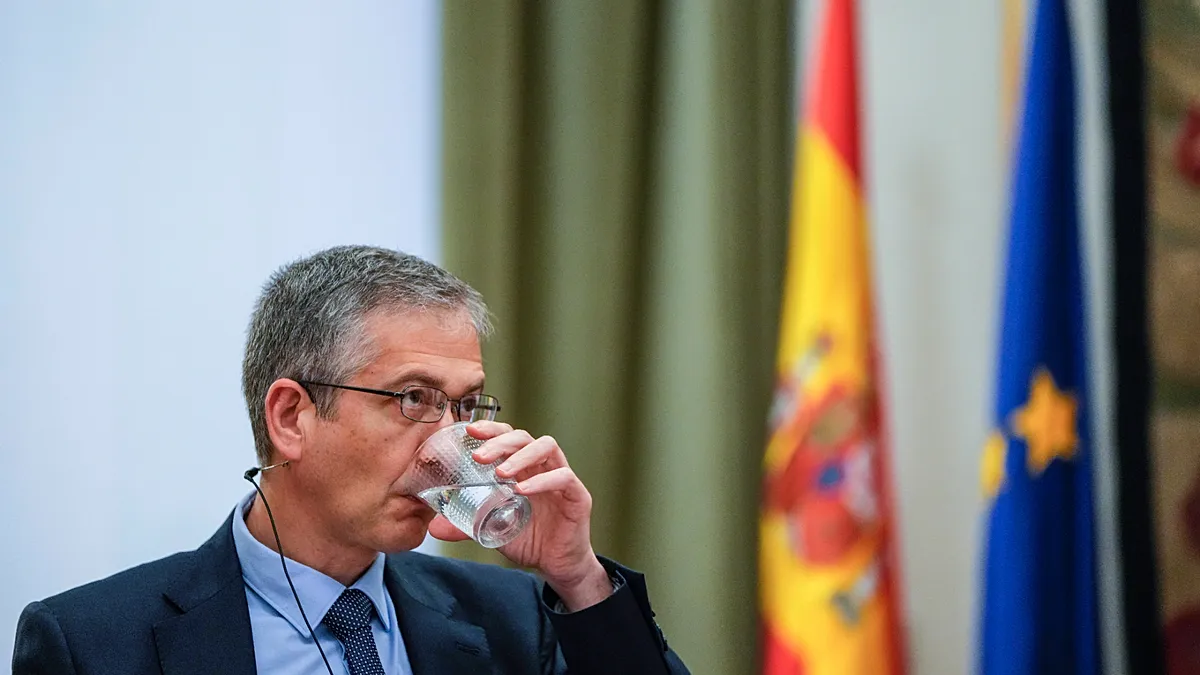
Usagevpn.com – Madrid is making its inaugural attempt to secure the highest monetary position within the eurozone, as indications mount that Christine Lagarde may depart the European Central Bank ahead of schedule. This development has triggered a competitive race for the institution’s future direction. According to reports from the Spanish financial daily Expansión, which consulted five individuals intimately familiar with the selection process, the Spanish administration has selected Pablo Hernández de Cos as its presidential nominee. The candidate currently serves as general manager at the Bank for International Settlements and previously held the governorship of Spain’s central bank. Sources indicate that regular communications have been maintained between Hernández de Cos and the delegation led by First Deputy Prime Minister and Economy Minister Carlos Cuerpo. The objective of placing the Spanish representative in the presidential suite located on the 40th floor of Frankfurt’s central bank headquarters—where Lagarde remains scheduled to serve until October 2027—has been actively pursued for several months.
Official Position and Candidate Credentials
Hernández de Cos has maintained silence regarding the potential candidacy, declining to provide public comment. Meanwhile, the economy ministry emphasized that Spain, recognized as one of the eurozone’s most significant economies and a major shareholder in the ECB, naturally seeks an influential position during the institution’s upcoming chapter. The ministry indicated that a formal candidacy will be presented when appropriate. “The selection process hasn’t even begun yet. When the time comes, Spain will put forward a candidate who is up to the task, and we will provide an update. There’s still time,” the ministry stated in its official communication. The Spanish nominee possesses qualifications that are difficult to challenge. His tenure at the Bank of Spain spanned from 2018 through 2024, during which he participated continuously in the ECB’s governing council. Additionally, he chaired the Basel Committee on Banking Supervision between 2019 and 2024, assumed leadership of the BIS in July 2025, and has consistently ranked at the top of economists’ assessments regarding readiness for the Frankfurt presidency this year.
Overcoming Previous Hesitation
Government endorsement carries substantial weight in this endeavor, particularly given earlier indications that Moncloa had expressed reservations. These concerns stemmed from disagreements during Hernández de Cos’s governorship concerning the Bank of Spain’s critical position on minimum wage and pension increases. However, sources categorically dismiss this narrative, asserting that the economy ministry has consistently viewed him as Spain’s sole viable option for the presidency and an opportunity that must not be missed. Such governmental support proves essential, as ECB board aspirants lacking home country backing have historically failed to secure positions. Hernández de Cos intends to depart Basel exclusively for the presidency, since his current role precludes advancement to any other position on the ECB’s six-member executive board, including the chief economist and market operations roles that are anticipated for discussion. Should the presidential position remain elusive, Madrid would pivot to nominate an alternative candidate to obtain another board seat. Spain currently lacks representation on the board following the conclusion of Luis de Guindos’s vice-presidency earlier this year, a role now held by Croatia’s Boris Vujčić. The ministry remains committed to preventing another period of absence, similar to the gap between José Manuel González-Páramo’s departure in 2012 and de Guindos’s appointment in 2018.
Timeline and Competitors
Lagarde’s potential early departure has accelerated the succession timeline, with discussions expected to intensify following the summer months. February reports suggested Lagarde intended to leave before the April 2027 French election, allowing French President Emmanuel Macron and German Chancellor Friedrich Merz to influence the selection. This month, Lagarde refused to eliminate the possibility of an early exit, informing Les Échos that “a European voice needs to be heard in the French presidential debate,” while separately telling Euronews “I’m not a candidate for anything.” The successor, appointed to a non-renewable eight-year term, emerges through a procedure where euro area finance ministers vote on candidate lists by qualified majority before EU leaders render the ultimate decision, though leaders have occasionally selected a single candidate directly, as occurred with Lagarde. Currently, Hernández de Cos competes against the Netherlands’ Klaas Knot and Germany’s Joachim Nagel and Isabel Schnabel. Updates with comment from the Spanish Economy Ministry