Iran’s Currency Plunges to Historic Low as Dollar Tops 2.1 Million Rials
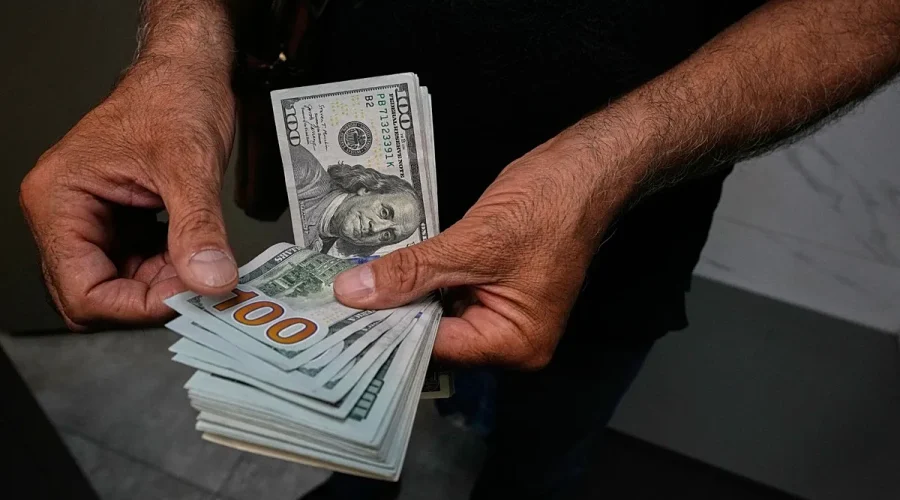
Usagevpn.com – Ordinary Iranians walked into Tehran’s free foreign-exchange market on Wednesday to find the US dollar trading above 2.1 million rials — a level never before recorded in the currency’s modern history. The collapse represents a roughly 60 percent erosion of the rial’s value against the greenback since the Iranian calendar year opened in March, when the dollar still exchanged at approximately 1.35 million rials. For households that had already been battered by pre-war inflation, the additional depreciation has effectively halved their purchasing power in under six months, pushing gold bars and hard currency into the role of primary savings vehicles for anyone who can still access them.
A Cascade of Record Lows Across Every Major Currency
The damage extends well beyond the dollar. The euro breached an unprecedented 2.55 million rials, while the British pound climbed to 2,976,000 rials. Perhaps most telling for regional trade dynamics, the UAE dirham — the benchmark currency used to price the rial across Gulf and Middle Eastern markets — crossed the 600,000-rial threshold for the first time ever. Precious metals tracked the same downward spiral: one gram of 18-carat gold surpassed 225.7 million rials, and the Imami gold coin, long regarded as Iran’s standard unit of stored value, changed hands at 2.26 billion rials.
War, Blockade, and Financial Isolation
The trajectory of the rial’s decline maps directly onto the escalation of the conflict that began with US-Israeli strikes on Iran on 28 February. Now entering its seventh month, the war has been compounded by a series of economic measures from Washington. In July, following the collapse of a brief ceasefire, the United States reimposed a naval blockade on Iranian ports, choking off key trade routes and slashing the country’s oil export revenues. Separately, the US Treasury severed Iran’s access to regional banking networks, cutting one of the Islamic Republic’s principal conduits for obtaining foreign currency and settling import payments. Together, these actions have created a perfect storm of supply constraints on hard currency while demand from importers and households continues to surge.
Iran’s dual exchange-rate architecture amplifies the distortion. The Central Bank sets an official rate — used for state transactions and subsidised imports of essentials — that remains significantly stronger than the free-market rate available to businesses and citizens. Since the war began, the gap between the two has widened sharply, with the free-market price now running at more than double the official figure. The resulting arbitrage pressure further drains foreign reserves and fuels speculative buying of dollars and gold.
Central Bank Governor Defends Reserves, Blames Sentiment
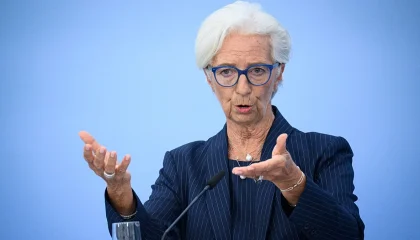
Abdolnaser Hemmati, governor of the Central Bank of Iran, addressed the market turmoil by announcing that the bank stood ready to inject $2 billion into the foreign-exchange market to stabilise the rial. He framed the latest slide as driven primarily by psychology rather than by underlying economic fundamentals.
“The dust created in the foreign exchange market will settle, and the recent increase in exchange rates is driven more by psychological factors than by real economic factors,” he said.
Hemati acknowledged that inflation and rising prices had placed heavy pressure on households’ daily lives, while insisting the Central Bank had contained the accelerating pace through monetary, supervisory, and prudential tools.
“Although inflation and rising prices have placed heavy pressure on people’s livelihoods and daily lives, and these difficulties are tangible, the Central Bank has been able to control the accelerating pace of inflation by using monetary, supervisory and prudential tools,” he said.
He also pushed back against American claims that Tehran had lost access to its financial reserves.
“These claims are completely baseless. The reserves have not been frozen, and the Central Bank has access to stable resources as well as multiple oil and non-oil revenues,” he said.
Hemati added that more than $18 billion in foreign currency had been allocated since March for imports of essential goods, medicines, animal feed, and raw materials, though he offered no further breakdown to substantiate the figure.
The Human Cost and the Rial-Toman Question
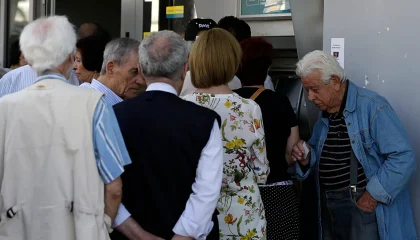
For the average Iranian, the abstract language of exchange rates translates into a concrete reality: every imported item, from cooking oil to pharmaceuticals, has grown markedly more expensive as the rial weakens. Those who held savings in the domestic currency have watched their real value shrink by roughly half in less than half a year. Gold and foreign currency have become the default hedges for middle- and upper-income households, deepening inequality in access to financial safety.
A separate but related issue looms in the background. Iran’s official currency is the rial, yet virtually all everyday transactions — from grocery bills to property listings — are conducted in tomans, a colloquial unit equal to 10 rials so deeply embedded in daily life that most price tags quote only in tomans. At Wednesday’s free-market rate, the dollar equated to roughly 220,000 tomans. In 2020 the government announced plans to formally replace the rial with the toman and strip four zeros from the currency, a redenomination that has yet to be fully implemented. Whether the current crisis accelerates or delays that transition remains an open question for policymakers navigating a market in freefall.
Related Reading
Frequently Asked Questions
What is Iranian rial in freefall as dollar?
Iranian rial in freefall as dollar is the main topic of this guide. The article explains the context, practical details, and next steps readers should understand.
Why does Iranian rial in freefall as dollar matter?
Iranian rial in freefall as dollar matters because readers are looking for a useful answer, not just a short summary. Good content should match search intent and help them decide what to do next.