A $49 Billion Fortune Walks Into a Swiss Charity Overnight
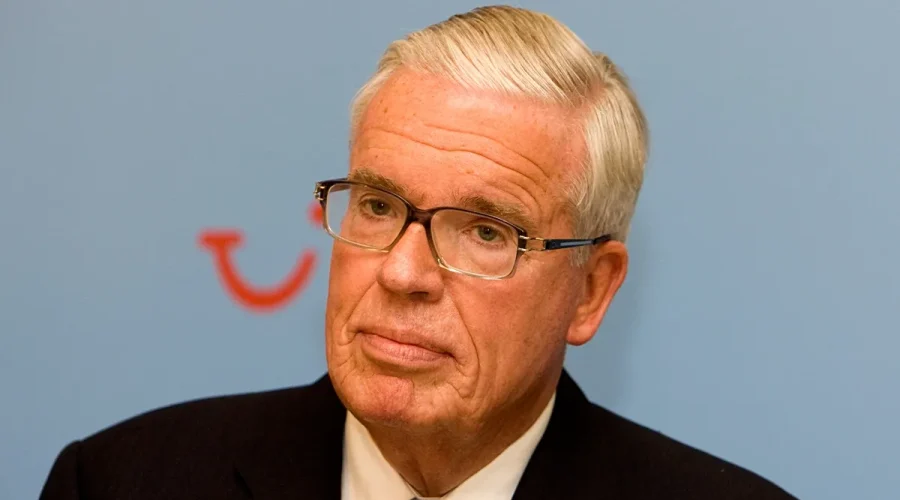
Usagevpn.com – On 24 August 2026, Klaus-Michael Kühne died at the age of 89 in the quiet village of Schindellegi, nestled in Switzerland’s canton Schwyz. Within hours of his passing, a fortune valued at roughly $49 billion (€42.2 billion) completed a transfer that had been architecturally planned for decades. No will was opened. No probate court convened. No tax authority filed a claim. The entire estate — shipping stakes, aviation holdings, chemical interests, and vast real-estate portfolios — slid into the Kühne Foundation, a non-profit he had established approximately fifty years earlier together with his parents.
The effect was immediate and seismic. Overnight, a mid-sized charitable organisation became one of the largest foundations operating anywhere in Europe, its balance sheet swelling by an order of magnitude that few European philanthropic institutions have ever witnessed in a single event.
The Man Behind the Empire
Kühne built his reputation on a contrarian instinct: while competitors retreated during economic downturns, he bought. That discipline produced Kühne+Nagel, widely regarded as the world’s most successful integrated air and sea freight forwarder. Beyond that core, he accumulated meaningful positions in three additional transport giants. Hapag-Lloyd, one of the planet’s largest container-shipping lines, carried a Kühne stake. So did Lufthansa, Germany’s national flag carrier. In a shorter-lived episode, he acquired a one-fifth interest in VTG, Europe’s biggest privately owned wagon-hire operator, paying €160 million in 2016 and divesting two years later for €300 million.
His final transaction closed at the very moment of his death, a detail that underscores how meticulously he had sequenced his exit from active ownership.
Why Switzerland, Why Now
Kühne made no effort to conceal his dissatisfaction with Germany’s fiscal and regulatory architecture. Speaking to German public broadcaster NDR in 2022, he stated without embellishment that the state
“cannot manage the economy properly.”
That sentiment, combined with a structural advantage unique to his chosen domicile, shaped where he parked both personal wealth and corporate governance. Canton Schwyz is one of only two Swiss cantons that levies no inheritance tax whatsoever — not on family members, not on unrelated beneficiaries, not on any recipient. Because a foundation is not an heir, Swiss law imposes no inheritance levy on assets flowing into it. In practical terms, nobody personally received Kühne’s fortune; the non-profit did.
He housed the entire business empire inside a private holding vehicle, Kühne Holding, also domiciled in Schindellegi. Under Swiss law, private companies are not obligated to file public annual reports — a transparency gap that distinguishes the jurisdiction from nearly every other European market. German-language media have estimated that as much as thirty percent of Kühne’s true net worth may never have been visible to the public as a consequence.
Inside the Foundation
The Kühne Foundation already operated twenty subsidiary organisations and employed approximately 800 staff before the inheritance arrived. Its published 2026 budget stood at CHF 135 million (€144.6 million), allocated roughly as follows: 42 percent to logistics education, 20 percent to medicine, 15 percent to climate initiatives, 11 percent to humanitarian logistics, and 7 percent to culture.
Governance rests with a board of trustees that includes Kühne’s wife and a tight circle of long-standing advisers. The assets now entering the foundation are projected to generate dividend income in the neighbourhood of CHF 1 billion per year in a normal market cycle, according to Swiss newspaper Neue Zürcher Zeitung. Even if only a fraction of that flow reaches the foundation’s operating budget, its financial capacity would expand dramatically.
Where the Foundation Sits in the Global Landscape
Kühne was not the first European industrialist to channel a personal fortune into philanthropy as a tax-efficient vehicle, but the scale of his transfer places the Kühne Foundation in genuinely elite company by size.
At the very top sits the Novo Nordisk Foundation, the Danish charity linked to the maker of blockbuster weight-loss drugs, whose holding company managed approximately €93 billion in assets at the close of 2025. India’s Tata Trusts, with holdings exceeding $100 billion (€86.2 billion), and the Gates Foundation at roughly $70.2 billion (€60.5 billion) occupy the next tier. Britain’s Wellcome Trust, a medical-research charity, reported approximately $42.8 billion (€36.9 billion) in its most recent published figures — placing it in roughly the same bracket as Kühne’s estimated incoming inheritance.
By contrast, Germany’s own Robert Bosch Stiftung, which controls 94 percent of engineering conglomerate Bosch, held around €5.5 billion in total assets — nearly eight times smaller than what Kühne has just transferred, despite Bosch remaining one of Germany’s most recognisable industrial brands. Denmark’s Carlsberg Foundation follows a model closer to Kühne’s, holding just under thirty percent of Carlsberg Group shares with seventy-seven percent of voting power, alongside approximately €1.55 billion in separate investments.
Broader Implications
The Kühne transfer crystallises a pattern that has accelerated across European industrial dynasties: the conversion of concentrated private wealth into perpetual charitable endowments, sheltered within jurisdictions whose tax codes treat foundations as non-heirs. For European policymakers debating inheritance-tax reform, the episode illustrates both the scale of capital that can migrate through philanthropic structures and the opacity that accompanies private Swiss vehicles. For the logistics and shipping sectors, it raises questions about how a foundation board — rather than a family or a public shareholder base — will steer strategic decisions at companies like Hapag-Lloyd and Lufthansa over coming decades.
What is certain is that the village of Schindellegi, home to roughly 5,000 residents, now hosts the administrative nerve centre of one of Europe’s most powerful charitable institutions, and that the flow of capital it commands will reshape funding priorities across logistics education, medicine, climate science, and humanitarian operations for generations.
Related Reading
Frequently Asked Questions
What is The death of Germany s richest?
The death of Germany s richest is the main topic of this guide. The article explains the context, practical details, and next steps readers should understand.
Why does The death of Germany s richest matter?
The death of Germany s richest matters because readers are looking for a useful answer, not just a short summary. Good content should match search intent and help them decide what to do next.