Congo Launches Emergency Ebola Vaccination as Outbreak Surpasses All Previous Records
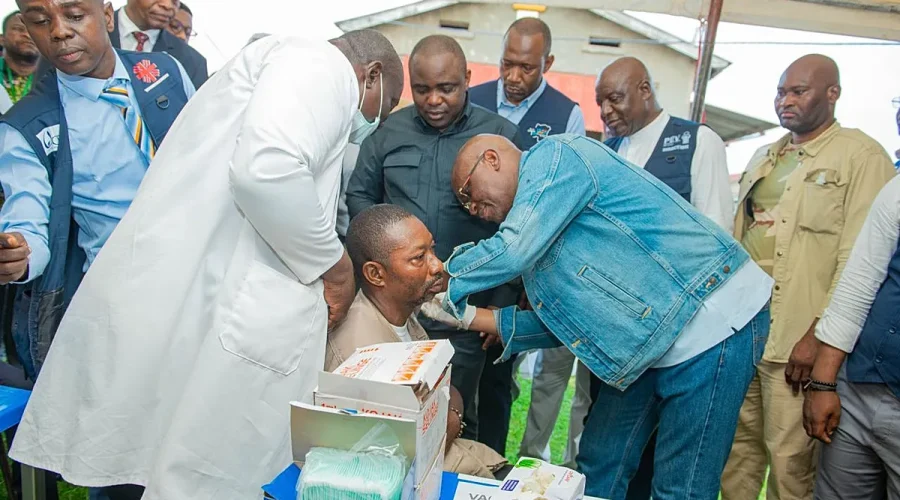
Usagevpn.com – In a move designed to stem what officials describe as the most rapidly expanding Ebola epidemic ever recorded, the Democratic Republic of Congo initiated mass vaccinations on Thursday, deploying a vaccine originally developed for a different viral strain to frontline health workers across the country’s eastern provinces. The decision marks an unprecedented step: a licensed product is being repurposed mid-outbreak to buy time while scientists race toward a strain-specific solution.
A vaccine repurposed under pressure
The Ervebo jab — previously proven effective against the Zaire strain of Ebola — is now being administered under a compassionate-use framework. This regulatory pathway permits a medical product to reach patients in a severe disease scenario even when it has not received formal approval for that specific indication. Health authorities justified the decision by noting that the Bundibugyo strain driving the current crisis shares genetic lineage with the strain Ervebo was designed to combat, meaning partial cross-protection is plausible.
“We have decided to use the Ervebo vaccine to protect first those who are on the front line,” Health Minister Roger Kamba stated at the campaign’s launch ceremony in Kisangani, capital of Tshopo province.
Kisangani sits in the eastern corridor where six provinces are now reporting Ebola cases. The minister urged medical staff to accept the injection, arguing that immunising caregivers would both shield them from infection and reduce the risk of them transmitting the virus into surrounding communities.
An epidemic of unprecedented scale
Government tallies as of Tuesday placed confirmed cases at 5,713, with 2,744 deaths already recorded. The epicentre remains Ituri province, and the outbreak has already eclipsed every one of the country’s 17 prior Ebola episodes in lethality.
The World Health Organization has characterised the situation as still out of control and warned it is on a trajectory to overtake the 2014–2016 West African epidemic — the deadliest Ebola event in recorded history, which claimed more than 11,000 lives across Guinea, Liberia, and Sierra Leone.
Supply logistics and trial design
WHO approved 70,000 doses of Ervebo for deployment in Congo last week. More than 50,000 have already arrived in-country. The remaining 20,000 doses are earmarked for a parallel clinical trial examining whether the vaccine confers meaningful protection against Bundibugyo specifically — a strain that, until now, has had no licensed vaccine or approved treatment.
Placide Mbala Kingebeni, Africa CDC’s director for research, clinical trials and innovation, confirmed that performance data will be gathered throughout the vaccination rollout to assess real-world efficacy against the current variant.
Geographic footprint of the rollout
The vaccination programme is projected to span 14 health zones distributed across Tshopo, Bas-Uele, and Haut-Uele provinces. These areas sit along major transport corridors in eastern Congo, where population density and cross-border movement compound transmission risk. Prioritising health workers in these zones is intended to create a buffer of immunised responders capable of reaching remote settlements before the virus establishes deeper community footholds.
Compounding crises on the ground
The epidemic is unfolding amid a convergence of obstacles: armed insecurity, large-scale displacement of civilian populations, an ongoing strike by health workers, and intense inter-provincial movement. Each factor independently strains containment capacity; together they create conditions in which case detection lags behind spread and contact tracing becomes nearly impossible in remote settlements. The combination of political instability and geographic remoteness in eastern Congo has historically slowed response times, and this outbreak is no exception.
Developing a strain-specific answer
While the compassionate-use campaign proceeds, scientists are racing to produce a vaccine tailored to Bundibugyo. The University of Oxford’s Vaccine Group and biotechnology firm Moderna have both initiated Phase I human trials. At this stage, the primary endpoints are safety, tolerability, and the magnitude of immune response generated. Successful Phase I results would open the door to larger efficacy trials, potentially delivering a purpose-built tool before the current epidemic subsides.
Why this moment matters
Ebola virus disease has haunted Central and West Africa since its first identification in 1976. Each subsequent outbreak has tested fragile health systems, often in regions already burdened by conflict and poverty. The current episode in the DRC is notable not only for its speed of expansion but for the fact that the responsible strain — Bundibugyo — had previously appeared only in smaller, more contained outbreaks. Its present behaviour, combined with the logistical and political challenges of eastern Congo, makes this the most demanding Ebola response the continent has faced. The decision to deploy an unlicensed-but-related vaccine represents both a pragmatic necessity and a scientific experiment conducted under the pressure of a ticking mortality clock.
Related Reading
Frequently Asked Questions
What is Congo begins Ebola vaccinations against world?
Congo begins Ebola vaccinations against world is the main topic of this guide. The article explains the context, practical details, and next steps readers should understand.
Why does Congo begins Ebola vaccinations against world matter?
Congo begins Ebola vaccinations against world matters because readers are looking for a useful answer, not just a short summary. Good content should match search intent and help them decide what to do next.