Italy’s New Wealth King: How a Plastic Surgeon Became the World’s 23rd-Richest Person Through Stablecoins
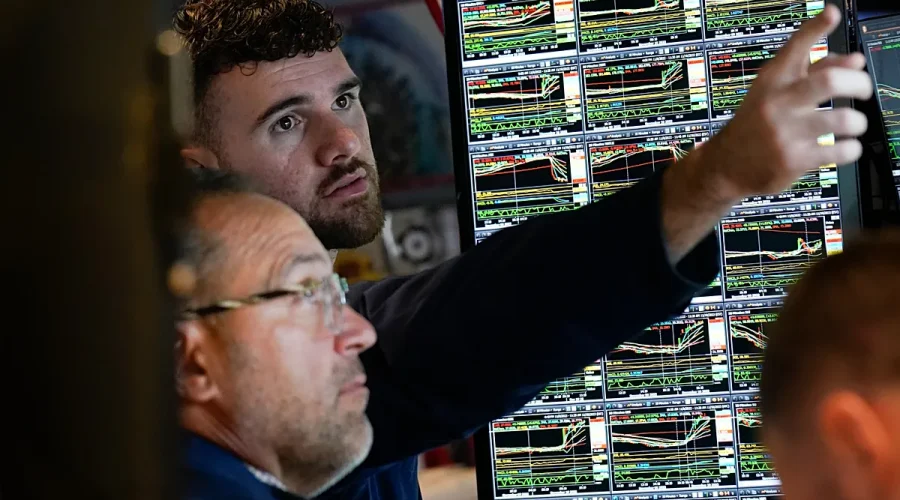
Usagevpn.com – A sustained surge in Bitcoin prices over the past week has thrust the cryptocurrency back into global headlines, with the asset climbing past the $79,000 mark and posting gains exceeding 20% in a matter of days. Fresh capital pouring into spot Bitcoin exchange-traded funds, anticipations of expanded liquidity in American markets, a more permissive regulatory posture from Washington, and a short-squeeze among traders positioned against the coin have all fueled the move. Yet beneath the familiar narrative of American-driven crypto momentum sits a story with unmistakably Italian roots — one that places a 62-year-old former surgeon at the apex of national wealth.
The Man Behind the Stablecoin
Giancarlo Devasini, chairman of Tether, the issuer of USDT — the largest stablecoin in global circulation — now commands an estimated fortune of $89.3 billion, per Forbes’ latest rankings. That figure places him at number 23 among the wealthiest individuals on Earth and roughly doubles the $48.8 billion attributed to Giovanni Ferrero, the confectionery magnate long associated with Italy’s top wealth slot. Andrea Pignataro, whose holdings are pegged at $42.6 billion, trails well behind. For the first time since 2007, an Italian who is not a member of the Ferrero dynasty has claimed the nation’s richest-person title.
Calling Devasini a “Bitcoin billionaire” captures the spirit but misses the mechanism. His wealth was constructed not through speculative trading of the volatile coin itself, but through the infrastructure layer of the digital-asset economy — specifically, the stablecoin ecosystem that now underpins trillions of dollars in daily crypto transactions worldwide.
Tether’s Scale and Its Treasury Footprint
USDT is engineered to track the US dollar one-to-one, functioning as a frictionless settlement rail for traders who need to shuttle value between exchanges and digital-asset venues without re-entering conventional banking channels. The scale of that role is staggering. By the close of 2025, more than 186 billion USDT tokens were outstanding, and Tether booked over $10 billion in annual profit. A substantial portion of the company’s reserve backing is parked in American government debt: direct holdings of US Treasury securities surpassed $122 billion by year-end 2025, while total exposure including indirect positions exceeded $141 billion. In practical terms, Tether has become one of the largest single corporate holders of US sovereign debt — a fact that has drawn scrutiny from both Washington policymakers and European regulators monitoring systemic interconnections.
Forbes attributes roughly 45% of Tether to Devasini personally. It is that equity stake, valued against the company’s revenue scale and profitability, that propels his net worth into the upper echelons of global wealth.
From Operating Theatre to Digital Currency
Devasini was born and raised in the Casale Monferrato area of northern Italy. He trained as a physician and specialised in plastic surgery, yet the scalpel gave way to the keyboard within a few years. His trajectory pivoted toward information technology, then e-commerce, and ultimately toward digital currencies.
One of the earliest documented traces of his crypto involvement dates to 2012, when a Financial Times investigation found him posting on a Bitcoin forum, offering to sell CDs and DVDs in exchange for the then-nascent cryptocurrency — a period when each coin was worth a small fraction of its present value. That early experiment preceded his deeper entanglement with Bitfinex, the exchange that would become the operational backbone of his later ventures.
Tether itself was launched in 2014 under the name Realcoin before being rebranded later that same year. Devasini, already deeply embedded in Bitfinex’s operations, assumed a central role at the stablecoin entity. A few years afterward, Paolo Ardoino — a computer scientist hailing from Liguria — joined the Bitfinex team. He now serves as Tether’s chief executive and has become the company’s primary public voice. Ardoino has recounted that his first encounter with Devasini occurred while he was developing software for Bitfinex.
A Billionaire Who Prefers the Background
Despite commanding a fortune approaching $90 billion, Devasini has cultivated an almost monastic silence in the media. Interviews are rare, public appearances rarer still, and sustained press coverage of his personal life remains thin. The public face of Tether is overwhelmingly Ardoino, who fields press conferences, regulatory meetings, and industry panels. Devasini, by contrast, has accumulated one of the largest fortunes on the planet without constructing the celebrity apparatus that typically accompanies billionaire status in Italy or elsewhere.
The Juventus Gambit
The profile question sharpened considerably in February 2025, when Tether announced the acquisition of a stake in Juventus Football Club — initially representing more than 5% of voting rights. By April, that position had swollen past 10% of the club’s share capital, elevating Tether to the status of second-largest shareholder behind Exor, the investment arm of the Agnelli-Elkann family. Later in the year, the holding crept to approximately 11.5%, accompanied by board representation. The juxtaposition was difficult to ignore: a company whose chairman built his fortune inside the cryptocurrency industry had become a principal owner of one of the most storied names in Italian football, a sport that remains a cultural touchstone for tens of millions of Italians and fans worldwide.
The Juventus investment also signalled Tether’s ambition to embed itself in mainstream European institutional life — a move that carries both brand-visibility upside and regulatory-attention risk, particularly as EU authorities continue to refine their frameworks for stablecoin issuers and their cross-border reserve management.
What Comes Next
For Italy, Devasini’s ascent reshapes the conversation around national wealth concentration. The Ferrero dynasty’s decades-long grip on the top spot has given way to a figure whose capital is denominated in digital tokens and backed by US government bonds rather than hazelnut factories. Whether that shift proves durable will depend on regulatory trajectories in both Washington and Brussels, on the continued appetite of global traders for stablecoin settlement, and on whether the next wave of crypto innovation rewards infrastructure builders or speculative traders. One thing is clear: the Italian wealth landscape has been permanently redrawn, and the man at its centre prefers to stay out of the spotlight.
Related Reading
Frequently Asked Questions
What is As bitcoin soars people ask who is?
As bitcoin soars people ask who is is the main topic of this guide. The article explains the context, practical details, and next steps readers should understand.
Why does As bitcoin soars people ask who is matter?
As bitcoin soars people ask who is matters because readers are looking for a useful answer, not just a short summary. Good content should match search intent and help them decide what to do next.