Ukraine Marks 35 Years of Sovereignty as European Powers Rally in Kyiv
Usagevpn.com – Kyiv, August 24, 2026 — For the fifth consecutive year since Moscow launched its full-scale invasion in February 2022, Ukraine observed its Independence Day with the weight of survival hanging over every ceremony. Thirty-five years of statehood, a milestone that Western intelligence agencies openly questioned would endure, was celebrated not with triumphal fanfare but with a sober acknowledgment of how close the republic came to collapse just four years ago.
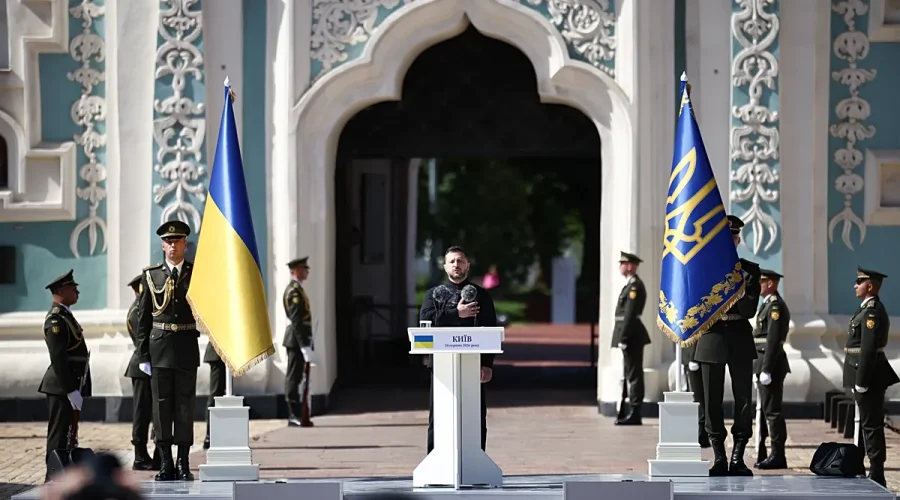
President Volodymyr Zelenskyy addressed his citizens and visiting dignitaries by recalling the pre-war assessments that predicted Ukraine would fold back into Russian orbit within days or weeks of a major assault. He rejected that narrative outright.
“But Ukrainians restored the independence of their state, and we will definitely protect the independence of Ukraine. No doubt about it.”
Zelenskyy went further, drawing a sharp line beneath the day’s symbolism. He warned that Ukrainians would never be reduced to pawns in great-power bargaining, nor would they accept governance they did not choose for themselves.
“Ukrainians will not be cobblestones under the feet of tsars and rulers. Ukrainians will not submit. Ukrainians will not be bargaining chips in disputes between capitals. Ukrainians will not submit to what they do not believe in. And they will definitely not abandon their own dream – the dream of living independently.”
European Solidarity and a Fresh €6.1 Billion Commitment
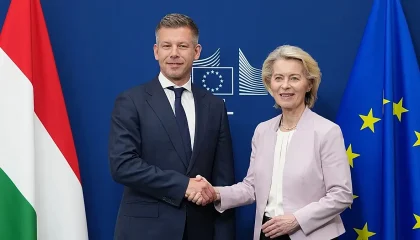
The diplomatic weight behind the celebrations was unmistakable. European Council President António Costa arrived in Kyiv alongside a delegation of senior EU officials, while French President Emmanuel Macron and German Chancellor Friedrich Merz joined the Coalition of the Willing sessions remotely. The gathering carried an explicit military purpose: Kyiv is pressing its partners for additional air-defence interceptors before winter deepens the strain on Ukraine’s already depleted missile-shield inventory.
That pressure produced an immediate result. On the morning of the anniversary, the European Union confirmed a new military-aid tranche worth €6.1 billion, earmarked for defence procurement and sustainment.
Costa, speaking beside Zelenskyy, framed the commitment in terms that extended well beyond the current conflict.
“We will continue to provide as much support as necessary for as long as necessary.”
He tied that pledge to Ukraine’s prospective accession to the EU and issued a blunt rebuke to Moscow:
“International law must prevail. Russia will not prevail. The European Union cannot be neutral when international law is being violated. We are not neutral. We are Ukrainian supporters.”
Burnham’s First Foreign Trip Draws a Historical Parallel
UK Prime Minister Andy Burnham made his inaugural overseas journey since assuming office a visit to Kyiv, a choice that signalled London’s continued alignment with Kyiv’s wartime posture. In remarks delivered alongside Zelenskyy, Burnham invoked Britain’s role in defeating Nazi Germany in the twentieth century and placed Ukraine’s present resistance in the same lineage.
“My nation kept the flame of European freedom alive in the 20th century, you hold that flame in the 21st.”
The British delegation also carried concrete defence commitments. UK Defence Minister Luke Pollard announced that London would share technology enabling Ukrainian factories to produce the long-range SCALP cruise missile domestically, reducing dependence on Western supply lines for a weapon system already integral to Ukraine’s deep-strike capability.
“We will stand with them for as long as it takes,”
Pollard added, underscoring that the technology transfer was framed as a long-term industrial partnership rather than a one-off shipment.
Absence of American Envoys Sharpens the Diplomatic Contrast
The most conspicuous gap at the Kyiv events was American. President Donald Trump’s two principal diplomatic envoys on the Ukraine file — Steve Witkoff and Jared Kushner — did not travel, despite weeks of speculation that the anniversary might mark their first visit to Ukrainian soil since assuming their roles. Witkoff, who has made eight trips to Moscow for bilateral talks, and Kushner have both refrained from crossing into Ukraine since taking charge of Washington’s Ukraine diplomacy.
Their absence was partially offset by the weekend presence of former US Vice-President Mike Pence and Keith Kellogg, Trump’s earlier special envoy for Ukraine, both of whom attended commemorative events in Kyiv. Their participation, however, carried the unmistakable character of private-citizen observation rather than official representation.
Commemoration Without a Parade: Drones Replace Marching Columns
The day’s public ceremony departed from the traditional format. No military column marched through central Kyiv. In its place, Ukraine showcased domestically manufactured drones and other indigenous defence technologies that have become the backbone of its wartime production base. Zelenskyy and First Lady Olena Zelenska opened the day by laying wreaths at memorials to fallen defenders before the president conferred some of the republic’s highest state decorations on serving men and women. Families of soldiers killed in action received posthumous honours.
The subdued tone of the ceremony was set against a backdrop of intensifying Russian bombardment. Moscow has escalated ballistic-missile and drone strikes on Ukrainian cities in recent weeks, pushing civilian casualty figures to their highest levels since the invasion’s opening months. That escalation has exposed, in stark operational terms, the shortage of advanced interceptor missiles that Kyiv’s allies are now racing to fill before winter weather compounds the vulnerability.
For Ukraine, the anniversary thus carried a double meaning: a hard-won affirmation of sovereignty that survived its most existential threat, and a reminder that the instruments of survival — air-defence systems, industrial capacity, allied political will — remain in constant demand.
Related Reading
Frequently Asked Questions
What is European allies back Ukraine as country?
European allies back Ukraine as country is the main topic of this guide. The article explains the context, practical details, and next steps readers should understand.
Why does European allies back Ukraine as country matter?
European allies back Ukraine as country matters because readers are looking for a useful answer, not just a short summary. Good content should match search intent and help them decide what to do next.