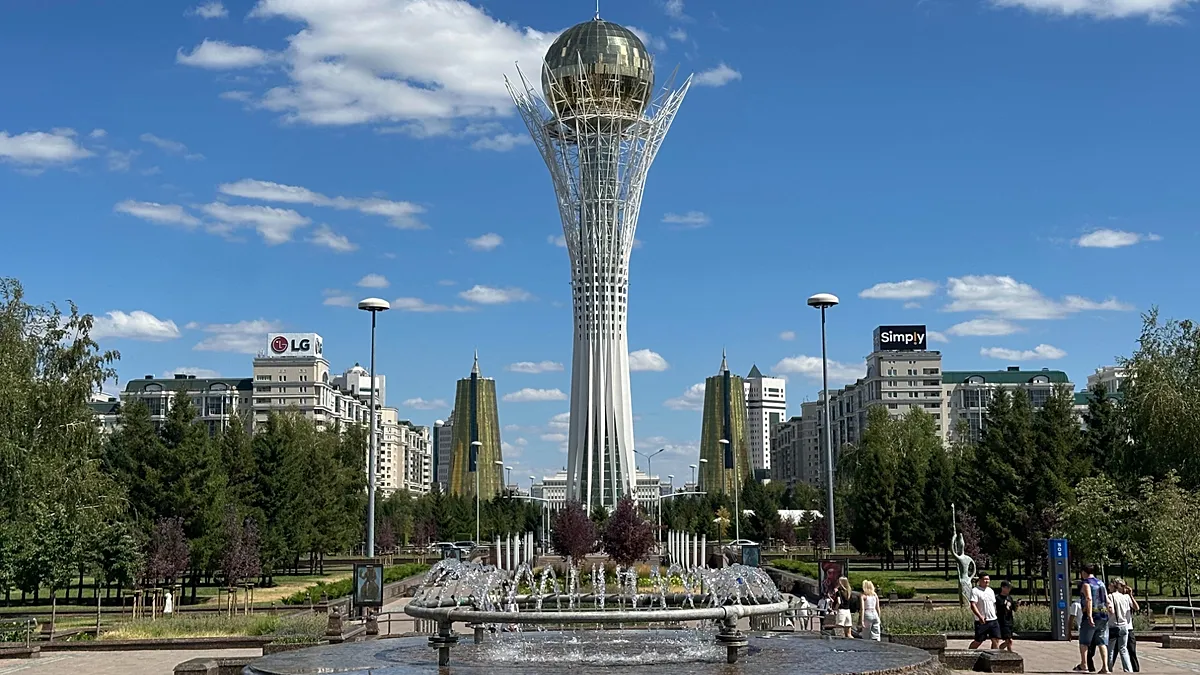
Record-Breaking Temperatures Sweep Through Kazakhstan’s Capital
Usagevpn.com – Even though summer has barely reached its midpoint in Astana, the Kazakh capital’s inhabitants have already weathered two unprecedented heatwaves. The most recent milestone occurred on July 14, when mercury climbed to an astonishing 39.5°C, shattering the previous date record of 35.3°C established three and a half decades prior. This achievement came shortly after another historic high on June 23, when the city registered 36.8°C, eclipsing the 1941 benchmark of 36.4°C by a narrow margin.
Emergency notifications continue to reach citizens through Kazakhstan’s 112 alert network as temperatures hover near 36°C. However, Astana represents only one piece of a much larger picture. Throughout the nation, sweltering conditions have generated readings of 44°C in southwestern areas, while southeastern and southern zones have experienced even more extreme measurements ranging from 45°C to 48°C.
According to the National Hydrometeorological Service of Kazakhstan, these elevated temperatures are projected to continue through July’s conclusion. Western and southern regions, which constitute the country’s warmest territories, are anticipated to see conditions between 35°C and 45°C. Social media platforms have been inundated with footage from southern Kazakhstan depicting locals cooking eggs on pavement surfaces as temperatures exceed 40°C.
Health Implications and Policy Gaps
UNICEF estimates that approximately 75% of Kazakhstan’s land area faces climate vulnerabilities impacting public wellbeing. A World Bank study cautioned that without enhanced adaptation strategies, heat-related fatalities across European and Central Asian urban centers could multiply threefold by mid-century. Despite these concerns, determining annual heat mortality figures remains challenging for Kazakhstan.
“The country does not currently collect a separate national indicator for heat-related mortality,” the Ministry of Health explained in response to inquiries.
While Kazakhstan lacks a comprehensive national Heat-Health Action Plan consistent with World Health Organization guidelines, certain components already function effectively. These encompass public alerts and medical guidance targeting susceptible populations including seniors, youth, and individuals managing chronic conditions. Government representatives indicate ongoing efforts to strengthen climate-health monitoring frameworks, particularly regarding extreme heat mortality assessments.
Expert Warnings and Regional Trends
Dr. Hans Henri P. Kluge, WHO’s Regional Director for Europe, emphasized that Central Asia confronts escalating heat-related fatalities as planetary temperatures rise. His assessment highlights particularly concerning projections for Kazakhstan and Uzbekistan.
“Projections show Kazakhstan and Uzbekistan face the steepest rises in heatwave-related mortality rates in Central Asia in the near term – and that’s under moderate climate scenarios. Sadly, it will get worse.”
Dr. Kluge advocates for proactive governmental intervention rather than reactive responses following heat events. He stressed that every nation, Kazakhstan included, requires comprehensive heat-health strategies implemented before summer arrives, not during crises. Countries adopting such frameworks have achieved approximately 25% reductions in excess heat fatalities, according to WHO data.
The financial burden of inaction may prove particularly severe for Central Asian populations, where rural communities often experience constrained access to cooling infrastructure. This phenomenon extends beyond isolated weather occurrences, representing an accelerating warming trajectory. Kazhydromet data reveals Kazakhstan’s temperature increase outpaces worldwide averages, with 2025 marking the warmest year ever documented at 2.98°C above historical norms.
Rising frequencies of days exceeding 30°C and 35°C intensify drought vulnerability, especially across southern and western territories. Concurrently, extreme heat elevates wildfire potential. The Ministry of Ecology reports that while most forest fires have been successfully managed, persistent hot conditions maintain substantial fire risk.
Consequences extend beyond summer discomfort. Accelerated snowmelt triggers earlier spring flooding, complicating reservoir storage for agricultural irrigation. Warmer winters diminish moisture penetration into deeper soil strata, potentially reducing harvest productivity. The World Meteorological Organization confirms Central Asia’s warming rate surpasses global averages, attributed to the region’s continental positioning far from oceanic moderating influences.
“Almost the entire region is experiencing more frequent and longer-lasting heatwaves during the warm season,” noted Saulet Sakenov, climate project analyst at UNDP Kazakhstan.
Sakenov highlighted that Kazakhstan’s glaciers have already diminished by 14% to 30% of their original mass since the 1960s, underscoring the profound environmental transformations underway across the nation.