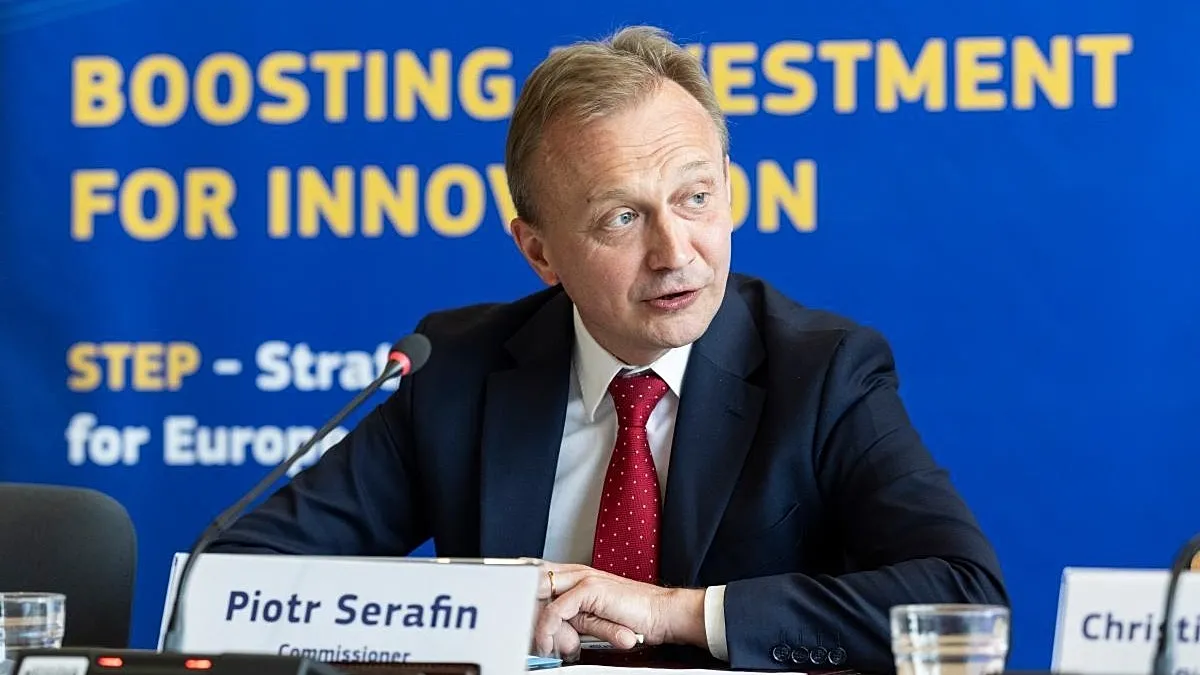
EU Budget Commissioner Piotr Serafin Criticises ‘Frugals’ Over Proposed Long-Term Budget Cuts
EU Budget Commissioner Piotr Serafin criticises – At the annual budget conference held in Brussels this week, European Union Budget Commissioner Piotr Serafin voiced concerns about the stance of certain member states that advocate for deeper financial cuts in the upcoming long-term budget. He argued that a more restrained approach to spending, combined with minimal efforts to generate additional revenue, could paradoxically increase the financial burden on taxpayers rather than reduce it. Serafin’s remarks targeted the so-called “frugal” countries, which are pushing for a scaled-back budget proposal that has already sparked debate across the bloc.
The €2 Trillion Budget and Ongoing Negotiations
The €2 trillion long-term budget plan, which covers the period from 2028 to 2034, was initially unveiled by the European Commission in July 2025. This proposal sets the framework for EU funding across various sectors, including infrastructure, research, and social programs. However, the negotiations have since intensified as member states attempt to align their priorities. The current compromise text, which emerged in mid-June, represents a middle ground between the frugals and the countries that support higher spending in specific areas.
According to sources who spoke with Euronews under anonymity, the mid-June draft is viewed as a critical first step in resolving differences. While it includes a €32.8 billion reduction from the Commission’s original proposal, it is still far from finalised. Negotiators aim to reach a consensus by the end of 2026, with the hope of avoiding prolonged discussions into 2027—a year marked by significant political elections in several European nations, including Italy, France, and Poland.
Frugals and the ‘Friends of Cohesion’ Clash
A group of six countries—Germany, the Netherlands, Denmark, Sweden, Finland, and Austria—has taken a firm position in favour of reducing the EU budget. These nations, often referred to as the “frugals,” have long prioritised fiscal discipline, seeking to limit the bloc’s spending to ensure economic stability. In contrast, 16 other member states, known as the “friends of cohesion,” have called for increased funding in agriculture and regional development programs. These countries argue that the initial proposal, which significantly slashes these areas, undermines efforts to promote equitable growth across the EU.
Serafin’s criticism of the frugals during his speech highlighted a key tension within the negotiations. He noted that while the frugals frame their position as modernisation, their approach might compromise long-term strategic goals. “We need to be mindful of the link between having a frugal budget and having a modern budget,” Serafin stated. “The truth is that a more frugal budget may not necessarily be more modern.” This perspective challenges the notion that reducing expenditure alone equates to progress in governance and efficiency.
“A frugal EU budget may not necessarily be cheaper for EU taxpayers,” Serafin added. “Strategic investments such as those in defence and security, if not covered by the EU’s funds, would have to be financed through national budgets. This could lead to duplication of efforts and inefficiencies, especially when multiple countries pursue similar initiatives independently.”
Serafin pointed out that shifting the financial responsibility to national governments might not streamline processes but instead create overlapping spending. For instance, if the EU reduces its allocation for defense, individual member states would need to cover the gap, potentially diverting resources from other priorities. This, he warned, could weaken the EU’s capacity to act as a unified entity, especially in times of crisis.
The Path to Agreement and Political Implications
The compromise text currently under discussion is a blend of the frugals’ demands and the friends of cohesion’s push for more spending. While it reflects a temporary agreement, the final numbers remain uncertain. Sources familiar with the negotiations suggest that the December deadline for resolving the budget is realistic, though some challenges persist. The outcome of these discussions will likely shape the EU’s financial landscape for the next six years.
Amid the political stakes, Serafin’s comments underscore the broader debate about the EU’s role in economic decision-making. His argument that a frugal budget might not always translate to cost savings resonates with critics who fear that the current approach could prioritise short-term savings over long-term investment. This tension highlights the need for a balanced strategy that addresses both fiscal responsibility and the EU’s strategic ambitions.
As the negotiations continue, the challenge for member states is to reconcile differing priorities while ensuring the budget supports the EU’s collective goals. Serafin’s critique serves as a reminder that the success of the EU’s long-term plans depends on coordinated efforts rather than fragmented approaches. The final agreement will not only determine the allocation of funds but also reflect the bloc’s ability to unite behind a shared vision for the future.