Italian Police Detain Four Suspects in Bomb Attack Against Investigative Journalist
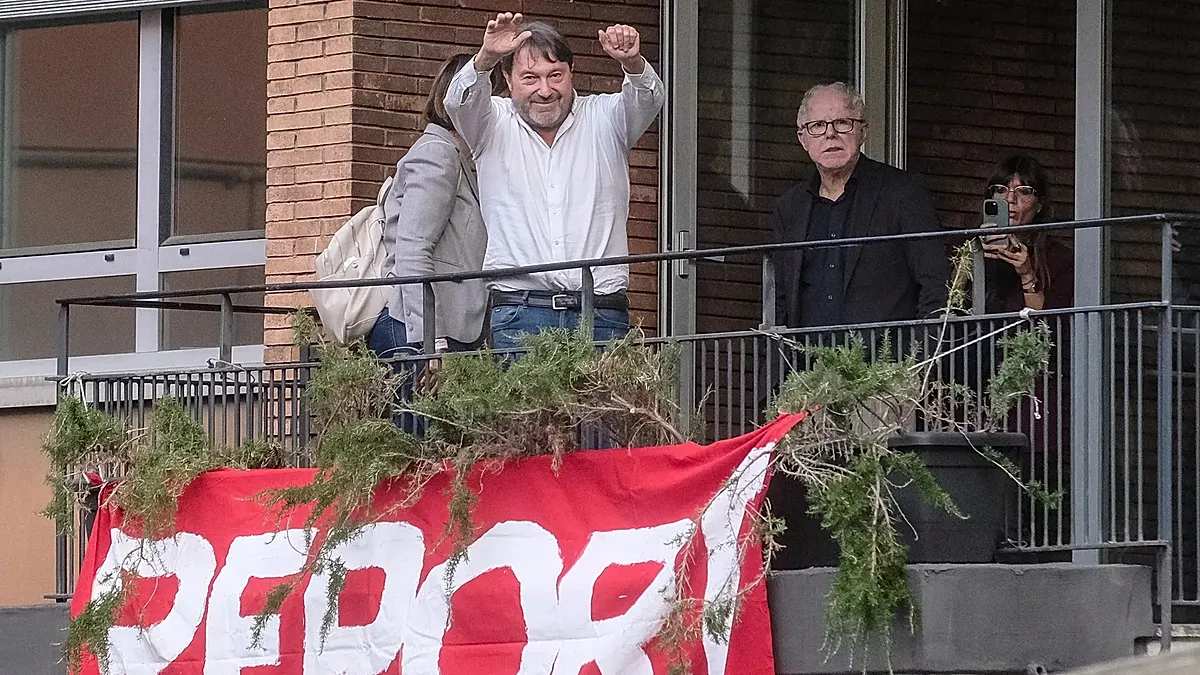
Italian police arrest four over bomb – Italian authorities have detained four individuals accused of planning and executing a bomb attack that targeted Sigfrido Ranucci, a prominent investigative journalist known for his work on the program *Report*. The incident, which took place in October, occurred at Ranucci’s residence in Pomezia, a town situated just outside Rome. The arrests followed a preliminary investigation that uncovered evidence linking the suspects to the use of an explosive device in a public setting, along with charges of criminal damage and issuing threats. The case highlights the growing concerns about threats to journalists in Italy and the potential involvement of organized criminal networks.
The Perpetrators and Their Alleged Roles
The four arrested individuals are currently held under precautionary custody measures. Among them is a young couple from Avella, consisting of Pellegrino D’Avino and his wife, Marika De Filippi. D’Avino was initially detained by the Carabianieri, the Italian military police, in Rome before being transferred to Rebibbia prison. De Filippi, meanwhile, remains under house arrest at their home. The other two suspects, Saverio Mutone and Antonio Passariello, are also under investigation. According to the judicial report, the group was believed to have operated as a collective of more than five members, employing methods reminiscent of mafia operations.
Passariello is accused of arranging the logistics of the attack, including securing the vehicle used in the operation. The other three individuals are said to have conducted reconnaissance activities in the days leading up to the incident. The explosive device, which was placed outside Ranucci’s home, is alleged to have been detonated by Passariello and Mutone. The preliminary findings indicate that while the attack was well-organized, its primary objective may have been to intimidate rather than to kill.
Organized Crime and the Unidentified Mastermind
The judicial inquiry has revealed that the suspects acted under the direction of an unnamed individual who is yet to be identified. This person is believed to have planned and coordinated the criminal act, with the group serving as an execution team. The presence of mafia-style tactics has raised questions about the possible connection between the attack and broader organized crime structures. However, the judge’s order emphasizes that “no evidence has emerged to confirm Passariello’s affiliation with the criminal milieu of the Moccia clan of Afragola,” suggesting the investigation is still ongoing.
In an anonymous message sent on April 6 to Rome prosecutor Carlo Villani, the sender identified Passariello as the key figure behind the operation. The email, which was cited by the Italian news agency Adnkronos in the custody order, claimed that the attack was conducted without prior consultation with the group associated with Passariello. The author of the email further stated that Antonio Passariello was accompanied by a young man named Luca, who resides at his address. The message noted that the two individuals had boasted “from morning till night” of their involvement in setting off the bomb “on behalf of the Moccia clan.”
Ranucci’s Statements and the Implications for Press Freedom
“I have been waiting for this moment since the day of the attack. I had no doubt it would come (…) From what I understand, there are those who organised it, those who were complicit, those who provided legal assistance, those who tried to destroy the SIM cards,”
Stated Ranucci in an interview with the Italian newspaper *La Repubblica*. He highlighted the complexity of the case, noting that multiple parties may have played a role in the attack. Ranucci also expressed concern about the role of state institutions, stating, “But this story seems to show once again that there is a part of the state that works, that protects its citizens, that does its job properly. Luckily,” he added, implying that the arrest of the suspects was a positive step in addressing the threat to investigative journalism.
The attack is not only a personal assault on Ranucci but also a symbolic strike against the broader world of investigative journalism in Italy. The National Federation of the Italian Press (FNSI) has issued a statement affirming its readiness to join the case as a civil party in any future trial. The federation emphasized that “the FNSI is aware that the investigation is not yet over. We hope that as soon as possible it will lead to further developments and to the identification of those who ordered the attack and the motives behind the act against the journalist.”
The Role of the Press and Constitutional Concerns
The RAI journalists’ union, Usigrai, has also released a press statement expressing its satisfaction with the progress made in the investigation. The union pointed out that the attack aimed to target “the whole world of investigative journalism and Article 21 of the Constitution,” a provision that guarantees freedom of expression and information. This has reignited discussions about the state of press freedom in Italy, with major international watchdogs noting a decline in rankings for the country’s media environment.
While the suspects have been charged, the case remains open to further revelations. The investigators’ reconstruction of events suggests that the group may have carried out other contracted operations, but the methods used in this particular attack—such as the placement of the explosive device—have not definitively proven an intent to kill. This nuance has sparked debate about the severity of the charges and the potential for the attack to be classified as a targeted act of intimidation.
As the investigation continues, the focus is shifting toward uncovering the full extent of the conspiracy and identifying the mastermind behind the operation. The evidence gathered so far points to a coordinated effort involving multiple individuals, but the absence of conclusive links to the Moccia clan has left some questions unanswered. The arrests have provided a sense of closure for Ranucci, who has long been a vocal critic of those who threaten journalists for their work. However, the broader implications for press freedom in Italy remain a topic of intense scrutiny.