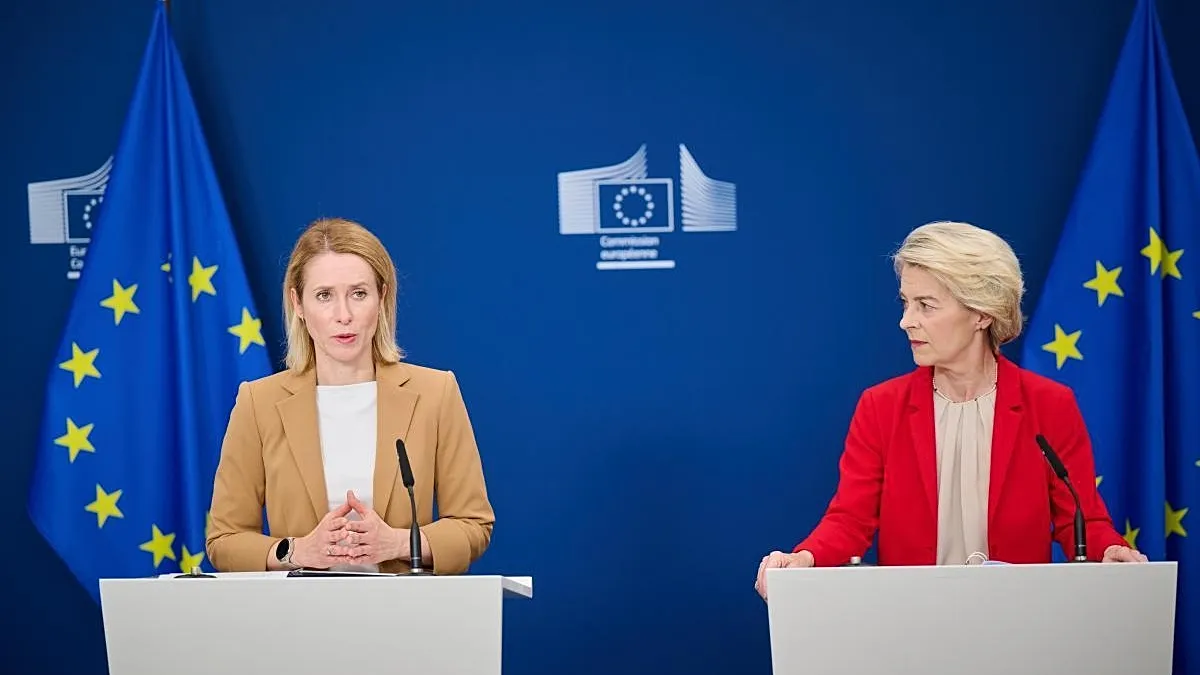
Israel as a Test Case for EU’s Foreign Policy Divide
EU’s Foreign Policy Fractures Erupt Over Israel
How Israel became a test case – Israel has become a critical test case for the European Union’s internal disputes regarding foreign policy authority. The country’s recent diplomatic actions have intensified tensions between the Commission and the European External Action Service (EEAS), exposing the growing divide over who leads the bloc’s international strategy. This conflict highlights how Israel’s geopolitical position is being used to showcase the EU’s institutional power struggles, with member states and officials reacting sharply to perceived shifts in alignment.
The situation reached a turning point when European Commissioner for the Mediterranean, Dubravka Šuica, embarked on a high-profile trip to Israel. While the visit was planned, its timing and execution sparked confusion, as it was not widely publicized on the Commission’s official platform. This lack of transparency raised questions about coordination between EU institutions, with some critics pointing to the inconsistent messaging as a sign of deeper structural rifts.
Šuica’s move came days after Israel’s foreign minister, Gideon Sa’ar, cut ties with EU chief diplomat Kaja Kallas. Sa’ar’s action followed reports of Kallas comparing Israel to apartheid South Africa, a statement that underscored the sensitivity of the issue. The incident has been framed as a test of loyalty within the EU, with Šuica’s independent approach challenging Kallas’ leadership in foreign affairs and reigniting debates about institutional priorities.
Šuica’s Strategy and EU Diplomatic Tensions
Šuica’s trip to Israel exemplifies the Commission’s growing assertiveness in foreign policy. Her Directorate-General for the Middle East, North Africa and the Gulf (DG MENA) was created to centralize key decision-making power, directly conflicting with the EEAS’s traditional role. This structural realignment has led to heated exchanges, with former EU foreign policy chief Josep Borrell criticizing the lack of coordination in a public statement:
“What a fine display of ‘solidarity and coordination’ in the EU,” Borrell wrote on X.
Meanwhile, the Commission’s own spokesperson, Paula Pinho, struggled to explain the absence of the trip announcement on Šuica’s webpage, further fueling speculation about internal discord. Analysts suggest that the incident reflects a broader shift in EU governance, where the Commission is increasingly positioning itself as the primary driver of foreign policy initiatives. “Šuica has von der Leyen’s backing to take these initiatives. That’s no secret,” said one EU diplomat, emphasizing the test case nature of the situation.
As the EU seeks to streamline its foreign policy, the Israel dispute has become a lightning rod for competing interests. Member states are now scrutinizing how the Commission’s expanded role affects diplomatic unity, with some arguing that Šuica’s actions risk fragmenting the bloc’s collective voice on global issues. The test case has not only tested internal cohesion but also exposed vulnerabilities in the EU’s institutional framework.
Broader Implications for EU Governance
The Israel test case has underscored the EU’s evolving power dynamics, where the Commission’s push for centralized control clashes with the EEAS’s traditional dominance. This has led to a reevaluation of how foreign policy is managed, with officials debating whether Šuica’s approach strengthens or weakens the bloc’s international standing. “The question is what damage that does,” noted a second diplomat, highlighting the strategic stakes of the ongoing test.
As the EU prepares for its next foreign affairs ministers’ meeting, the Israel dispute serves as a pivotal moment in defining the bloc’s direction. The Commission’s ability to present alternative options without EEAS input will be closely watched, signaling a potential shift toward a more fragmented foreign policy landscape. This test case has not only tested institutional loyalty but also forced member states to confront the implications of a divided EU on the global stage.