Qatargate: Belgian Judiciary Issues Arrest Warrant for Former EU Commissioner Dimitris Avramopoulos
Qatargate – Belgian authorities have taken a significant step in the ongoing Qatargate investigation by issuing an arrest warrant for Dimitris Avramopoulos, a former European Union commissioner. This legal action comes as part of a broader probe into allegations that Qatar and Morocco attempted to sway decisions within the European Parliament through financial incentives and gifts provided to current and past lawmakers. The countries have consistently denied any involvement in corrupt practices, maintaining that their actions were transparent and aligned with diplomatic protocols.
Scope of the Qatargate Scandal
The Qatargate scandal has been centered on accusations that the Gulf state of Qatar and Morocco engaged in efforts to influence key decisions in the EU. These allegations suggest that both nations used monetary donations and other gifts to secure favorable outcomes for their interests. While the European Parliament has been a primary focus, the investigation has also extended to former officials and lawmakers, including Avramopoulos, who now serves as a member of the Greek parliament.
Avramopoulos’s Role in the Investigation
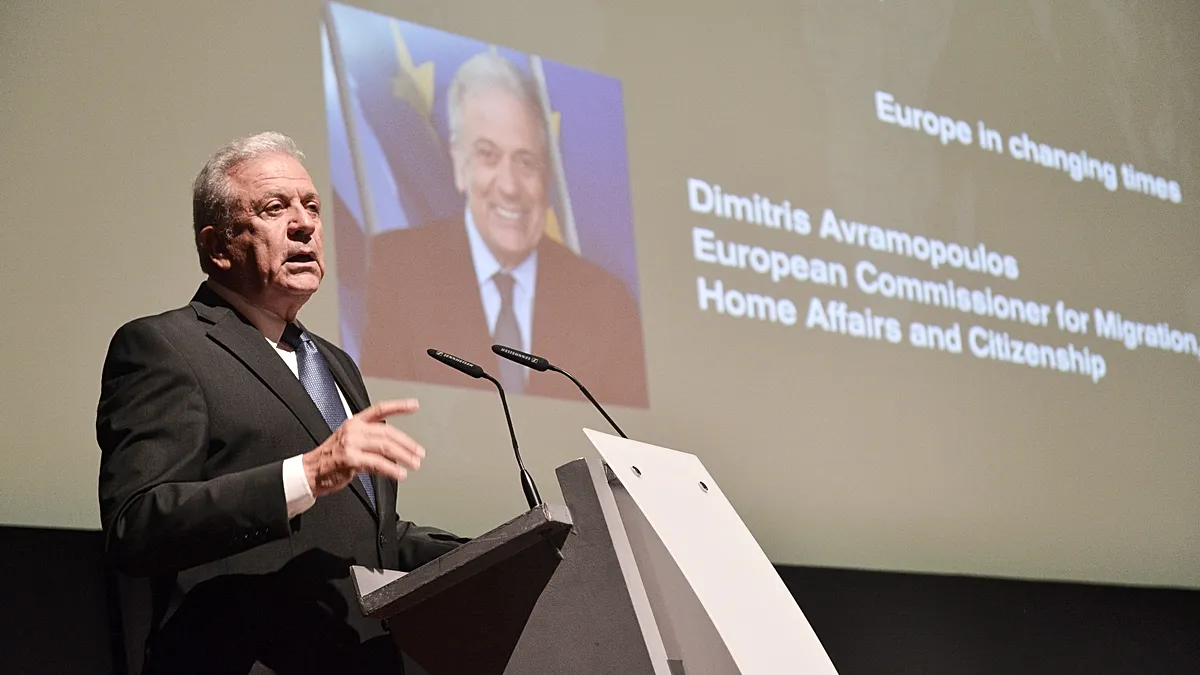
Avramopoulos, who held the position of EU commissioner for migration, home affairs, and citizenship from 2014 to 2019 under President Jean-Claude Juncker, is now a prominent figure in the Greek political landscape as a representative of the New Democracy party. His involvement in the Qatargate case stems from his association with Fight Impunity, an NGO established by former European Parliament member Antonio Panzeri, a central player in the corruption allegations. Avramopoulos served on the honorary committee of this organization, which has drawn scrutiny for its potential ties to the scandal.
Legal Proceedings and Immunity Challenges
Belgian prosecutors are now seeking to lift Avramopoulos’s diplomatic immunity to question him as part of the investigation. This step follows the detention of former Greek MEP Eva Kaili, who was also implicated in the case. According to Belgian legal sources, Avramopoulos is alleged to have received payments from a “criminal network” linked to the Qatargate affair. The former commissioner has denied any wrongdoing, emphasizing that all financial transactions were fully documented in his official asset declarations and reported to Greek tax authorities.
Defensive Statements and Institutional Approval
In a statement issued on 19 December 2022, Avramopoulos clarified that his role with Fight Impunity was “entirely without executive or managerial responsibilities.” He described the committee as an honorary body, which included notable figures such as former EU foreign policy chief Federica Mogherini, former French prime minister Bernard Cazeneuve, and Italian senator Emma Bonino. Avramopoulos further stated that he obtained written permission from the European Commission prior to joining the NGO. The Commission’s Independent Ethical Committee, he added, had given a favorable opinion on his participation on 10 December 2020.
Financial Claims and Timeline of Payments
Avramopoulos detailed that he received €5,000 per month from February 2021 to February 2022. He maintained that these payments were declared and taxed in Greece according to national law. The former commissioner claimed that he requested the cessation of payments in February 2022, citing a decline in the organization’s activities. He stated that his involvement with Fight Impunity effectively ended by March 2022. Following the Qatargate revelations, Avramopoulos voluntarily resigned from the NGO and asked for his name to be removed from its website.
Cooperation and Ongoing Legal Process
Antonio Panzeri, the founder of Fight Impunity, has since entered into a cooperation agreement with Belgian prosecutors, offering insights into the organization’s operations. This collaboration has provided additional context to the Qatargate case, though Avramopoulos remains a key figure under examination. The Belgian legal process is now set to move forward, with the case being transferred from the Athens Court of Appeal Prosecutor’s Office to the Supreme Court Prosecutor’s Office. From there, it will be passed to the Greek parliament via the Ministry of Justice, ensuring that the investigation adheres to the prescribed procedures.
The Qatargate scandal has sparked widespread debate about the transparency of EU decision-making and the role of external actors in shaping policy. Avramopoulos’s case highlights the complexities of balancing political alliances with ethical standards. While he has not been formally convicted, the arrest warrant signifies a critical phase in the judicial process. Belgian prosecutors argue that the evidence against Avramopoulos is compelling, but the former commissioner continues to assert his innocence, citing compliance with financial disclosure requirements.
Implications for EU Integrity
The Qatargate investigation underscores the EU’s efforts to hold its officials accountable for potential misconduct. By targeting Avramopoulos, Belgium has demonstrated its commitment to pursuing justice even when cases involve former high-ranking members of the Union. The case also raises questions about the effectiveness of ethical guidelines for EU commissioners post-tenure. Avramopoulos’s defense hinges on the argument that his actions were not driven by personal gain but by a shared commitment to advocacy, a stance he has reiterated throughout the legal proceedings.
As the investigation progresses, the focus remains on verifying the extent of Avramopoulos’s involvement and the sources of the payments he received. The Belgian judiciary’s decision to issue an arrest warrant has sent a strong signal to the European Parliament and its officials, emphasizing the need for vigilance against undue influence. While the outcome of the case remains uncertain, the process continues to unfold, with the potential to reshape perceptions of integrity within EU institutions.
In conclusion, the Qatargate scandal has brought to light the intricate web of relationships and financial interests that may impact EU governance. Avramopoulos’s case serves as a pivotal example of how even retired officials can become subjects of scrutiny. The Belgian judiciary’s actions, combined with the cooperation of Panzeri, have set the stage for a thorough examination of the allegations. As the legal process moves forward, the final verdict on Avramopoulos’s role in the scandal will be closely watched, both within Greece and across the EU.