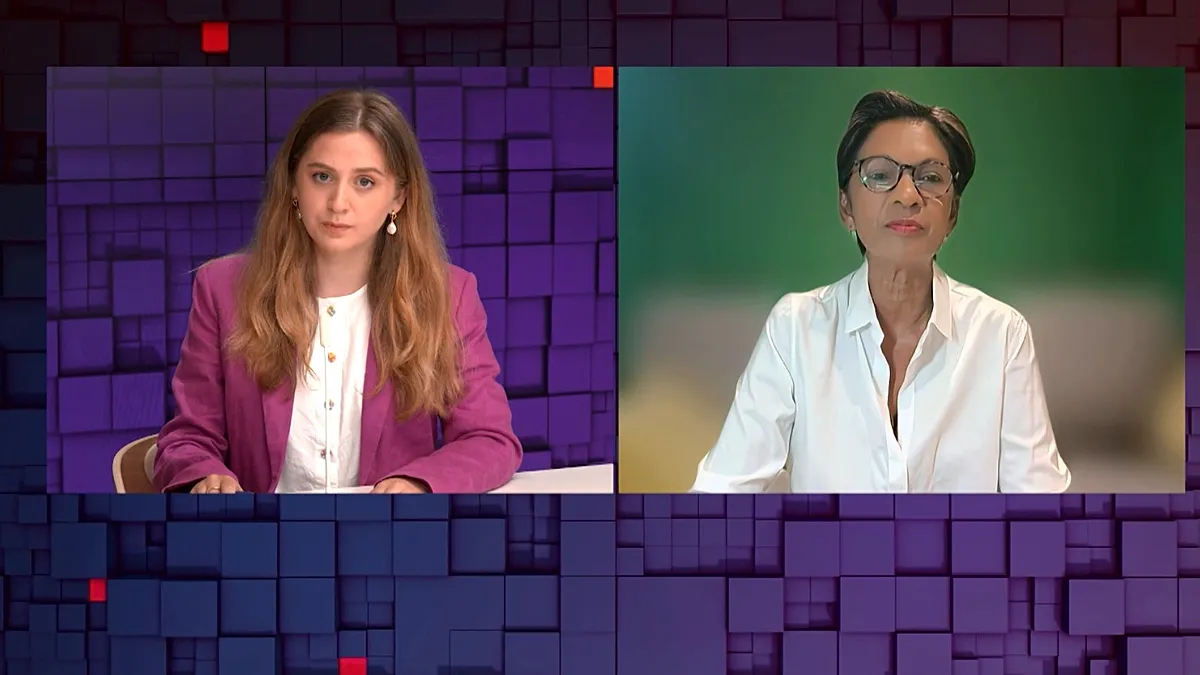
Next PM Needs ‘Plan’ for EU Ties, Brexit Legal Campaigner Gina Miller Tells Euronews
Political Shifts and Legal Legacies
Next PM needs plan for EU ties – As the United Kingdom prepares for a new era of leadership, Gina Miller, a prominent British-Guyanese businesswoman and advocate, has called for a decisive strategy to navigate the country’s ongoing relationship with the European Union. Her remarks came shortly after Prime Minister Keir Starmer announced his resignation, raising questions about the direction of Britain’s post-Brexit policy. Miller, who has played a pivotal role in shaping the legal framework of Brexit, emphasized the importance of clarity and foresight in addressing the EU’s evolving ties with the UK.
Miller, 61, became a central figure in the Brexit debate after spearheading two landmark legal actions against successive Conservative governments. These cases challenged the manner in which the UK’s departure from the EU was processed, culminating in significant rulings that reshaped the political landscape. Her first campaign targeted the process by which Prime Minister Theresa May initiated Article 50, the legal mechanism for EU withdrawal, without parliamentary approval. This led to a Supreme Court decision affirming the need for legislative input in the Brexit process. Her second challenge focused on the parliamentary suspension by Boris Johnson, which was declared unlawful by the court in 2019.
A Call for Boldness in EU Relations
On the eve of the 10th anniversary of Brexit, Miller urged the Labour Party’s next leader to adopt a cohesive plan for the UK’s future with Brussels. “I’m hoping the new leader of Labour will outline a clear strategy and define the trajectory of our relationship with Europe,” she said in a recent interview with Euronews. This statement underscores her belief that the current approach, which she described as vague, lacks the necessary direction to ensure stability and growth in the UK’s post-Brexit engagement.
“I have been very disappointed that Prime Minister Starmer was not much clearer on what he called ‘realigning.’”
Despite being seen as the most pro-European leader since the Brexit vote, Starmer’s tenure saw a delicate balance between pro-EU sentiments within his party and the broader public’s resistance to revisiting the referendum’s outcome. His decision to resign has sparked discussions about the UK’s upcoming ‘reset’ negotiations with the EU, set to begin on 22 July. These talks, which aim to streamline trade and regulatory frameworks, have been a focal point of debate in recent weeks.
The Swiss Model and Rejoining the EU
Miller has suggested that a Swiss-style agreement could offer a viable path for the UK to deepen its integration with the EU. This model, which grants access to the single market for specific sectors, has been previously discussed as an alternative to the current Trade and Cooperation Agreement (TCA). “In my view, the door remains open for a more aligned relationship, and I believe we should commit to this vision rather than making incremental adjustments,” she stated. The idea of rejoining the EU has gained traction among Labour leaders, though it faces opposition from far-right factions like Reform.
However, the EU has historically been hesitant to adopt such an agreement, citing concerns over sovereignty and regulatory alignment. Miller argues that the same rigorous checks and balances that were enforced during the Brexit process must be applied to future discussions about reintegration. “Whatever decisions are made moving forward, they cannot be done behind closed doors,” she warned. “Any changes to our relationship with Europe must be transparent and subject to parliamentary scrutiny.”
Legal Campaigns and Political Tensions
Miller’s legal battles have not only influenced Brexit’s trajectory but also highlighted the importance of institutional accountability. In 2016, her challenge to Theresa May’s executive action on Article 50 led to a landmark ruling that mandated parliamentary involvement. This decision became a cornerstone of the Brexit legal framework, ensuring that the process was not dictated solely by the government. Two years later, her second campaign exposed the irregularities in Boris Johnson’s parliamentary suspension, reinforcing the principle that executive power must be checked.
“Irrespective of my personal support for remaining in the EU, this was much more about the process and ensuring prime ministers could not put themselves above the law.”
Miller’s advocacy has also brought attention to the political risks associated with Brexit. She noted that the far-right Reform party, which has gained momentum in recent years, poses a threat to the UK’s EU relationships. “The B word (Brexit) was once a political lightning rod, but now it’s reigniting as a rallying cry for those who want to reshape the country’s future,” she remarked. The resurgence of Brexit-related discourse has, in turn, led to a renewed wave of criticism against her, with both supporters and opponents of the EU expressing hostility.
Legacy and Future Prospects
Miller’s influence extends beyond her legal victories. She has become a symbol of the fight for democratic process in a time of political upheaval. Her recent comments reflect a broader concern about the UK’s preparedness for future negotiations. “With the anniversary of Brexit approaching, it’s clear that the public is re-engaging with the debate, and that means the pressure to deliver a robust strategy is intensifying,” she said. This pressure is likely to shape the priorities of the next prime minister, who will need to address both domestic and international challenges.
As the UK navigates this new political phase, Miller’s warnings serve as a reminder of the stakes involved. The upcoming General Election, expected to be a pivotal moment, could determine whether the country moves toward closer ties with the EU or continues on its current path. Her call for a “plan” is not just a suggestion but a demand for leadership that prioritizes transparency, stability, and long-term vision. “The opportunity is there for a bold approach, but it requires a leader willing to take the reins and steer the UK toward a future that benefits all,” she added.
In the context of Brexit’s evolving narrative, Miller’s perspective is both a critique of the past and a blueprint for the future. Her legal campaigns have set a precedent for holding leaders accountable, and her ongoing advocacy ensures that the principles of democratic governance remain at the forefront of the discussion. As the UK’s political landscape shifts, her insights will be critical in shaping the next chapter of the country’s relationship with Europe.