Russian Drone Strike in Zaporizhzhia Leaves One Dead, Seven Injured
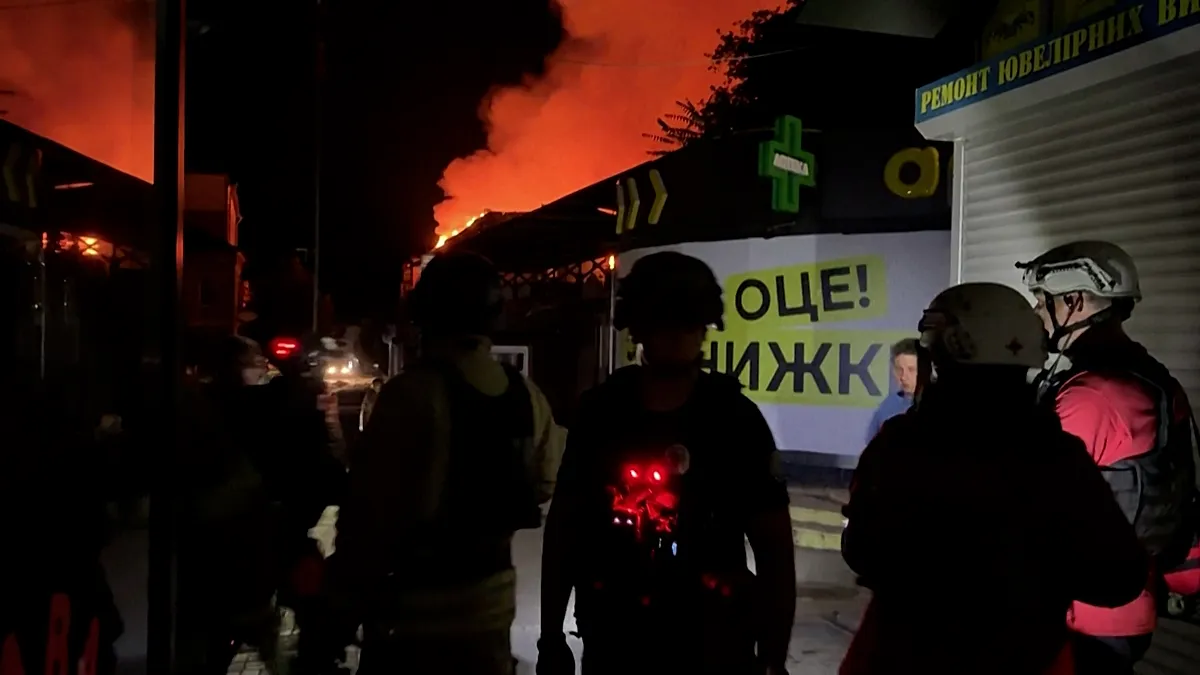
Ukraine – Residents of Zaporizhzhia, a city in eastern Ukraine, were caught off guard by a sudden aerial assault that left one person dead and seven others wounded. The attack, which targeted a residential building, unfolded in the early hours of the day, prompting immediate action from emergency services. Thick smoke billowed from the damaged structure as firefighters, police officers, and rescue teams scrambled to contain the situation. The neighborhood was engulfed in chaos, with residents forced to evacuate their homes and seek shelter as the air raid alarms blared repeatedly.
Response to the Attack
Firefighters and emergency personnel spent hours battling the fire, navigating the dense smoke and debris to rescue trapped civilians. Video footage captured the urgency of the operation, showing rescue workers moving swiftly through the rubble while air raid warnings disrupted their efforts. The drone strike had inflicted significant damage, destroying sections of the roof and upper levels of the building. Authorities confirmed that the attack was a direct hit, leaving several families homeless and causing extensive property loss.
“The damage to the building was severe, and our teams worked tirelessly to ensure the safety of the residents,” said a local emergency official. “However, the constant interruptions from air raid alerts made it difficult to coordinate a full-scale response.”
As the fire was brought under control, the focus shifted to treating the injured. Hospital staff reported that the casualties included both civilians and emergency responders, with some suffering from burns and smoke inhalation. The incident has sparked renewed concerns about the vulnerability of urban areas to Russian attacks, even as the war enters its fifth year. Despite the city’s strategic importance, the strike highlights the challenges faced by Ukrainian communities in maintaining resilience under sustained aerial pressure.
Context of the Sustained Campaign
The drone attack is part of a broader pattern of Russian aerial assaults that have targeted Ukrainian cities and infrastructure over the past four years. Since the full-scale invasion began in 2022, the conflict has seen a dramatic shift in tactics, with drones playing a central role in both offensive and defensive operations. These unmanned aircraft have allowed Russia to strike with precision, often bypassing traditional air defenses and hitting critical locations with minimal warning.
While the destruction of residential areas has raised questions about the human toll of the war, military analysts note that Russia’s ground advance has slowed in recent months. This has led to a prolonged stalemate along the front lines, where both sides have struggled to make significant territorial gains. The use of widespread drone warfare has complicated the battlefield, forcing Ukrainian forces to prioritize air defense and counter-attacks in addition to holding key positions.
“Drone attacks have become a double-edged sword for Russia,” explained a defense expert. “They allow for targeted strikes on urban centers, but also create a need for continuous surveillance and coordination, which can slow down their ability to focus on ground operations.”
Despite Moscow’s larger military resources, the reliance on drones has forced a recalibration of strategies. The attack in Zaporizhzhia underscores the growing importance of urban warfare, where the lines between civilian and military targets blur. As the conflict continues, the psychological impact on local populations remains a key factor in the war’s progression. The city, which has endured numerous strikes in the past, now faces the grim reality of daily life being disrupted by the ever-present threat of aerial bombardment.
Broader Implications of the Conflict
Ukrainian officials have called for increased international support to bolster defenses against such attacks. The incident in Zaporizhzhia has also reignited debates about the effectiveness of current air defense systems. While these systems have improved since the war’s onset, they still struggle to keep pace with the volume and speed of drone strikes. The need for advanced technology and better coordination between civilian and military authorities has never been more pressing.
As the war drags on, the focus of Russian attacks has increasingly shifted to symbolic targets, such as infrastructure and residential areas, to demonstrate the ongoing pressure on Ukrainian forces. The Zaporizhzhia home, which was hit in the attack, stands as a reminder of the war’s reach into everyday life. Residents now live with the knowledge that their homes could be struck at any moment, adding to the uncertainty and anxiety that has become a constant companion in the conflict.
Analysts suggest that the prolonged nature of the war has forced both sides to adopt more sustainable strategies. Russia, having initially aimed for a rapid victory, has had to adapt to the realities of a protracted conflict. This has led to a more measured approach, with emphasis placed on attrition and psychological warfare rather than outright conquest. Meanwhile, Ukraine has leveraged its resilience and international alliances to maintain its position, even as the cost of the war continues to rise.
With the drone attack serving as a stark example of the evolving nature of the conflict, the situation in Zaporizhzhia highlights the challenges of modern warfare. The combination of advanced technology and traditional tactics has created a complex battlefield, where the impact of each strike is felt deeply by both combatants and civilians. As the war moves into its fifth year, the resilience of cities like Zaporizhzhia will be tested in the weeks and months to come.
The incident also raises questions about the future of the conflict. With Russia’s ground operations stalled and its reliance on drones increasing, the war may continue to be shaped by aerial campaigns. For Ukraine, the ability to protect its cities and infrastructure will remain a critical priority, even as the focus of the war shifts toward strategic and symbolic targets. The attack on Zaporizhzhia serves as a sobering reminder of the ongoing struggle, where every moment brings new challenges and new risks.