When Tokyo’s Streets Become a River: Inside the Fukagawa Hachiman Matsuri
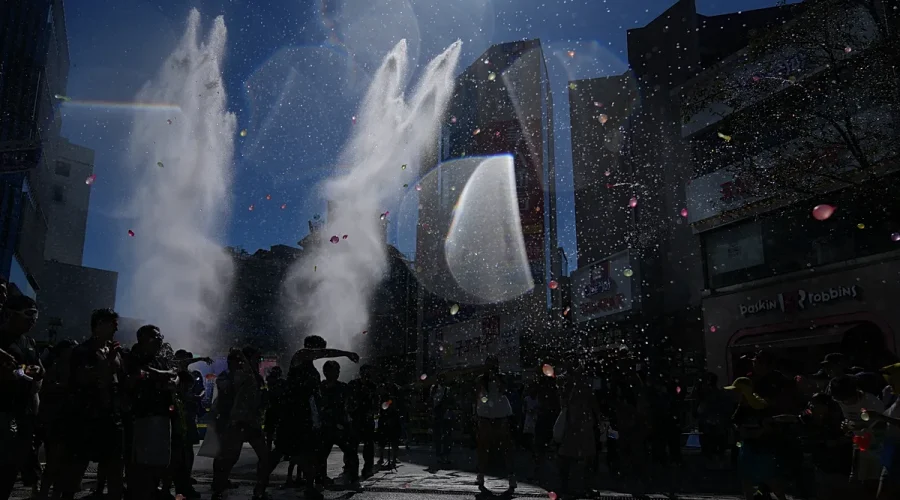
Usagevpn.com – On a sweltering August Sunday in 2026, the narrow lanes of eastern Tokyo transformed into something closer to a river than a road. Thousands of spectators lined the route armed with buckets, garden hoses, and plastic water pistols, pelting the bearers of ornate portable shrines as they lumbered past. Firefighters joined in from municipal trucks, aiming powerful jets of water at the mikoshi carriers to ensure no one escaped the soaking. The spectacle, captured on video and shared widely, offered a vivid reminder that Japan’s oldest urban festivals still operate on a logic of communal catharsis rather than polite observation.
A Triennial Rite Rooted in the Edo Period
The Fukagawa Hachiman Matsuri is not an annual event. It convenes once every three years, a cadence that gives participants ample time to rehearse, fundraise, and coordinate the enormous logistical undertaking involved. The festival’s origins stretch back to 1642, when the city now called Tokyo still bore its older name, Edo, and the Tokugawa shogunate was consolidating its grip on the capital. At that time, the neighbourhood of Fukagawa — today a quiet residential pocket in Kōtō Ward — was already a centre of Shinto devotion centred on Hachiman, the deity associated with archery, agriculture, and imperial protection.
Mikoshi, the small portable shrines that form the visual heart of most Japanese matsuri, are temporary vessels believed to house the spirit of the deity for the duration of the procession. Carrying one is considered both an honour and a physical ordeal; the structures can weigh well over a hundred kilograms, and bearers must maintain a steady, rhythmic gait over long distances. In the Fukagawa procession, 54 such shrines were deployed along an eight-kilometre route, each accompanied by its own team of carriers, musicians, and support personnel.
The Weight of History: Eitai Bridge, 1807
The festival’s long history is not without shadow. In 1807, during a previous iteration of the matsuri, the wooden Eitai Bridge spanning the Sumida River gave way beneath the crush of spectators who had gathered to watch the mikoshi pass. Nearly 1,500 people were killed in the collapse, one of the deadliest structural disasters in Edo-period Tokyo. The tragedy left a mark on local memory and on the festival’s own lore, a reminder that the very crowds that give the matsuri its energy can also become its greatest hazard. Modern safety planning — crowd management, route restrictions, and coordination with fire and police departments — carries the quiet weight of that memory.
Scale, Preparation, and Social Function
Roughly 25,000 people took part in the 2026 procession, a figure that encompasses carriers, musicians, shrine attendants, volunteer marshals, and the spectators who line the route. Participants describe years of preparation preceding each triennial event: neighbourhood associations (chōnai-kai) organise funding, coordinate training sessions, and negotiate with municipal authorities for permits and road closures. The work is deliberately inclusive. Residents of different ages, occupations, and social standings are expected to contribute, whether by carrying a mikoshi, playing a taiko drum, or simply standing along the route to cheer and splash water.
This social function is central to how the festival is understood locally. In a ward where postwar apartment living has eroded older forms of neighbourhood solidarity, the matsuri operates as one of the few remaining structures that compel mixed groups to cooperate toward a shared physical task. The water-spraying, far from being mere chaos, is a ritualised expression of that solidarity: spectators do not merely watch but participate, blurring the boundary between performer and audience in a way that mirrors older Shinto processions where the deity’s passage was meant to purify and energise the entire community.
Why the Water Matters
In Shinto practice, water is a purifying element. The drenching of mikoshi bearers during processions is not simply recreational; it echoes older rites in which water was thrown to cleanse the deity’s vessel and to share its protective power with the crowd. The addition of municipal firefighters with high-pressure hoses is a modern amplification of the same impulse — the community collectively ensuring that no carrier, no spectator, and no stretch of street is left untouched by the ritual’s cleansing force.
The next Fukagawa Hachiman Matsuri will not arrive for another three years. Until then, the neighbourhoods of Kōtō Ward will return to their ordinary rhythms, but the memory of that August Sunday — the roar of drums, the spray of water, the slow heave of fifty-four shrines threading through eight kilometres of city street — will persist as both celebration and cautionary tale, binding the present to a history that spans nearly four centuries.
Related Reading
Frequently Asked Questions
What is Tokyo festival turns streets into a giant?
Tokyo festival turns streets into a giant is the main topic of this guide. The article explains the context, practical details, and next steps readers should understand.
Why does Tokyo festival turns streets into a giant matter?
Tokyo festival turns streets into a giant matters because readers are looking for a useful answer, not just a short summary. Good content should match search intent and help them decide what to do next.