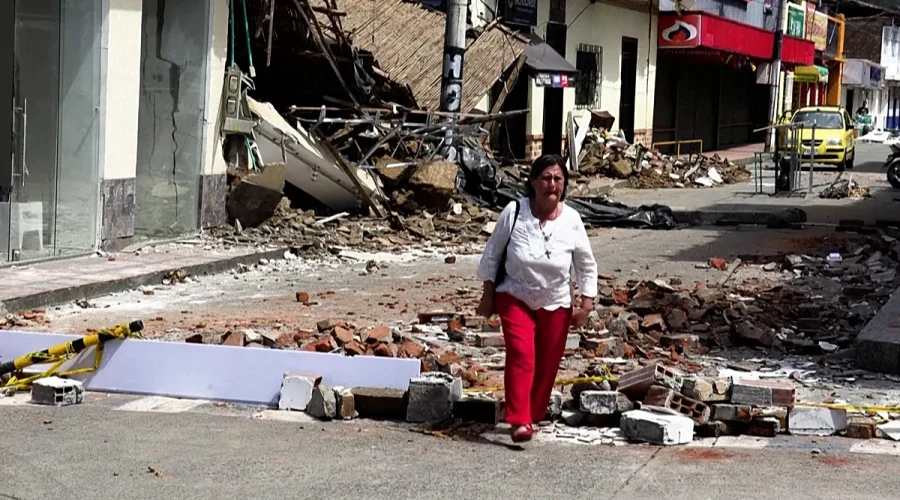
Colombia’s Valle del Cauca Reels After Devastating Earthquake Claims Dozens of Lives
Usagevpn.com – Communities throughout Colombia’s southwestern Valle del Cauca department are grappling with the aftermath of a powerful seismic event that struck on August 10, leaving widespread destruction and claiming at least 27 lives across multiple municipalities. The earthquake, centered near the small town of El Cairo, has triggered a massive humanitarian response as search-and-rescue teams continue their work while residents begin the arduous process of recovery.
Zarzal: Homes Reduced to Rubble
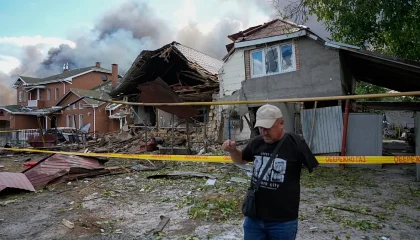
The municipality of Zarzal has emerged as one of the hardest-hit areas, where approximately 700 residential structures sustained damage ranging from minor cracks to complete collapse. Emergency crews moved systematically through neighborhoods, conducting door-to-door assessments to determine which families required immediate shelter and essential supplies. Streets became impassable as debris from collapsed walls and roofs accumulated, while structural engineers evaluated severely compromised buildings to decide whether demolition would be necessary for public safety.
At least one fatality was confirmed in Zarzal, though officials cautioned that the final death toll could rise as search operations extend into the night. The destruction has particularly affected working-class neighborhoods where housing stock was already aging before the seismic event.
Roldanillo: Tragedy and Curfew
Residents of Roldanillo returned to streets lined with damaged storefronts and homes, attempting to salvage belongings from the wreckage. The town suffered at least two confirmed deaths, including local councillor Juan Carlos García Castañeda, who perished when a section of a gymnasium collapsed during the shaking. The tragedy sent shockwaves through the community, where the councillor was well-known for his work on infrastructure projects.
Authorities quickly declared a state of public calamity, a designation that unlocks emergency funding and coordination mechanisms. A nighttime curfew was imposed to facilitate rescue operations and prevent looting as power and running water remained interrupted for thousands of households. Many families chose to sleep outdoors or in hastily arranged temporary shelters, while local merchants combed through piles of rubble searching for inventory that could be salvaged to sustain their businesses.
El Cairo: Epicentre of Destruction
El Cairo, a municipality of roughly 7,000 inhabitants situated close to the earthquake’s epicentre, experienced catastrophic damage. Regional officials estimated that approximately 80 percent of residential and public buildings were either damaged beyond repair or completely destroyed. The town’s vulnerability was compounded by its location in a mountainous region where the seismic waves triggered landslides that blocked critical access roads and generated persistent aftershocks that kept residents on edge.
Many families were forced into makeshift shelters constructed in open spaces, schools, and community centers. The combination of structural damage, transportation disruptions, and ongoing geological activity has created a complex emergency situation requiring sustained coordination between local and national authorities.
Regional Recovery Challenges
Valle del Cauca, Colombia’s third-largest department by population and a vital agricultural and industrial hub, faces what officials describe as a prolonged recovery period extending from months to potentially years. The department, located west of the capital Bogotá and south of the Pacific coast, is home to Cali, Colombia’s second-largest city, and serves as a critical corridor for trade and transportation.
More than 1,000 homes across the department have been documented as damaged, though comprehensive assessments remain ongoing. The economic implications are significant, as Valle del Cauca contributes substantially to Colombia’s coffee production, sugar industry, and manufacturing sector. Disruptions to infrastructure, housing, and local commerce threaten to ripple through regional supply chains and affect national economic indicators.
Local leaders have emphasized that restoring essential services—electricity, water, telecommunications, and transportation networks—will require coordinated efforts involving government agencies, private sector partners, and international aid organizations. The human cost extends beyond immediate fatalities, as thousands of residents face displacement, loss of livelihoods, and the psychological toll of losing homes and community landmarks.
As emergency operations transition toward recovery mode, the challenge of rebuilding resilient infrastructure while addressing the needs of vulnerable populations will define the region’s path forward. The earthquake has exposed both the fragility of aging building stock and the resilience of communities determined to rebuild their lives amid uncertainty.
Related Reading
Frequently Asked Questions
What is Quake leaves Colombian towns in ruins?
Quake leaves Colombian towns in ruins is the main topic of this guide. The article explains the context, practical details, and next steps readers should understand.
Why does Quake leaves Colombian towns in ruins matter?
Quake leaves Colombian towns in ruins matters because readers are looking for a useful answer, not just a short summary. Good content should match search intent and help them decide what to do next.