Spain and Italy Send Firefighting Resources to Portugal
Spain and Italy send firefighting resources – Portugal is currently grappling with severe wildfires, with the Vouzela blaze emerging as a critical focal point for emergency responders. The intense heatwave sweeping across the region has intensified the spread of fires, prompting authorities to declare a heightened alert state for the entire mainland territory from July 3 to July 6. Local communities and officials are closely monitoring the situation, as the blaze threatens to escalate further in the coming days. The country’s National Authority for Civil Protection (ANEPC) has issued regular updates, highlighting the growing challenges faced by firefighters and the urgent need for external support.
International Support Mobilized
Amid the escalating crisis, Portugal has activated the European Civil Protection Mechanism, securing aid from neighboring countries. Spain and Italy have already deployed resources to assist in the fight against the wildfires. From Italy, two Canadair water-bombers have arrived, while Spain has contributed 118 firefighters and 45 support vehicles. These efforts underscore the collaborative response among European nations to address the environmental and human toll of the blazes. Morocco, too, is set to send additional help under bilateral agreements with Spain, expanding the regional network of support.
“Europe stands with Portugal and its citizens, who once again are facing devastating forest fires,” wrote the President of the European Commission, Ursula von der Leyen, on social media as she confirmed the arrival of European assistance.
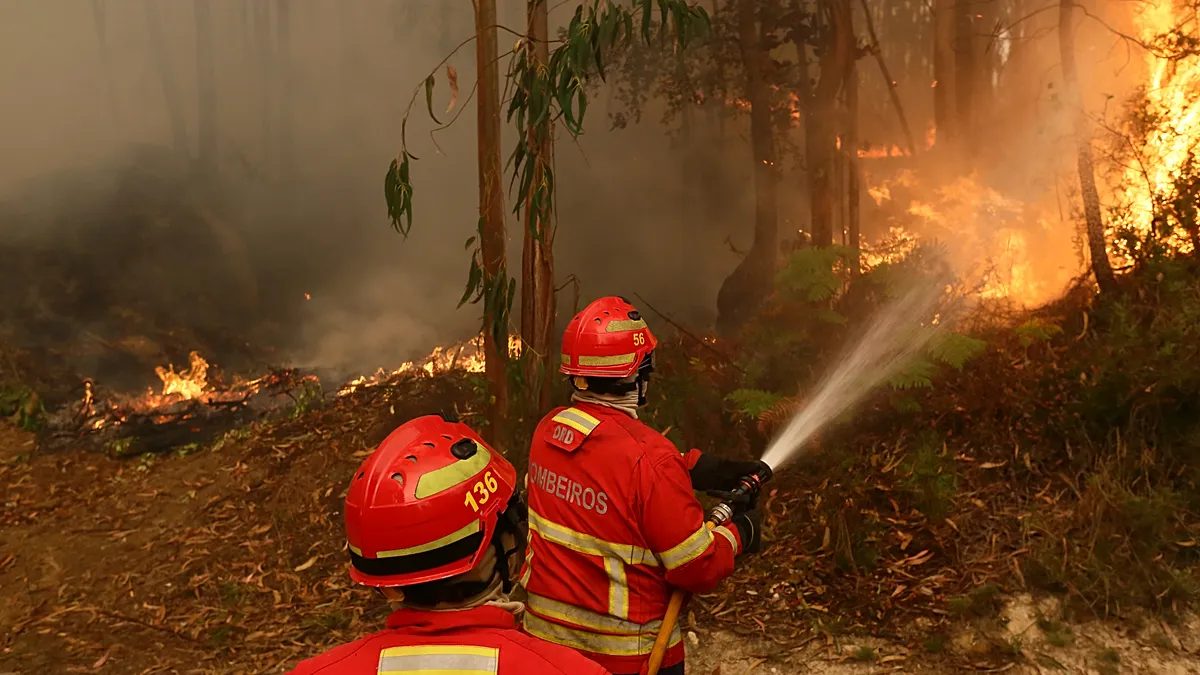
The deployment of these resources marks a significant step in combating the fires, which have been intensifying since Wednesday. The Vouzela fire, located in the district of Viseu, has already consumed 11,000 hectares by Saturday afternoon, according to the ANEPC portal. At that time, over 1,238 firefighters were working alongside 411 vehicles and six aircraft to contain the blaze. The scale of the operation reflects the severity of the situation, as the fire continues to spread rapidly under extreme heat conditions.
Heatwave and Fire Behavior
Temperatures in Portugal are expected to peak at 44°C in certain areas, creating an environment conducive to rapid fire propagation. This extreme heat has not only exacerbated the situation but also placed immense pressure on firefighting crews. The blaze has been active since Wednesday, with no signs of slowing down despite the influx of international aid. The ANEPC reports that nine individuals have been injured in the past 24 hours, two of whom are in serious condition. These figures illustrate the human cost of the wildfires and the ongoing risks to both firefighters and civilians.
The resources arriving in Portugal on Saturday are concentrated on the Vouzela fire, which has become a priority due to its size and proximity to populated areas. The European Commission’s spokesperson confirmed that aerial assets from Spain and Italy will begin operations on Sunday, providing crucial support to ground teams. This coordinated effort highlights the strategic allocation of resources to target the most affected regions. While the immediate focus is on Vouzela, the broader implications of the fire for Portugal’s ecosystem and infrastructure remain a concern.
Government Measures and Response
Recognizing the urgency of the crisis, the Portuguese government has implemented special measures to mitigate the spread of fires. These include a ban on access to forests and restrictions on the use of certain machinery in rural areas. The aim is to reduce human activity that could contribute to further blazes and to ensure the safety of both emergency responders and residents. Such actions reflect a proactive approach to managing the disaster, although they also impose logistical challenges on local communities.
The activation of the European Civil Protection Mechanism demonstrates Portugal’s reliance on regional cooperation in times of crisis. This framework allows for the rapid mobilization of resources, including personnel and equipment, from other EU member states. Spain’s contribution of 118 firefighters and 45 vehicles highlights the importance of bilateral agreements in addressing cross-border environmental threats. Meanwhile, Italy’s two Canadair water-bombers offer a specialized aerial response, targeting hotspots and reducing the intensity of the fire from above.
Despite the international support, the challenges of fighting wildfires in such extreme conditions remain formidable. The combination of high temperatures, dry vegetation, and strong winds creates a volatile environment where fires can surge unpredictably. Firefighters are working tirelessly to contain the flames, but the situation demands sustained effort and coordination. The involvement of multiple countries, including Morocco, underscores the interconnected nature of environmental crises and the shared responsibility of regional partners to respond effectively.
As the Vouzela fire continues to burn, officials are emphasizing the importance of public awareness and preparedness. The ANEPC has urged residents to stay informed and follow safety guidelines, such as avoiding open flames and reporting any signs of emerging fires. Additionally, the government has allocated emergency supplies and reinforced communication channels to ensure timely updates on the blaze’s progression. These measures aim to build resilience within the community and minimize the impact of the disaster.
Regional Collaboration and Future Outlook
The collaborative efforts between Spain, Italy, and Morocco highlight the critical role of international partnerships in disaster management. While the immediate focus is on extinguishing the Vouzela fire, the broader implications of the crisis may lead to long-term strategies for climate resilience. Portugal’s experience with wildfires in recent years has prompted discussions on improving early warning systems and enhancing fire prevention initiatives. The current situation serves as a reminder of the vulnerability of the region to climate change and the necessity of a unified response.
The European Commission’s spokesperson, when addressing RTP – Antena 1, stated that the aerial resources from Spain and Italy are expected to “begin operating on Sunday.” This timeline reflects the logistical planning required to deploy equipment and personnel efficiently. The coordination between national and international agencies is essential to ensuring that resources are used optimally and that the most vulnerable areas receive priority attention. As the fire rages on, the combined efforts of these teams offer a glimmer of hope, though the road to containment remains challenging.
While the immediate threat is being addressed, the long-term recovery and ecological restoration of the affected areas will be a significant undertaking. The consumption of 11,000 hectares by the Vouzela fire underscores the scale of the environmental damage, with implications for biodiversity, water resources, and local economies. The Portuguese government’s introduction of special measures, such as forest access bans, is a temporary solution, but it also highlights the need for sustained investment in fire prevention and management infrastructure.
In conclusion, the wildfires in Portugal are a stark reminder of the challenges posed by climate-related disasters. The support from Spain and Italy, along with the expected contributions from Morocco, exemplifies the solidarity within the European community. As the Vouzela fire continues to burn, the efforts of firefighters and international aid teams will be crucial in protecting lives, property, and the environment. The situation remains fluid, and ongoing coordination will be necessary to ensure a successful outcome in the fight against the blaze.