Serbia’s Early Election Puts Vučić and Student Movement at the Centre of National Debate
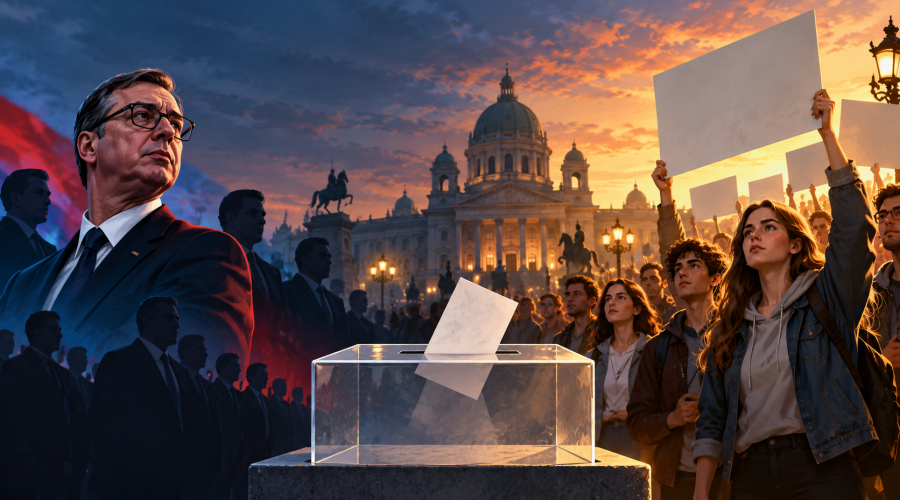
Usagevpn.com – Serbians vote on Sunday, 25 October, in snap parliamentary elections shaped by nearly two years of protest, public anger and deepening distrust in state institutions. The contest will fill all 250 seats in the National Assembly and may prove to be the most consequential political test Serbia has faced in more than a decade.
More than 6.45 million people are eligible to cast ballots. They can choose among 18 electoral lists containing 2,418 candidates, ranging from established governing parties to minority representatives and a student-backed slate created out of the country’s protest movement.
The election was formally triggered after President Aleksandar Vučić dissolved parliament on 9 September, acting on a proposal from the Serbian government. Yet the reasons Serbia is returning to the polls extend far beyond the procedural decision to call an early vote. The campaign has become a confrontation over political power, accountability and whether citizens still have confidence in the institutions that govern them.
A vote after the Novi Sad tragedy
The current period of political unrest began after the collapse of a concrete canopy at Novi Sad railway station on 1 November 2024. Sixteen people died in the disaster, which rapidly became a focal point for demands that those responsible be held accountable.
Students initially called for the release of documents connected to the station’s reconstruction and pressed authorities for answers. Their demonstrations later broadened into a challenge to corruption, political responsibility and the operation of public institutions.
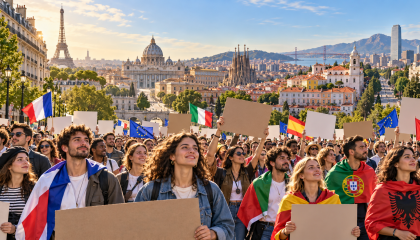
Throughout 2025, the movement organised large demonstrations, university occupations, blockades of roads and institutions, and rallies in communities around Serbia. What began as a response to a specific tragedy increasingly became a wider civic mobilisation. For the first time in 14 years, Vučić’s governing system faced a sustained and serious political challenge.
In May 2025, students began calling for a snap parliamentary election. During 2026, they took the further step of entering the race themselves, turning a protest campaign into an attempt to secure representation in parliament.
For many protesters, the Novi Sad disaster has come to represent concerns over corruption, public procurement, institutional oversight and political accountability.
Vučić returns to the heart of the campaign
The biggest electoral bloc is organised around the Serbian Progressive Party, or SNS, under the list “Aleksandar Vučić – United Serbia.” Although Vučić is no longer Serbia’s president, he remains the defining figure in the campaign.
In late September, he stepped down from the presidency to lead the SNS campaign and seek the post of prime minister. He previously served as prime minister before becoming president of the republic. That decision has made the parliamentary election more personal, with voters effectively being asked to judge the future of his political leadership as well as the composition of the next government.
The ruling camp is not alone in seeking influence. The “Ivica Dačić – Stability Factor” list brings together the Socialist Party of Serbia and smaller allied parties. Right-wing and nationalist voters have several options, including “Authentic Right – Miloš Jovanović – Boldly Serbian.” The centrist pro-European opposition is represented by the “European Serbia” list.
Minority communities are also represented in the contest. The Alliance of Vojvodina Hungarians, the SDA of Sandžak, the list led by Usama Zukorlić, the Albanian Coalition and other smaller organisations are participating. If the outcome is tight, these groups could become important in negotiations to form the next governing majority.
Students attempt to move from protest to parliament
The most unusual entry is the Student List, running as “Students Win.” It is not structured as a conventional party and has no single traditional leader. Its candidates were chosen through student plenums, and its 250-person slate includes professors, doctors, artists, activists and people without previous senior political roles.
The list is an effort to translate the energy of demonstrations into parliamentary influence. Its appearance has altered the nature of the campaign. Rather than being viewed simply as another contest between government and opposition parties, the vote is now widely seen as a judgment on the political order built during Vučić’s years of dominance.
For supporters of the student movement, representation in the assembly could provide a new route for pressing institutional reforms and accountability demands. For critics, the central question is whether a movement built outside conventional party structures can demonstrate enough political experience to take on the responsibilities of government.
Competing explanations for Serbia’s unrest
The opposing sides offer sharply different accounts of the protests. Demonstrators have focused on the need for transparent institutions and consequences for failures linked to the Novi Sad tragedy. Their concerns reach beyond the station collapse to the way public power is exercised and scrutinised.
Authorities portray the protests as an effort to undermine stability and install a movement they say lacks sufficient governing experience. Government representatives have also argued that “foreign actors” stand behind the student movement. Vučić has repeatedly said foreign intelligence services are financing what he has described as a “colour revolution” in Serbia.
Government officials have characterised the unrest as an attempt to destabilise the country, while Vučić has alleged foreign intelligence involvement in a “colour revolution.”
Sunday’s result will therefore carry significance beyond the distribution of parliamentary seats. It will indicate whether the governing bloc can preserve its dominance, whether the student-led challenge can convert public mobilisation into electoral support, and how much leverage smaller lists may have in shaping Serbia’s next administration.
Whatever the final count, the election closes one phase of a crisis that began with a fatal public tragedy and opened a broader argument about trust, responsibility and the future direction of Serbian politics.
Related Reading
Frequently Asked Questions
What is Serbia goes to polls to choose?
Serbia goes to polls to choose is the main topic of this guide. The article explains the context, practical details, and next steps readers should understand.
Why does Serbia goes to polls to choose matter?
Serbia goes to polls to choose matters because readers are looking for a useful answer, not just a short summary. Good content should match search intent and help them decide what to do next.