European Cities See Fresh Wave of Demonstrations Over Cost of Living and Public Services
Usagevpn.com – Large demonstrations unfolded across several European cities on Saturday, bringing together people with sharply different local concerns but a shared sense of pressure over public policy, living costs and political accountability. From pension reform in Madrid to housing affordability in Portugal, protesters filled streets in France, Albania and Italy as well.
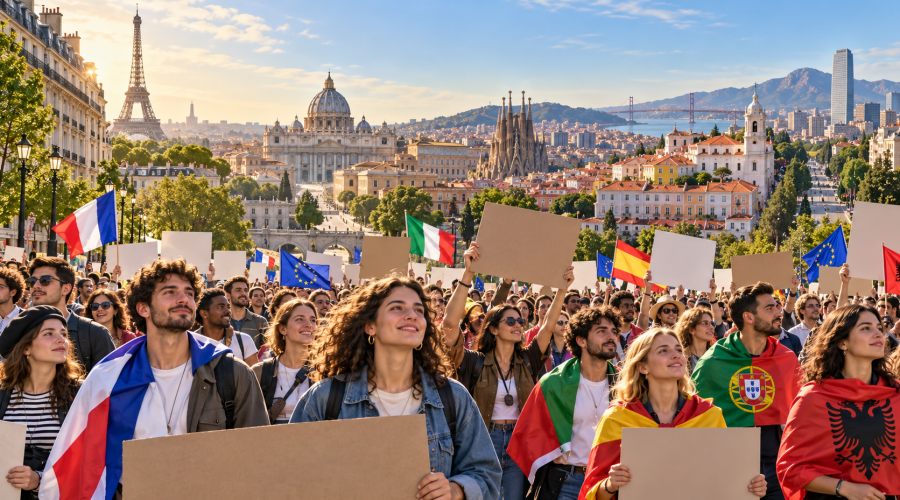
The protests reflected a broad range of demands rather than a single cross-border movement. Pensioners and workers in Spain called for stronger protections for retirement income, while Portuguese demonstrators focused on access to affordable homes. In Albania, anger directed at the government again led to confrontations around state buildings. Italian cities saw protests marked by disturbances and arrests.
France records widespread violence and arrests
France experienced some of the most serious unrest, despite security measures, protest restrictions and a substantial police presence. Clashes occurred in several cities, resulting in around 2,400 arrests.
Nearly 1,000 members of the security forces were injured during the unrest. In Paris alone, 100 protesters and residents were also reported injured. The scale of the confrontations underlined the difficulty authorities faced in containing events even where preventive measures had been put in place.
The incidents in France showed how quickly demonstrations can become dangerous when large crowds, policing operations and public frustration collide. For residents and businesses in affected areas, such unrest can disrupt transport, daily routines and access to city centres, while also increasing concerns about safety for demonstrators, bystanders and emergency personnel.
Tear gas used during Tirana protest
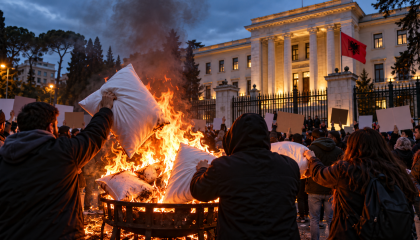
Thousands of people gathered in Tirana for another anti-government demonstration in the Albanian capital. Police used tear gas to disperse the crowd after violence broke out around government buildings.
The protest was the latest in a series of confrontations between demonstrators and police that have taken place since mid-October. Government buildings were attacked, and dozens of protesters were detained.
More than 300 protesters and police officers have been injured during the period of unrest, highlighting the continuing tension between authorities and opponents of the government. The repeated clashes have kept political instability at the forefront of public life in the capital, where demonstrations have become a major expression of dissatisfaction.
Italian protests spread through major cities
In Italy, thousands of people took to the streets in Milan, Rome, Turin, Naples, Bologna and Florence. Demonstrators threw bottles, stones and firecrackers during the protests, creating flashpoints in several urban centres.
Police carried out nine arrests and temporarily detained 371 people during demonstrations held in eight cities. Of those brought to police stations, 110 were minors.
The involvement of minors among those detained adds another dimension to the events, illustrating that street demonstrations can draw in people from a wide range of age groups. It also places added attention on how police handle large gatherings where peaceful participants, young people and those involved in disorder may be present at the same time.
Madrid protesters focus on pension protection
In Madrid, the central demands were tied to the future of the public pension system. Protesters called for pension increases to be linked to real inflation, arguing that retirement income should keep pace with rising prices.
They also sought an increase in the minimum pension so that it matches the minimum wage. Other demands included narrowing the gender pension gap and safeguarding public pensions from privatisation.
These issues have direct consequences for current and future retirees. Inflation can reduce the purchasing power of fixed incomes, making the method used to adjust pensions especially important for households dependent on monthly payments. Calls to close the gender gap also point to the unequal retirement outcomes that can result from differences in pay, work patterns and time spent outside paid employment.
Housing affordability remains a central concern in Portugal
In Portugal, demonstrators placed affordable housing at the centre of their demands. The issue affects people trying to rent or buy homes, as well as families facing the strain of rising accommodation costs.
Housing pressure has become a defining concern in many European cities, particularly where salaries do not stretch as far as rents, mortgages and other essential expenses. Demonstrations focused on housing bring attention to the practical effects of policy choices on where people can live, how much of their income goes toward accommodation and whether younger residents can remain in the communities where they work or study.
Different grievances, shared pressure
The demonstrations across Europe were driven by distinct national and local disputes, including opposition to war, concerns about education, allegations of corruption, housing costs and pension policy. Yet the events also revealed a broader pattern: public dissatisfaction can emerge through very different issues when people feel that core needs such as security, income, housing and trustworthy government are not being adequately addressed.
Not every demonstration followed the same course. Some remained focused on specific policy goals, while others escalated into confrontations that led to injuries and detentions. The contrast is significant. Peaceful protest can put public demands into view, but violence can shift attention toward policing, damage and public safety.
For governments across the continent, the challenge is not limited to managing crowds on a single day. The deeper task is responding to the grievances that bring people into the streets, whether they concern the cost of housing, the value of pensions, access to education, corruption or foreign policy. The latest protests demonstrate that those pressures remain active in cities from western Europe to the Balkans.
Related Reading
Frequently Asked Questions
What is Protests sweep across Europe from France?
Protests sweep across Europe from France is the main topic of this guide. The article explains the context, practical details, and next steps readers should understand.
Why does Protests sweep across Europe from France matter?
Protests sweep across Europe from France matters because readers are looking for a useful answer, not just a short summary. Good content should match search intent and help them decide what to do next.