How the brain updates memories without losing what came before
Usagevpn.com – Memories are rarely fixed snapshots. A familiar street can change over months as an old building is renovated: people may remember how it looked before construction began, the disruption of the work itself and the completed structure that eventually replaces it. These are closely related experiences, yet the brain usually keeps them distinct enough to make sense of the sequence.
Researchers at the Institute of Neurosciences, a public centre operated by the Spanish National Research Council (CSIC) and Miguel Hernández University, have explored how the brain manages that balancing act. Their study, published in PLOS Biology, points to a mechanism in the hippocampus that can help the brain add fresh information to an existing memory while preventing excessive overlap between old and new experiences.
A memory hub with a filtering role
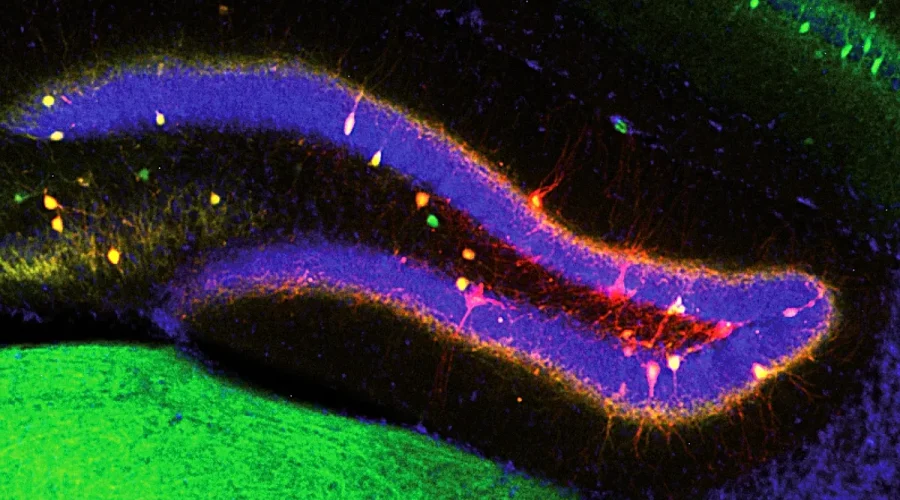
The work focuses on the dentate gyrus, a part of the hippocampus long associated with the formation of new memories. The hippocampus is important for remembering events and their context, including where and when something occurred. Within the dentate gyrus, the research team examined a particular class of neurons whose role is to restrain the activity of other cells.
This inhibition appears to act as a flexible control system. Rather than simply strengthening or weakening memory across the board, it may influence whether the brain treats a new experience as an addition to what is already known or protects an earlier memory from being altered by incoming details.
That distinction matters in everyday life. New information can be useful when it updates an understanding of a changing place, task or situation. At other times, however, blending too much new material into a stored memory could make it harder to retrieve the original event accurately. The study suggests the dentate gyrus may help negotiate these competing demands.
Experiments in mice
To investigate the process, scientists carried out experiments in mice and adjusted the level of inhibitory activity in the relevant neural circuit. The animals’ behaviour changed when inhibition was lower than usual, indicating that the degree of restraint placed on the network can affect how memories are expressed and retrieved.
“With lower-than-usual levels, their behaviour was more consistent with better memory retrieval and a more detailed recollection,” explains Encarni Marcos, co-lead of the study and head of this line of research at the IN CSIC-UMH.
The finding does not mean that reducing inhibition is universally beneficial. Memory is not improved simply by allowing more neural activity. The team’s computational model indicated that the effect depends on how much information must be handled. When the memory burden was relatively light, lower inhibition supported performance. Once the volume of information became much greater, that advantage disappeared.
In practical terms, a brain system that works well for recalling a small set of details may need a different setting when it is confronted with a far more complex stream of information. This could help explain why remembering and updating experiences is not a single, uniform process.
Context determines what the brain needs
The researchers propose that the dentate gyrus can shift between two broad modes. In one, it supports the integration of newly arriving information. In the other, it helps preserve an existing representation when new stimuli might otherwise interfere with it.
Which mode is more useful depends on context and on what the task requires. A changing environment may call for a memory system that readily incorporates updates. In another setting, accurate recall may depend on maintaining separation between an earlier experience and what happens later.
“What we infer from these results is that there is a mechanism that dynamically adjusts the mode of operation by using inhibition,” Marcos concludes.
The study adds detail to an important question in neuroscience: how the brain can remain adaptable without making stored memories unstable. Human memory must be capable of learning from new experiences, but it also needs to retain enough of the past to provide continuity and reliable context.
The mouse experiments and the computational model offer a framework for understanding that trade-off at the level of neural circuits. They do not mean that the same results can be directly transferred to every aspect of human memory. Still, the work highlights a possible biological principle: the brain may actively regulate how open a memory network is to change, rather than passively recording each new event.
For people trying to understand why memories can feel vivid, incomplete or shaped by later events, the research underscores the complexity of recall. Remembering is not merely the playback of a stored record. It involves a living system that continually decides how to organise old knowledge alongside new information.
Related Reading
Frequently Asked Questions
What is Scientists uncover how the brain adds?
Scientists uncover how the brain adds is the main topic of this guide. The article explains the context, practical details, and next steps readers should understand.
Why does Scientists uncover how the brain adds matter?
Scientists uncover how the brain adds matters because readers are looking for a useful answer, not just a short summary. Good content should match search intent and help them decide what to do next.