Oktoberfest prepares for its busiest midpoint as “Italian weekend” approaches
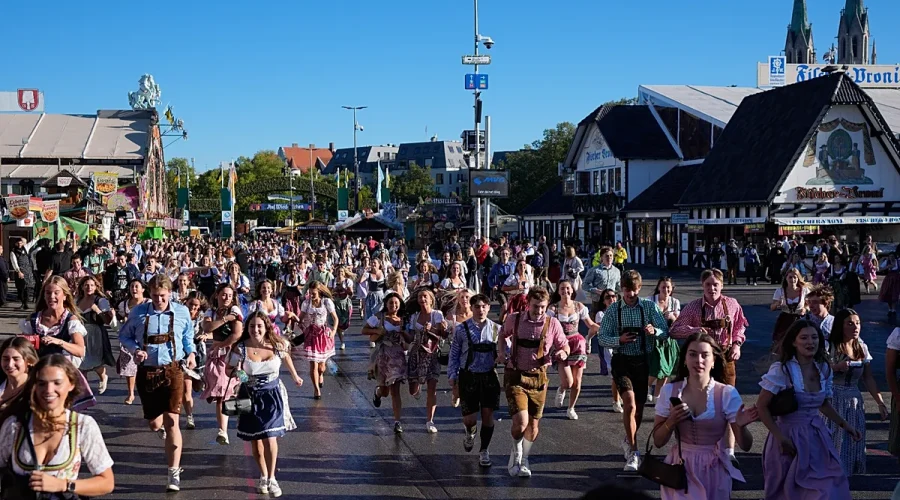
Usagevpn.com – Munich’s Oktoberfest is heading into one of its traditionally most crowded stretches, with 26 and 27 September marking the midpoint of the 2026 festival. The weekend, widely known as “Italian weekend,” is expected to bring tens of thousands of visitors from Italy to the Theresienwiese, putting renewed focus on how organisers manage capacity and crowd safety.
The heightened attention follows severe congestion during last year’s middle Saturday. In 2025, visitor numbers rose to a level that forced officials to temporarily close access to the festival grounds. Sections of Wirtsbudenstraße became so packed that people were unable to move in either direction. Videos shared by attendees described the situation as a “nightmare,” with scenes that appeared close to a mass-panic scenario.
For 2026, the city is seeking to identify dangerous crowd density earlier, before conditions reach that point. A larger reliance is being placed on surveillance cameras and artificial-intelligence-supported systems that track movement patterns across the grounds. The aim is to give organisers a clearer view of where people are gathering, how quickly spaces are filling and when access measures may be necessary.
A weekend with a long-established Italian connection
The name “Italian weekend” has been used for decades, although there is no single event or clearly documented starting year behind the label. Its meaning is practical as much as cultural: Munich is relatively accessible from northern Italy, particularly via the Brenner Pass, and many travellers arrive by car, coach or motorhome for a short autumn trip.
Public holidays and extended weekends in Italy during September can also make the timing attractive for visitors. The result is a noticeably international atmosphere at the Wiesn, the local name commonly used for Oktoberfest and its Theresienwiese site.
The Italian presence is visible beyond the festival tents. Munich daily newspapers have often produced bilingual front pages during these days. Italian Carabinieri and fire-service personnel from Bolzano also work alongside Munich police on site, assisting with patrols and communication where needed. Their presence reflects both the scale of cross-border travel and the practical need to help visitors navigate a large, busy event.
Why the middle weekend matters
Oktoberfest draws large crowds throughout its run, but the midpoint can be especially demanding for organisers. Weekend visitors, day-trippers and international guests arrive at the same time, while popular beer tents, walkways and entrance areas can fill quickly. A crowd-management decision may affect not only those already inside the grounds, but also people travelling toward the site and waiting at nearby access points.
Temporary closures are intended to limit pressure on the most congested areas. They do not necessarily signal the end of the event for the day, but they can leave visitors waiting until the flow of people inside has eased. For anyone planning to attend during the busiest hours, flexibility is likely to be important: arrival times, access routes and the availability of space can change rapidly when visitor numbers rise.
Mobile-phone data from the first part of this year’s festival has also shown that attendees are spending more time on the grounds. Visitors stayed for an average of 15 minutes longer than they did in 2025. That increase may appear modest on an individual level, but at a major event it can add to pressure during the day’s peak periods because fewer people are leaving while new guests continue to arrive.
The strongest concentration of visitors in the opening week occurred each day between 17:00 and 18:00. The early evening period is therefore a key window for crowd monitoring, especially as people move between tents, food stands, rides and the main pedestrian routes.
Safety measures under close watch
The experience of 2025 has made crowd control a central concern rather than a background logistical issue. In very dense environments, even ordinary movement can become difficult when people are unable to change direction or find space to step aside. Monitoring systems can help identify these conditions, but their effectiveness also depends on quick decisions, clear communication and cooperation from visitors.
Festival-goers can reduce stress by allowing extra time for travel, keeping an eye on local access information and avoiding attempts to push through tightly packed areas. Groups may also find it easier to agree on a meeting point before entering, as mobile service and movement can become challenging in the busiest parts of the grounds.
With Italian weekend arriving at the festival’s halfway point, Munich faces a familiar test: maintaining the celebratory character of Oktoberfest while ensuring that its most popular days remain manageable. The city’s expanded use of camera networks and AI-based crowd tracking will be watched closely as visitor flows build across 26 and 27 September.
Related Reading
Frequently Asked Questions
What is Oktoberfest halfway through?
Oktoberfest halfway through is the main topic of this guide. The article explains the context, practical details, and next steps readers should understand.
Why does Oktoberfest halfway through matter?
Oktoberfest halfway through matters because readers are looking for a useful answer, not just a short summary. Good content should match search intent and help them decide what to do next.