North Korea Fires at Least One Ballistic Missile into Sea
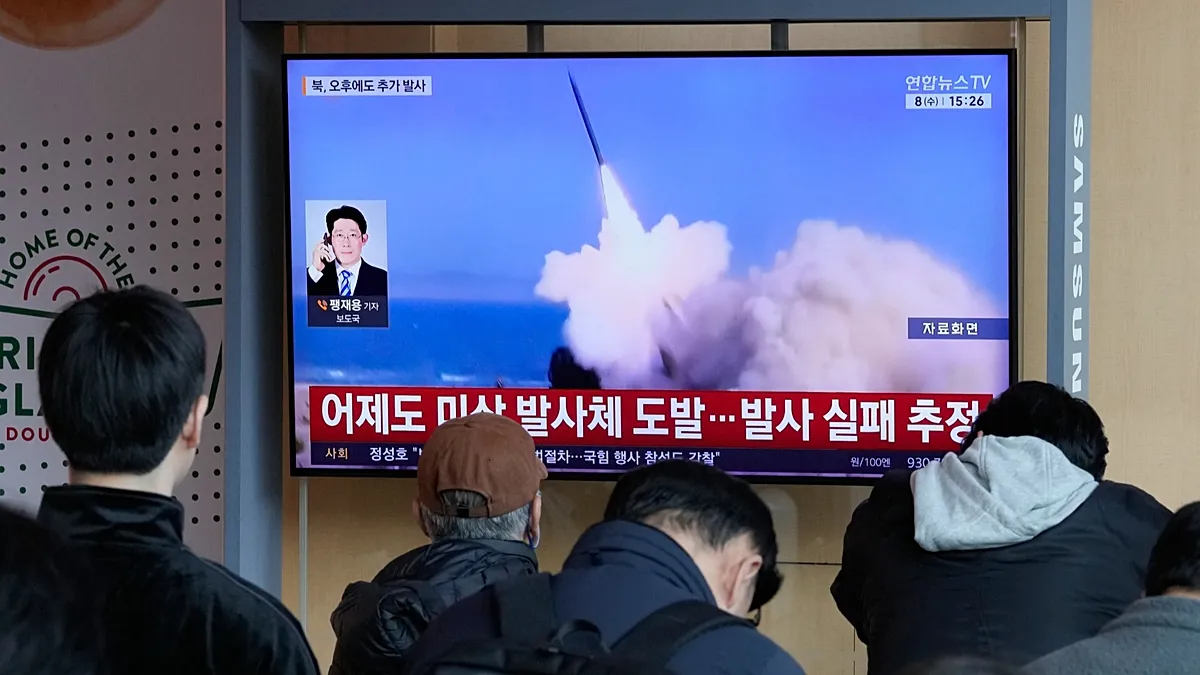
Usagevpn.com – North Korea fires at least one ballistic missile into the Sea of Japan, Seoul’s military command confirmed Thursday. The launch occurred around 5:00 pm local time from the Wonsan area along North Korea’s eastern coastline—a location that has historically served as a critical military and naval hub for the isolated state.
South Korea’s Joint Chiefs of Staff communicated the development to news organizations shortly after detection, noting that the projectile traveled toward what Seoul refers to as the East Sea, a body of water also internationally recognized as the Sea of Japan.
Allied Coordination and Surveillance
Japan’s defense ministry independently corroborated the launch through its official X platform, initially posting that “something that may be a ballistic missile has been launched from North Korea.” A follow-up communication confirmed that the missile had passed without affecting Japanese territory or airspace. Read more: Asia-Pacific security updates
The JCS subsequently announced that Seoul had intensified its surveillance operations and maintained elevated readiness levels while coordinating closely with security partners Washington and Tokyo.
“Our military detected a short-range ballistic missile launched from the Wonsan area of North Korea at around 5:00 pm,” South Korea’s Joint Chiefs of Staff stated in its official message.
Regional Tensions and Military Posture
Pyongyang has consistently characterized itself as an “irreversible” nuclear power since the collapse of leader Kim Jong-un’s 2019 summit with then-US President Donald Trump. That historic meeting ultimately failed due to disagreements regarding the scope of denuclearization commitments and the extent of sanctions relief that Washington would provide.
Kim Yo-jong, the influential sister of North Korea’s supreme leader, delivered a pointed statement on Wednesday through state media channels. She declared that Pyongyang’s “leadership will set up additional military options which are obviously due to Japan’s transformation.” This warning comes amid growing concerns in Seoul about Japan’s military modernization efforts.
Tokyo’s Defense Minister Shinjiro Koizumi articulated a sense of urgency earlier this week, arguing that Japan’s military capabilities require substantial enhancement. A newly released government assessment highlighted mounting threats from three directions: China’s expanding influence, Russia’s military activities, and North Korea’s persistent provocations.
FAQ: Understanding the Missile Launch
What type of missile was launched? South Korea’s military identified it as a short-range ballistic missile originating from the Wonsan area.
Where did the missile land? The projectile was fired into the Sea of Japan, also known as the East Sea in South Korean terminology.
How did Japan respond? Japan’s defense ministry confirmed the launch through official channels and verified that no Japanese territory or airspace was affected.
What is the broader context? North Korea has deepened its relationship with Russia while maintaining confrontational postures toward regional neighbors amid Japan’s military expansion.
Japan increased its defense budget by 9.7 percent in 2025, reaching $62.2 billion (equivalent to €53.8 billion), representing 1.4 percent of GDP—the highest proportion since 1958.
“Ours isn’t the defence meant to wage wars, but to prevent new wars, strictly kept to self-defence and within the scope of our (pacifist) Constitution and international laws,” Japan’s defense ministry explained in its official statement.
China, traditionally North Korea’s closest ally, has expressed concern over what it describes as Japan’s “new militarism.” Beijing views Tokyo’s military buildup through the lens of historical grievances and contemporary strategic competition in the Asia-Pacific region.
South Korea’s President Lee Jae Myung, who assumed office in June 2025, has pursued a notably different approach from his hawkish predecessor. The dovish leader has extended repeated offers for dialogue with North Korea without imposing preconditions, seeking to open channels with the hermetic regime despite its lack of response thus far.
The Korean Peninsula remains technically in a state of war, as the 1950-53 Korean conflict concluded with an armistice agreement rather than a formal peace treaty. This unresolved status continues to shape diplomatic and military calculations across the region.
Analysts note that North Korea has simultaneously deepened its economic and military relationship with Russia, providing troops and munitions for Moscow’s ongoing war in Ukraine. In return, Pyongyang receives financial support and potential diplomatic backing on the international stage.