Macron Promises Accountability After Violence Sweeps French Cities
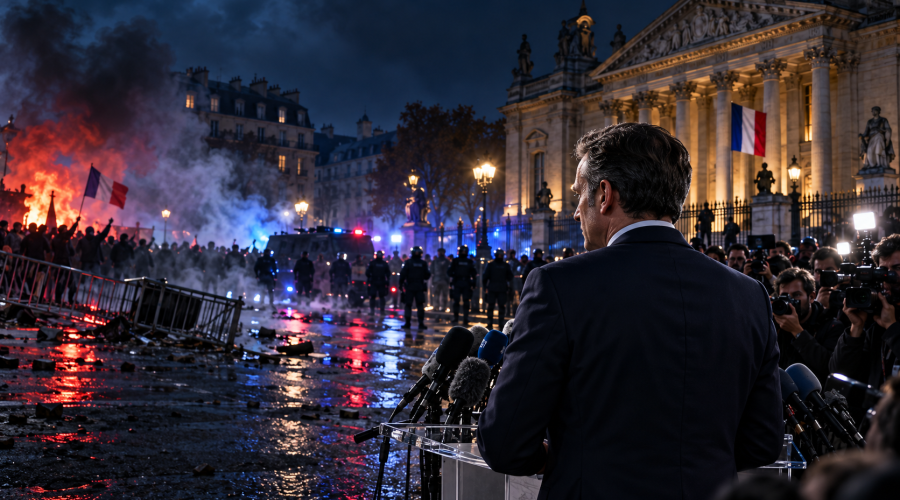
Usagevpn.com – President Emmanuel Macron has pledged that people responsible for looting, destruction and attempts to destabilise France will face consequences after demonstrations over living costs and student conditions erupted into widespread violence on Saturday.
In a televised address on Sunday, Macron sought to draw a firm line between peaceful demonstrators and those he said had exploited public anger to attack buildings, businesses and public institutions. The unrest added new pressure to an already fraught political climate as France moves toward next April’s presidential election.
“Those who looted will have to pay for the damage, and those who sought to bring down the Republic will be held accountable,” Macron said.
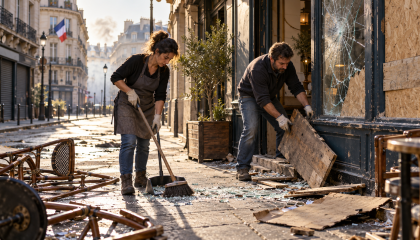
The president said no grievance could excuse the scenes witnessed across the country. One of the most striking incidents took place in Limoges, where a historic town hall was set alight during the disorder. Shops were damaged in several major cities as fires, vandalism and confrontations with security forces followed rallies that had initially begun peacefully.
Peaceful Protesters and Violent Actors
Macron acknowledged that many French people were frustrated and angry, and described some of the concerns raised during the protests as legitimate. But he urged the public not to confuse people marching peacefully with those using large crowds as cover for criminal acts.
He condemned what he called “insurrectionist elements from the radical far left, joined by numerous criminals,” and appealed to political leaders across the spectrum to denounce violence without qualification. His remarks appeared intended both to recognise the social pressures driving the demonstrations and to reject any suggestion that unrest could be treated as an acceptable form of political expression.
“Nothing justified” the violence seen across France, Macron said.
The distinction is important in a country where public demonstrations are a longstanding part of political life. Saturday’s gatherings brought together people concerned about rising everyday costs and worsening conditions for students. Those demands, Macron said, should be addressed through debate and democratic participation rather than through destruction.
More than 2,000 people were arrested during the unrest, while over 600 police officers, gendarmes and firefighters were injured. The scale of those figures underlined the intensity of the clashes and the strain placed on emergency services during the disturbances.
Government Faces Questions Over Security Response
Macron’s intervention came as his government faced intense scrutiny over the policing operation. The president, the interior minister and the prime minister have all been pressed to explain how authorities responded as protests escalated in multiple cities.
Criticism has come from opposing political directions. Marine Le Pen, the far-right leader who is ahead in polling before the presidential contest, accused Macron of laxisme, a French term suggesting excessive leniency or weakness in maintaining order. Her criticism reflects a wider argument on the right that the government has not acted forcefully enough against those responsible for violence.
Progressive and Green political groups, meanwhile, challenged what they viewed as excessive use of force against protesters. The debate has highlighted the difficult balance facing authorities: maintaining public order and protecting emergency workers while safeguarding the right to demonstrate.
Jean-Luc Mélenchon, leader of the far-left LFI movement, has also faced accusations from critics that his rhetoric has contributed to disorder and further violence. Macron did not single out individual political figures in his address, but his call for a united condemnation of the riots was directed at a political class deeply divided over the causes of the crisis and the proper response.
Protection for Cities, Public Buildings and Businesses
The president did not unveil new national security measures before leaving for Kuwait on Monday. Instead, he said local authorities would work directly with police to protect areas most exposed to further disruption.
Macron said the aim was to safeguard “our cities, our public buildings and our stores”.
That focus reflects the immediate impact of the violence on local communities. Damage to town halls and other public facilities can disrupt everyday services, while attacks on shops can affect workers, owners and residents long after the demonstrations have ended. Fires and clashes also place firefighters and other first responders at risk while diverting resources from other emergencies.
The events have intensified the political stakes ahead of the presidential election. Macron said France deserved a “beautiful election” shaped by argument and public debate, rather than intimidation and destruction. His message was an appeal for the campaign to remain within democratic boundaries even as public dissatisfaction and rivalry between political camps sharpen.
For many people who joined the protests peacefully, the central issues remain the cost of living and student conditions. Macron’s challenge will be to address those concerns while ensuring that violence does not overwhelm the broader debate. The government’s handling of both tasks is likely to remain closely watched in the months leading to the election.
Related Reading
Frequently Asked Questions
What is news Macron vows to hold those?
news Macron vows to hold those is the main topic of this guide. The article explains the context, practical details, and next steps readers should understand.
Why does news Macron vows to hold those matter?
news Macron vows to hold those matters because readers are looking for a useful answer, not just a short summary. Good content should match search intent and help them decide what to do next.