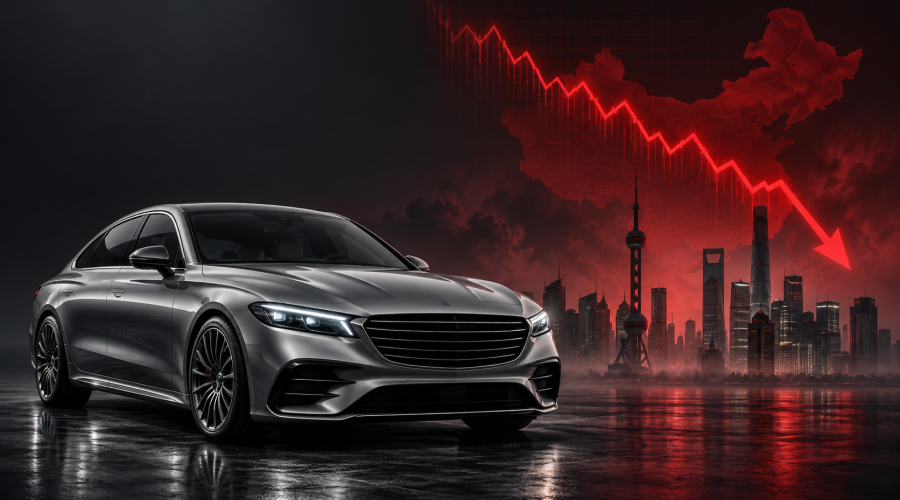
Mercedes-Benz trims 2026 expectations as China pressures deepen
Usagevpn.com – Mercedes-Benz has scaled back its financial expectations for 2026, underscoring the mounting strain facing Germany’s premium carmakers in China and across an increasingly cost-sensitive global market.
The company said it now expects core profit for the full year to be broadly unchanged at roughly €5.8 billion. That represents a sharp retreat from its earlier expectation of growth of at least 15%.
Its outlook for the profitability of the core passenger-car division was also reduced. Mercedes-Benz now anticipates a margin of between 2% and 3%, compared with a previous range of 3% to 5%.
Third-quarter figures point to weaker profitability
Preliminary results for the third quarter showed core profit of €1.77 billion. The car division produced a 2.5% margin over the period, placing it within the company’s newly lowered annual target range.
Mercedes-Benz is scheduled to publish its full third-quarter results on Wednesday. Investors reacted quickly to the revised forecast, sending the company’s shares down by more than 4% after the announcement.
The move adds Mercedes-Benz to a growing list of major German manufacturers that have had to reassess their outlooks. Volkswagen and BMW each saw their shares fall by about 2%, and both companies had already reduced their own full-year projections.
China remains a central challenge
China has long been a crucial market for European luxury brands, but the competitive landscape has become far more difficult. Domestic manufacturers, including BYD and Xiaomi, are intensifying pressure with a rapidly expanding range of vehicles and aggressive competition for buyers.
For Mercedes-Benz, the impact is visible in delivery figures. Vehicle deliveries in China dropped another 29% during the first nine months of 2026. The decline follows a difficult 2025, when deliveries in the country fell to their lowest level since 2016.
Weak demand and fierce rivalry do not affect sales volumes alone. They can also weigh on pricing, model mix and the ability to protect margins, particularly when manufacturers are already dealing with higher material costs. The revised Mercedes-Benz outlook reflects how those forces can combine to narrow profitability even for established premium brands.
The challenge is broader than one company’s quarterly performance. European carmakers are trying to preserve their position in a market where consumer expectations, technology competition and cost structures are changing quickly. A weaker result in China can have an outsized influence on group earnings because of the market’s scale and its previous importance to German automotive groups.
Cost pressures shape production decisions
Mercedes-Benz chief executive Ola Källenius has called on German employees to take on additional working hours without extra pay as the company seeks to improve its competitiveness. At the same time, the manufacturer is increasing production capacity in Hungary.
Costs in Hungary are around 70% lower than in Germany.
The comparison highlights the pressure on manufacturers to review where vehicles and components can be produced most efficiently. Labour costs, energy expenses, supply-chain logistics and access to skilled workers all influence such decisions. For companies with extensive operations in Germany, efforts to contain costs can become especially sensitive because they affect employees, unions and long-standing industrial locations.
Mercedes-Benz’s updated guidance suggests that management sees the present pressures as significant enough to alter near-term financial targets, rather than simply treating them as a temporary quarterly setback. The company’s upcoming full results will offer a closer view of how sales trends, costs and regional performance contributed to the lower outlook.
A wider restructuring era for German carmakers
Volkswagen is pursuing an even larger restructuring programme, with plans to eliminate 120,000 jobs worldwide by the end of the decade. If completed, the reduction would rank as the largest restructuring in automotive history, exceeding the roughly 50,000 jobs lost after General Motors entered bankruptcy in 2009.
The scale of those plans illustrates the depth of the adjustment now under way across the sector. Carmakers are balancing the need to invest in new technology and remain competitive in key markets while also protecting earnings in an environment of softer demand and rising input costs.
For investors, the latest Mercedes-Benz revision is another reminder that premium branding does not fully shield a manufacturer from wider market changes. For workers and suppliers, it points to continued pressure for efficiency measures as companies reconsider production footprints and operating costs.
Mercedes-Benz’s revised target of around €5.8 billion in core profit still represents a substantial earnings base, but the shift from an anticipated double-digit increase to flat performance marks a meaningful change in expectations. The company’s performance in China, together with the course of material costs and the effectiveness of its cost measures, will remain central to its prospects through the rest of 2026.
Related Reading
Frequently Asked Questions
What is Mercedes Benz cuts 2026 profit outlook?
Mercedes Benz cuts 2026 profit outlook is the main topic of this guide. The article explains the context, practical details, and next steps readers should understand.
Why does Mercedes Benz cuts 2026 profit outlook matter?
Mercedes Benz cuts 2026 profit outlook matters because readers are looking for a useful answer, not just a short summary. Good content should match search intent and help them decide what to do next.