Maricarmen Abascal Dies After Becoming a Defining Figure in Spain’s Housing Protests
Usagevpn.com – Maricarmen Abascal, the Madrid pensioner whose battle to remain in the home she had occupied for seven decades became a powerful symbol of Spain’s housing emergency, has died. Her struggle transformed a personal eviction case into a national rallying point, drawing vast crowds to demonstrations and intensifying pressure on the government to act.
Abascal lived in her flat in the Retiro district of Madrid for 70 years. Her situation gained national attention after her rent rose beyond what she could afford, placing her at risk of losing the home that had long been at the centre of her life. For many people facing rising rents and limited housing options, her experience came to represent wider fears about affordability, displacement and security for tenants.
An Eviction That Sparked a Wider Movement
Her removal from the property did not happen immediately. Eviction efforts were attempted several times, and Abascal was ultimately forced out on the fourth attempt, in full view of journalists and cameras. Images of the elderly woman leaving her home gave added urgency to a protest movement that had already been growing in cities across Spain.
After the eviction, Abascal was admitted to hospital. Yet the story did not end with her departure from the flat. Public pressure, demonstrations and negotiations with authorities led the property fund responsible for the eviction to reverse its position. An agreement allowed her to return to her home.
That outcome was viewed by many protesters as an important, if limited, victory. It showed how an individual case could expose broader tensions in a housing system where renters often face sharp increases in costs while available homes remain scarce. At the same time, Abascal’s case underscored the uncertainty experienced by people who lack the means to absorb sudden rent increases or secure alternative accommodation.
Housing Pressure Becomes a National Political Issue
Spain’s housing crisis has developed into a major political challenge despite the country’s strong economic growth. As Europe’s fourth-largest economy expands, many Spaniards still find themselves unable to buy or rent homes at prices within reach of their incomes. The gap between economic growth and everyday housing costs has become increasingly visible in public debate.
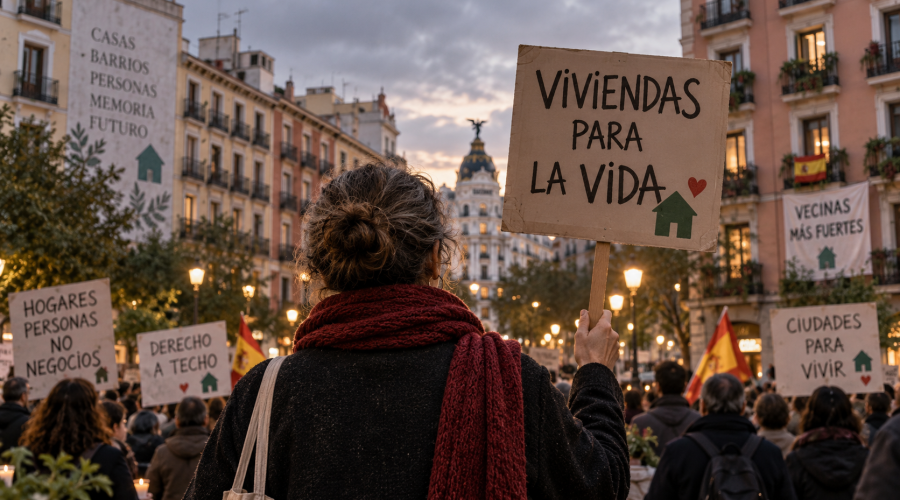
Demonstrators have called for stronger legal safeguards for tenants, tougher action against fraud and an end to evictions when no replacement housing is available. Their demands reflect concern not only for people already facing removal from their homes, but also for younger adults, families and older residents struggling to stay in the communities where they live.
Abascal’s ordeal became especially significant because it gave a human face to those wider concerns. Her long connection to her Retiro flat made the prospect of eviction particularly resonant. For protesters, the issue was not simply a dispute over a contract or a rent increase; it was a question of whether people can remain in homes and neighbourhoods built around decades of personal history.
Political Fallout and Early Elections
The housing dispute also added to the pressure on Prime Minister Pedro Sánchez’s government. The administration suffered a damaging defeat in Parliament after right-wing opposition parties rejected emergency decrees intended to address the housing crisis.
The legislative setback came as anger over housing continued to build. A new wave of demonstrations in Barcelona turned violent on Monday night, only hours after Sánchez announced that Parliament would be dissolved and that Spain would hold an early general election on 29 November.
The decision to call an election placed housing policy at the centre of an already unsettled political moment. Voters are likely to weigh the government’s response to rents, shortages and evictions against the proposals offered by opposition parties. The issue has moved beyond specialist policy discussions and into a broader debate about living standards, inequality and the role of the state in protecting residents from displacement.
Fresh Measures Approved
On Tuesday, the government approved urgent housing measures resembling those that Parliament had rejected the previous week. The renewed action reflected the scale of public pressure following demonstrations across the country and the political consequences of failing to deliver a response.
The measures arrive amid a difficult balance for policymakers. They must address the immediate risks faced by tenants while responding to a shortage of homes and the rising cost of living. Protesters have made clear that they want protections that can prevent people from being removed from their homes when there is nowhere else for them to go.
Abascal’s death closes the chapter on a case that helped bring those demands into sharp focus. Her name became closely associated with the housing protests because her experience captured the emotional and practical consequences of an eviction. Although she was eventually able to return to her flat, the larger crisis that brought supporters onto the streets remains unresolved.
As Spain approaches the 29 November election, housing is set to remain one of the country’s most pressing concerns. The demonstrations surrounding Abascal’s case showed how quickly frustration over rent and access to homes can develop into a nationwide movement. Her legacy now rests in the continuing call for stronger tenant protections and a housing system that does not leave people without an alternative place to live.
Related Reading
Frequently Asked Questions
What is Maricarmen symbol of Spain s housing?
Maricarmen symbol of Spain s housing is the main topic of this guide. The article explains the context, practical details, and next steps readers should understand.
Why does Maricarmen symbol of Spain s housing matter?
Maricarmen symbol of Spain s housing matters because readers are looking for a useful answer, not just a short summary. Good content should match search intent and help them decide what to do next.