Senior Libyan Intelligence Leader Slain in Benghazi Car Bombing
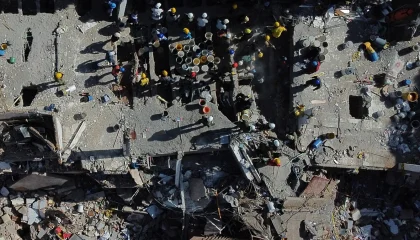
Usagevpn.com – A devastating car bombing in Benghazi has claimed the life of Fawzi al-Mansouri, the military intelligence chief for the Libyan National Army (LNA), confirming a significant blow to the Haftar family’s security apparatus. The assassination occurred on Monday evening when an explosive device attached to al-Mansouri’s vehicle detonated as he departed from a local mosque, according to official statements released on Tuesday.
Al-Mansouri stood as one of the most influential figures within the LNA’s intelligence network, maintaining particularly close relationships with the Haftar family. His career spanned critical periods in Libya’s modern history, most notably serving as a pivotal architect in the LNA’s military campaigns against jihadist organizations, including the Islamic State group, between 2014 and 2017 across eastern Libya. His expertise and leadership proved instrumental during these operations that helped reshape the security landscape in the region.
Haftar Family Response and Investigation
Khaled Haftar, son of Field Marshal Khalifa Haftar and the LNA’s chief of the general staff, announced the opening of a formal investigation into the assassination. In a public statement, Khaled characterized the attack as employing what he described as “a despicable terrorist tactic,” emphasizing that the violence represented more than a localized incident. “Terrorism is a project targeting the entire region, not just Libya,” the statement declared, framing the bombing within broader regional security concerns.
The LNA officially designated al-Mansouri as a “heroic martyr” in their commemoration of his service. Beyond his intelligence work, al-Mansouri held considerable prominence during Haftar’s ambitious 2019 military offensive aimed at capturing Tripoli. This major operation received substantial backing from both Russia and Egypt, representing one of the most significant attempts to consolidate power under Haftar’s leadership. Despite initial momentum, the offensive ultimately faltered against forces loyal to the Tripoli government, which received crucial support from Turkey.
Security Implications and Analyst Commentary
The timing and sophistication of the bombing have raised serious questions about security vulnerabilities within LNA-controlled territories. Hamish Kinnear, an analyst with the UK-based research firm Verisk Maplecroft, noted that the attack represents a substantial setback to the Haftars’ efforts to project stability across their domains. “An attack of this sophistication in an LNA stronghold is also a major blow to the group’s security credentials,” Kinnear observed, highlighting the strategic implications of the assassination.
Kinnear further emphasized that the intelligence capabilities required to successfully target such a prominent figure suggest that the responsible party possesses significant operational resources. “The intelligence required to target such a high-profile figure successfully is indicative of significant capabilities on the part of the responsible actor,” the analyst explained. Authorities have not yet publicly identified those responsible for the bombing.
Libya’s Political Landscape and the Washington-Mediated Plan
Libya has experienced political fragmentation since NATO’s intervention contributed to the overthrow of Muammar Gaddafi in 2011. The country currently operates under two competing administrations vying for legitimacy and control. The United Nations-recognized government in Tripoli, led by Prime Minister Abdulhamid Dbeibah, contends with a rival administration based in Benghazi that receives backing from the elder Haftar, who functions as the de facto ruler of eastern and southern Libya.
Dbeibah has governed since 2021 following a political agreement brokered by the United Nations, though he lacks a fresh electoral mandate. A planned election scheduled for December 2021 was ultimately cancelled due to disagreements regarding candidate eligibility and the legal framework governing the vote. His administration has encountered persistent domestic challenges, including widespread protests in Tripoli earlier this year concerning electricity shortages.
Haftar, a former general under Gaddafi who defected and resided in the United States for nearly twenty years before returning to Libya following the 2011 uprising, transformed the LNA into the dominant military force in eastern and southern regions. The Tripoli-based government issued a statement condemning the “terrorist attack” against al-Mansouri, expressing that it denounced the killing “regardless of one party’s positions or alliances.”
Regional Stability and Future Outlook
Following the assassination, Khaled Haftar’s office announced that authorities had arrested a “terrorist cell in Benghazi that was preparing to carry out acts of sabotage,” though officials did not confirm whether this group maintained connections to al-Mansouri’s killing. Benghazi authorities organized al-Mansouri’s funeral on Tuesday afternoon, releasing photographs depicting armed men in military fatigues alongside senior LNA officials, including Khaled and Saddam Haftar.
In a formal declaration, the LNA pledged that it would “not cease fighting terrorism and will continue our struggle for the stability and security of Libya, as well as for the unification of its institutions.” Libya possesses Africa’s largest proven oil reserves, resources that have simultaneously fueled political divisions and provided economic leverage for competing factions.
Efforts to consolidate the country’s executive powers continue under a Washington-mediated framework that the LNA has publicly endorsed. According to leaked provisions of the plan, Prime Minister Abdulhamid Dbeibah would maintain leadership of the Tripoli-based government while Lieutenant General Saddam Haftar—also Khalifa’s son—would assume a senior national executive position, potentially heading a unified presidential structure. Saddam Haftar received his appointment as deputy commander-in-chief of the LNA in August 2025 as part of a comprehensive restructuring that distributed operational command among Khalifa’s principal heirs.
Kinnear expressed skepticism regarding the prospects for American unification efforts, noting that under the proposed roadmap, neither side “is likely to be satisfied with their respective positions for long.” He warned that “a new, destabilising power struggle could soon emerge.” Libya expert Jalel Harchaoui similarly suggested that the killing would “disrupt, or at the very least complicate, ongoing efforts to stabilize the country’s political trajectory.”
Related Reading
Frequently Asked Questions
What is Libyan Marshal Haftar s intelligence chief?
Libyan Marshal Haftar s intelligence chief is the main topic of this guide. The article explains the context, practical details, and next steps readers should understand.
Why does Libyan Marshal Haftar s intelligence chief matter?
Libyan Marshal Haftar s intelligence chief matters because readers are looking for a useful answer, not just a short summary. Good content should match search intent and help them decide what to do next.