La Rábida: The Huelva Monastery Linked to Columbus’s Atlantic Voyage
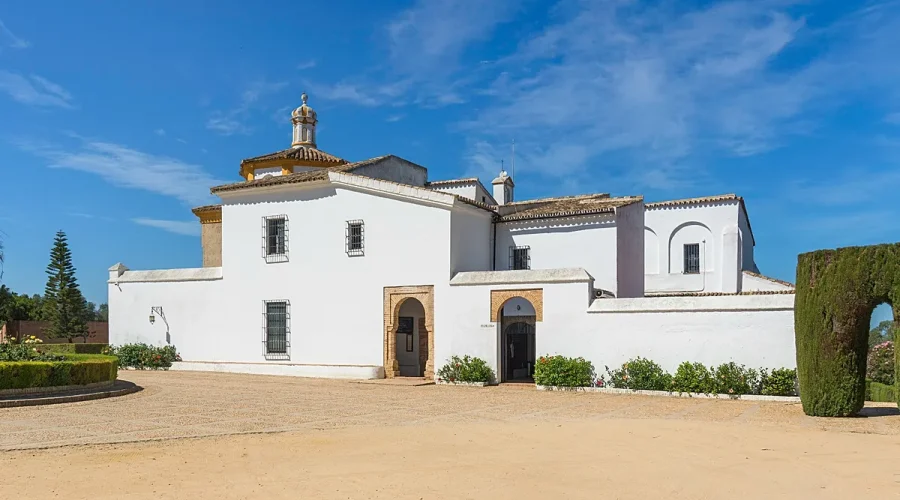
Usagevpn.com – On an elevated stretch of land near Huelva, where the Tinto and Odiel rivers meet before flowing into the Atlantic, the Monastery of Santa María de la Rábida remains closely tied to one of history’s most consequential expeditions. Its Franciscan community offered Christopher Columbus shelter and influential support at a moment when his plan to sail west had repeatedly failed to win royal approval.
The monastery stands near Palos de la Frontera, the port from which the expedition departed on 3 August 1492. For visitors, La Rábida is more than a religious monument: it is a place that connects the quiet setting of a medieval hermitage with the political, maritime and personal decisions behind a journey that transformed relations between Europe and the Americas.
From retreat to meeting place
Franciscan friars had established themselves in the area in the early 13th century, when the site was a modest hermitage beside the Huelva estuary. For generations, it was principally a place of prayer and seclusion. Its wider historical importance emerged much later, when Columbus arrived seeking help for an ambitious maritime proposal.
He had spent years attempting to persuade European rulers to support a western route to the Indies. Portugal, France and Italy had not provided the backing he sought. He had also approached the crowns of Castile and Aragon, but their attention was absorbed by the campaign against Granada, the final Muslim stronghold on the Iberian Peninsula after more than 770 years of Reconquista.
At La Rábida, Columbus found a community prepared to listen. The convent became a refuge for the navigator and a bridge to the royal court. The friars understood that securing an audience with the Catholic Monarchs could determine whether the project remained only a proposal or became an expedition.
Friar Juan Pérez and royal support
Among the Franciscans associated with Columbus’s cause was Friar Juan Pérez, who had served as confessor to Queen Isabella I of Castile. His connection to the queen made him an important intermediary. Together with other supporters, he helped bring Columbus’s proposal back before the Catholic Monarchs.
The eventual backing of Isabella I gave the voyage the authority and resources it needed to proceed. Columbus believed he was opening a new trade route to the Indies by crossing the Atlantic from west to east. Instead, the expedition reached lands unknown to Europeans, altering the map of the world and creating a lasting connection between continents that had previously had no knowledge of one another.
Isabella’s role also carries legal and moral significance in accounts of the early period of Spanish rule in the newly encountered territories. She required that Indigenous peoples be treated as Castilian citizens and free vassals, protected against abuse and enslavement. Her will continued to address the status and protection of these new subjects, and it is often regarded as an important legal milestone anticipating later ideas of human rights.
Our Lady of Miracles
The monastery still preserves the image of Saint Mary of La Rábida, also called Our Lady of Miracles. Tradition holds that Columbus prayed before the statue shortly before leaving on the Atlantic crossing. At the time, his enterprise appeared highly uncertain to many observers, and sailors considering the voyage could reasonably fear that they might never return.
The chapel provides a tangible link with the spiritual dimension of the expedition. Its calm atmosphere contrasts sharply with the scale of what followed: an encounter between societies on opposite sides of the Atlantic whose consequences would shape politics, trade, religion, language and human lives for centuries.
The Pinzón brothers and the crews of Palos
Royal approval alone could not put the expedition to sea. Columbus also needed ships and experienced sailors willing to undertake a journey into waters many regarded with suspicion. That made the participation of Palos de la Frontera’s maritime community essential.
The Pinzón brothers were especially important. Martín Alonso Pinzón, a respected local navigator, used his reputation to support the undertaking and helped recruit much of its crew. His involvement helped overcome doubts among sailors who were reluctant to join Columbus’s venture.
Martín Alonso Pinzón commanded the caravel La Pinta, while his brother Vicente Yáñez Pinzón took command of La Niña. A third brother, Francisco Martín Pinzón, sailed as master, or second-in-command, aboard La Pinta. Their presence gave the expedition experienced nautical leadership across its fleet.
Columbus himself captained the nao Santa María. Together, the three vessels departed from Palos on 3 August 1492. The support of the Pinzón family, combined with the intervention of La Rábida’s friars and the eventual decision of Isabella I, made possible a voyage that might otherwise never have left the Andalusian coast.
A Place to Read History in Its Landscape
La Rábida’s importance lies partly in how clearly it reveals that major historical events rarely rest on one person’s determination alone. Columbus arrived with a proposal, but the project required religious allies, a royal decision, local seafaring knowledge and crews prepared to face an unknown route.
Walking through the monastery today means moving through a setting that witnessed those converging forces. The rivers, the nearby Atlantic and the port communities around Palos help explain why this quiet Franciscan site became central to an expedition whose effects reached far beyond southern Spain.
Related Reading
Frequently Asked Questions
What is La Rábida monastery?
La Rábida monastery is the main topic of this guide. The article explains the context, practical details, and next steps readers should understand.
Why does La Rábida monastery matter?
La Rábida monastery matters because readers are looking for a useful answer, not just a short summary. Good content should match search intent and help them decide what to do next.