EU foreign policy chief backs Ukraine’s refinery strikes as self-defence
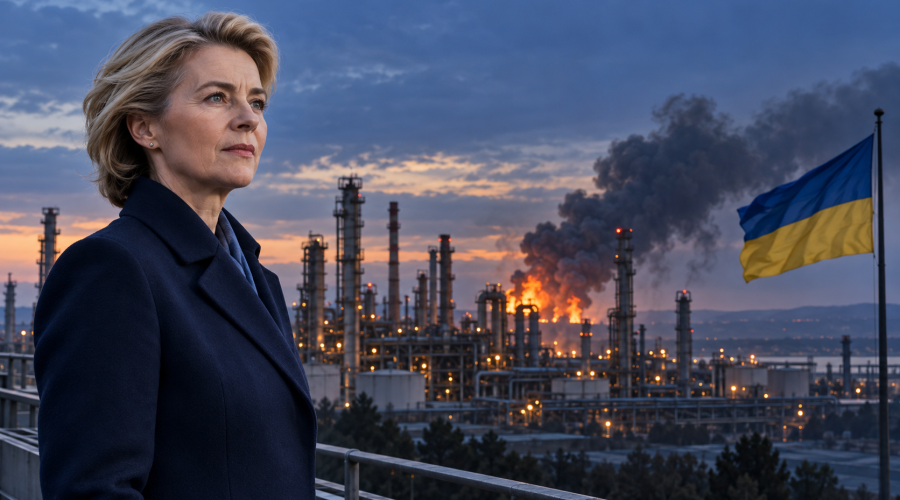
Usagevpn.com – Kallas – Ukraine’s campaign against Russian oil refineries is a legitimate form of self-defence because oil revenues help finance Moscow’s war, EU foreign policy chief Kaja Kallas has said, as fresh debate grows over a proposed halt to attacks on energy infrastructure.
Kallas argued that the fastest route to stopping such strikes would be for Russia to end its invasion. Speaking ahead of an EU summit, she said the conflict must not be viewed as a dispute between equal sides, stressing that Russia remains the aggressor and Ukraine the country defending itself.
“If we look at international law, it is clear that [hitting refineries] is in defence of Ukraine because that is where the funding comes from for this war to kill Ukrainian people every day,” Kallas said.
Her comments came after US President Donald Trump announced an arrangement for Russia to supply more than 300,000 tonnes of diesel during a wider global energy crunch. They also followed discussion of an “energy ceasefire” that would require both Russia and Ukraine to stop targeting energy-related facilities.
Oil infrastructure at the centre of the conflict
Russia’s oil sector has become a major target for Ukraine as Kyiv seeks to weaken the resources available for the Kremlin’s military campaign. Refineries are particularly significant because they turn crude oil into products such as diesel and petrol, helping support both export income and domestic fuel supplies.
Kallas said the link between energy income and the war explains Ukraine’s strategy. She contrasted Kyiv’s attacks on Russian refinery capacity with Russian strikes on Ukraine’s electricity and energy systems, which she said are intended to increase hardship for civilians as winter approaches.
“If we look at the big picture, the majority of the financing for this war comes from oil. And that is why Ukraine is also targeting them [the refineries], while Russia is targeting the energy infrastructure inside Ukraine, to cause as much suffering for the Ukrainian people in the upcoming winter,” she said.
The EU’s top diplomat also called on Washington to focus pressure on Moscow rather than Kyiv. European governments, she said, will continue backing Ukraine, which has not accepted surrender or abandoned its defence against Russia’s full-scale invasion.
Zelenskyy signals return to refinery operations
Ukrainian President Volodymyr Zelenskyy said Kyiv intends to resume attacks on Russian oil refineries after a temporary pause. He accused the United States of using intelligence-sharing and Starlink satellite internet access as leverage while Russian attacks on Ukraine intensified.
“The block (on attacking refineries) is out. We’re done,” Zelenskyy said.
He said Ukraine had stopped attacking Russian energy sites for three days after a request from Washington. During that period, he said, Russian forces continued striking Ukrainian infrastructure and killing civilians.
Zelenskyy said US officials warned Ukrainian counterparts that intelligence-sharing could be suspended if refinery strikes continued. While the later disruption was described as a technical issue, he rejected that explanation for interruptions affecting Starlink services.
“It was not a technical problem, it was the will,” Zelenskyy said.
Reliable communications are critical for Ukraine’s military and civilian resilience during the war, particularly when conventional infrastructure is damaged. Any interruption to satellite connectivity can affect coordination, access to information and communications in areas exposed to fighting or power outages.
Refinery attacks have expanded sharply
Ukraine has greatly increased its operations against Russian oil infrastructure. Its Defence Ministry said 12 major refineries were hit in September alone. By late August, only five of Russia’s 32 major refineries had avoided Ukrainian drone attacks, the International Energy Agency said.
Some refinery sites have been attacked as many as 15 times since Russia began its full-scale invasion of Ukraine in 2022. Repeated strikes can force repairs, disrupt output and place added pressure on fuel logistics, even when facilities are not permanently taken offline.
The attacks underline the increasingly central role of long-range drones in the war. Ukraine has used them to reach targets far from the front line, while Russia has continued a large-scale campaign against Ukrainian power systems and other essential infrastructure.
For ordinary Ukrainians, the energy dimension of the conflict has direct consequences. Damage to electricity generation, substations and distribution networks can leave homes, hospitals and businesses without power, heating or water. The risk becomes more acute during colder months, when energy needs rise.
Kremlin questions scope of any ceasefire
Despite talk of an energy ceasefire, Moscow indicated that the terms remain uncertain. Kremlin spokesperson Dmitry Peskov responded with scepticism when asked about what had been agreed and how it would work in practice.
“What was announced? What are the boundaries of the energy ceasefire? What does it mean? Was any of this specified?” Peskov said on Wednesday.
He added that work on the issue was still continuing. His remarks suggested that no clearly defined arrangement had yet taken effect.
The dispute over refinery attacks highlights a broader problem for any limited ceasefire: both sides would need to agree on which facilities are protected, how violations are identified and what happens if one party continues its operations. Without those details, announcements can leave room for competing interpretations while strikes continue.
For Kallas, however, the wider reality remains unchanged. She said the war’s fundamental distinction is clear: Ukraine is resisting an invasion, while Russia is responsible for the aggression that has driven the conflict since 2022.
Related Reading
Frequently Asked Questions
What is Kallas?
Kallas is the main topic of this guide. The article explains the context, practical details, and next steps readers should understand.
Why does Kallas matter?
Kallas matters because readers are looking for a useful answer, not just a short summary. Good content should match search intent and help them decide what to do next.