Azerbaijan seeks a broader place on the global tourism map
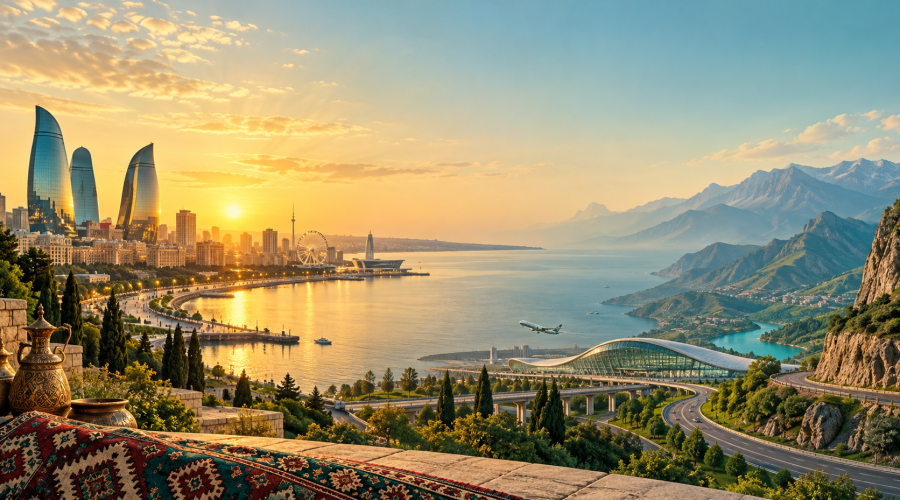
Usagevpn.com – Azerbaijan is positioning tourism as a larger part of its economy by combining improved access, international events and investment beyond the capital. The strategy looks past Baku’s established appeal to promote mountain villages, Silk Road heritage, winter sports, wellness experiences and local traditions across the country.
Florian Sengstschmid, the Austrian-born chief executive of the Azerbaijan Tourism Board, sees considerable room for the South Caucasus to attract more long-haul visitors. He first arrived in Baku in 2001 and, despite having worked with destinations worldwide, says Azerbaijan continues to reveal unexpected sides of itself.
For Sengstschmid, one challenge is that the South Caucasus is too often treated as a single post-Soviet bloc. Azerbaijan, Georgia and Armenia each have their own historical paths and cultural identities. Azerbaijan’s location between Europe and Asia has created a particularly layered story, one that tourism officials believe deserves more international attention.
European influences and a living mix of faiths
European connections can be found in places visitors may not anticipate. Bridges constructed by the Siemens brothers are still in use, while German heritage settlements including Helenendorf remain part of the country’s cultural landscape. The coexistence of religious communities is another element of daily life: mosques, churches and synagogues can stand close together in different parts of the country.
Azerbaijan is also home to its largest Jewish settlement, recognisable by its red-tiled roofs. It is believed to have been the only entirely Jewish settlement outside Israel and the United States, and the last surviving shtetl in the world. Such places add depth to an itinerary that might otherwise be limited to modern architecture and city life in Baku.
Regional diplomacy could further reshape how travellers experience the Caucasus. Sengstschmid believes the peace process, including the initial agreement signed in Washington in August 2025, may make it easier to develop journeys spanning more than one country. Multi-country routes could give distant visitors stronger reasons to make the trip and help lift the international profile of the region as a whole.
Baku builds on its event-hosting record
The capital has already demonstrated its ability to welcome large international audiences. Baku’s visibility rose after Eurovision in 2011, while COP29 in 2024 placed its infrastructure and hospitality capacity under greater scrutiny. In the days before the Washington summit, the city also welcomed a Formula 1 weekend and the Azerbaijan Investment Forum. More than 17,000 overseas visitors attended the race weekend.
“Who can host a COP can host any other meeting and conference,” Sengstschmid said.
Major events are part of the country’s wider tourism case, but they are not intended to be the entire experience. Hospitality is deeply embedded in Azerbaijani culture, Sengstschmid says, with visitors traditionally welcomed as guests. The next phase is to encourage those guests to stay longer and spend time in regions beyond Baku.
From Silk Road towns to high-altitude snow
Routes beyond the capital lead through former Silk Road landscapes, side valleys and historic settlements. Shaki, a UNESCO-listed town in the Greater Caucasus, is known for its Khan palaces and offers a distinct contrast to Baku’s urban character. A wine route and a developing wellness offer expand the range of travel options, including treatments using naftalan oil, a natural resource that has been used for skin care for centuries.
The country’s geography supports that variety. Its environments range from desert terrain to mountains rising to 4,000 metres, allowing travellers to encounter very different climates within one destination. Winter tourism is now a major priority, particularly in the Shahdag mountains.
A five-year agreement with the International Ski and Snowboard Federation, known as FIS, is expected to bring races and World Cup competitions to Azerbaijan. Shahdag is scheduled to host FIS World Cup finals in freestyle moguls and dual moguls in March, adding an international sporting dimension to the country’s mountain offer.
Better connections and easier entry
Accessibility remains central to the plan. Baku airport has a five-star Skytrax rating, and Azerbaijan Airlines is receiving new aircraft this year. From 8 May 2027, the airline is set to operate four weekly flights between Brussels and Baku.
Entry arrangements are also designed to be straightforward. For major events such as Formula 1, visitors can enter with a passport and a valid event ticket. Other travellers can apply through the e-visa system, which normally processes applications within three days; urgent visas can be issued in as little as three hours.
“Connectivity and accessibility are the key bottlenecks in tourism,” Sengstschmid said.
Growing tourism without displacing local life
A new state programme running through 2030 seeks to address both demand and supply. It includes incentives for charter carriers, additional flight routes and tour operators, while encouraging high-quality, environmentally conscious accommodation in regional areas. Support for micro and small businesses is another part of the approach, as are efforts to align transport, customs and other parts of the visitor experience.
The emphasis is not solely on visitor totals. Tourism generated 7 billion manat in 2025, equivalent to roughly €3.5 billion and 5.4% of gross domestic product. The objective is to reach 12 billion manat by 2030. Visitor numbers, now just below three million, are expected to grow only moderately, with longer stays and higher local economic impact taking priority.
Basgal illustrates the type of regional development officials want to encourage. The mountain village, located along the Silk Road and historically associated with silk printing, had been largely abandoned. Infrastructure investment helped bring families back. Small tea houses and food stalls now operate there, while women continue traditional silk-printing practices. Visitors can take part in the village’s heritage while encountering a community that remains actively lived in rather than staged for tourism.
Sengstschmid identifies Sim, in southern Azerbaijan, as one of the country’s lesser-known highlights. He describes it as a fairytale setting: old wooden homes and balconies covered in moss, water running through the village, nearby waterfalls and a UNESCO-listed forest beginning at its edge. The setting can feel almost tropical, he says, despite being in Azerbaijan.
That contrast is central to the country’s tourism ambition. Azerbaijan is presenting itself not as a destination defined by one landmark or one city, but as a place where cosmopolitan events, heritage communities, mountain sport and varied landscapes can be connected within a single journey.
Related Reading
Frequently Asked Questions
What is How Azerbaijan is building its next?
How Azerbaijan is building its next is the main topic of this guide. The article explains the context, practical details, and next steps readers should understand.
Why does How Azerbaijan is building its next matter?
How Azerbaijan is building its next matters because readers are looking for a useful answer, not just a short summary. Good content should match search intent and help them decide what to do next.