Caspian Airlines plane halted in Istanbul over €3 million claim
Usagevpn.com – A Caspian Airlines Boeing 737 preparing to leave Istanbul for Iran was seized on Monday over an unpaid debt estimated at roughly €3 million, leaving passengers who had already boarded unable to continue their journey.
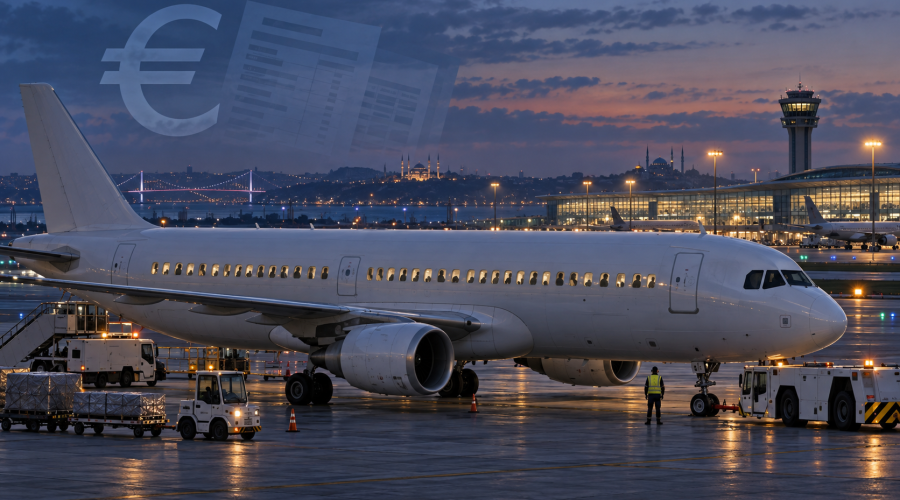
The aircraft, registered EP-KPB, was stopped at Istanbul Airport shortly before departure after enforcement officers served a court-backed seizure order. Legal representatives and bailiffs acting for aviation representation and supervision company ACM Temsil Gözetim boarded the plane before take-off procedures could be completed.
Passengers and cabin crew were subsequently asked to leave the aircraft and return to the terminal. The action effectively grounded the jet while the debt dispute is addressed, disrupting a route that remains important for travel between Turkey and Iran.
Aviation pressure extends beyond one aircraft
The incident comes during an exceptionally difficult period for Iran’s aviation industry. Caspian Airlines, a Tehran-based carrier founded in 1993, operates Boeing 737 aircraft on domestic and international services, including flights to Istanbul. It is part of Iran’s state aviation group.
Iranian airlines have long had to contend with restricted access to aircraft, spare components, maintenance support and international payment systems. Decades of US sanctions have complicated routine fleet upkeep and commercial arrangements with foreign businesses, creating persistent operational and financial strain.
Those challenges have intensified since the US-Iran war began in February. Repeated disruption to Iranian airspace and reduced international connectivity have placed further limits on airline operations, while carriers and airport service companies face greater uncertainty over their exposure to sanctions.
The Istanbul seizure took place only days after broad US secondary sanctions targeting Iran’s aviation sector entered force last Wednesday. On 8 September, the US Treasury sanctioned 27 Iranian airlines and nine related service providers under Operation Economic Outcast.
Foreign airports, fuel suppliers, ground handlers and ticketing companies that continue to serve Iranian carriers could face sanctions and possible exclusion from the US dollar system.
The measures have rapidly narrowed the international network available to Iranian airlines. Iranian carrier services have been suspended in Iraq, the United Arab Emirates, Azerbaijan and Oman. Mahan Air, Iran’s largest private airline, has also halted flights to Turkey and Oman.
Routes cut as international connections shrink
Several foreign airlines have adjusted their own Iran operations. Lufthansa and Austrian Airlines have suspended flights to Iran until 24 October, while Qatar Airways has paused services because of airspace restrictions. China, Russia and Pakistan have continued operating flights to and from Iran.
The change is evident in flight activity at Tehran’s principal airport. Daily international departures and arrivals had generally stood at between 80 and 90 before the latest sanctions. By Monday, tracking data showed that total had fallen to about 41 flights.
For travellers, a reduction of that scale can mean fewer options, more uncertainty around schedules and greater disruption when a flight is cancelled or an aircraft is unavailable. Airlines operating remaining routes may also face pressure to reorganise aircraft rotations, crew planning and ground support arrangements.
Turkey has not imposed a formal prohibition on Iranian airlines, allowing Caspian Airlines to continue using the Istanbul route when the aircraft was seized. That distinction is significant: the grounding was linked to a specific creditor’s claim rather than a Turkish ban on Iranian commercial flights.
The case also illustrates how financial disputes can become especially disruptive in aviation. Aircraft are high-value assets that move across national borders, and a court order enforced at an airport can halt a service even after travellers have boarded. In this instance, the seizure affected not only the airline and its creditor, but also passengers and crew who were already ready to depart.
Iran pursues international complaints
Tehran has lodged formal complaints with the United Nations, the International Civil Aviation Organisation and the International Court of Justice in response to the widening restrictions affecting its aviation sector.
As sanctions, airspace limitations and commercial disputes converge, Iran’s carriers face a more constrained international environment than they did only weeks ago. The halted Caspian Airlines flight at Istanbul highlights the practical consequences: a plane intended to connect passengers with Iran instead remained on the ground, caught in a debt claim amid a broader regional aviation crisis.
Related Reading
Frequently Asked Questions
What is Iranian airliner with passengers on board?
Iranian airliner with passengers on board is the main topic of this guide. The article explains the context, practical details, and next steps readers should understand.
Why does Iranian airliner with passengers on board matter?
Iranian airliner with passengers on board matters because readers are looking for a useful answer, not just a short summary. Good content should match search intent and help them decide what to do next.