Spain Examines Control Centre Decision After Deadly High-Speed Rail Collision
Usagevpn.com – Spanish investigators are focusing on a decision made at a central rail control centre in Madrid after a high-speed train collision in Castilla-La Mancha left at least 68 people dead and 58 others receiving hospital treatment.
Transport Minister Óscar Puente said the conduct of the train drivers is not the central issue in the inquiry. Instead, attention has turned to an instruction that permitted a Renfe-operated AVE train to return to normal operation after a key safety system malfunctioned.
“Inexplicable”
Puente used that word to describe the decision under examination, saying investigators must establish why the authorisation was issued and how the sequence of events unfolded before Wednesday’s crash.
Safety-system failure preceded the collision
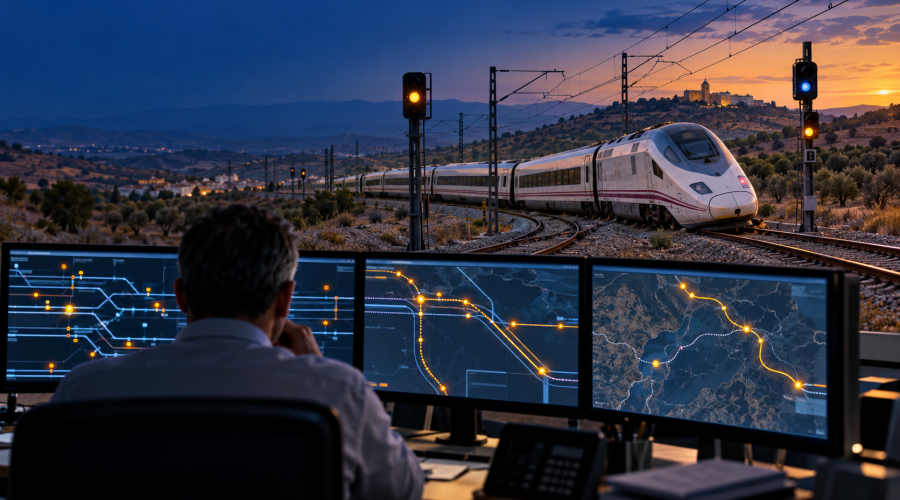
The incident began at roughly 8:30 am, when the LZB safety system failed along a 63-kilometre section of railway because of a computer malfunction. The failure automatically stopped about six trains operating on the affected route, leaving the Madrid control centre responsible for managing rail traffic.
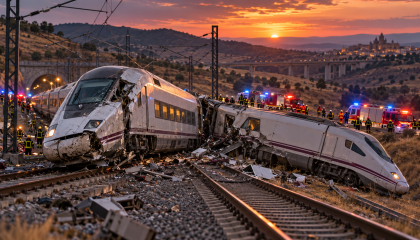
At 8:36 am, the Renfe AVE service was allowed to resume normal running even though a red signal remained active. The train continued for about 25 kilometres before striking a stationary Iryo train at around 8:53 am.
Investigators are still reviewing operational data to determine the AVE’s precise speed in the moments before impact. Puente said the train may have been travelling at up to 200 kilometres per hour on that part of the line.
Why the operating procedure matters
Puente said the AVE should have been subject to the railway procedure known as marcha a la vista after the automated safety system stopped functioning. The measure is intended for situations in which normal signalling or automatic supervision cannot be relied upon.
Under that procedure, trains must proceed at a reduced speed that allows the driver to stop safely if another train, an obstruction or another danger appears ahead. It is designed to create an additional margin of protection while railway traffic is being directed manually.
The distinction is crucial to the investigation: normal running assumes that the usual safeguards and signalling conditions are in place, while marcha a la vista requires a far more cautious approach. Officials are now examining why the high-speed service was cleared to continue in normal conditions despite the red signal and the system failure.
Puente stressed that the drivers should not be blamed for the crash. The inquiry will seek to clarify who made the operating decision, what information was available at the control centre and whether established emergency procedures were properly applied.
National mourning and support for victims
Puente described the disaster as one of the most difficult experiences a person can confront and expressed sympathy for those killed, injured and affected by the collision.
Prime Minister Pedro Sánchez said the country was grieving after the accident and offered support to victims, their families and people injured in the crash. He said the government’s immediate work was centred on assisting survivors and relatives, locating anyone still requiring help, and ensuring access to material and psychological support.
“The whole of Spain is in mourning.”
Sánchez also recognised the emergency services, Civil Protection teams and authorities involved in coordinating the response. Their work has included caring for the injured and supporting families during a major and traumatic rail emergency.
The prime minister announced three days of national mourning. He also said the government would respond firmly if the investigation confirms failures involving the railway safety systems.
A second fatal high-speed rail crash this year
The Castilla-La Mancha collision is Spain’s second deadly high-speed rail accident of 2026. In January, another crash involving Renfe and Iryo trains killed 46 people.
The latest tragedy has intensified scrutiny of how high-speed rail is managed when automated systems fail. Modern rail networks rely on layers of technology, signalling and human oversight, but emergency procedures are especially important when one of those layers is disrupted. The investigation will therefore need to assess not only the computer malfunction itself, but also the operational choices made after it brought services to a halt.
For passengers and families, the immediate focus remains on the human toll: 68 lives lost, dozens of people receiving medical care, and communities coping with the consequences of a crash that occurred during a routine morning period of rail travel. The official inquiry is expected to establish the full chain of events and determine what changes may be needed to prevent a similar disaster.
Related Reading
Frequently Asked Questions
What is Inexplicable order by control centre investigated?
Inexplicable order by control centre investigated is the main topic of this guide. The article explains the context, practical details, and next steps readers should understand.
Why does Inexplicable order by control centre investigated matter?
Inexplicable order by control centre investigated matters because readers are looking for a useful answer, not just a short summary. Good content should match search intent and help them decide what to do next.