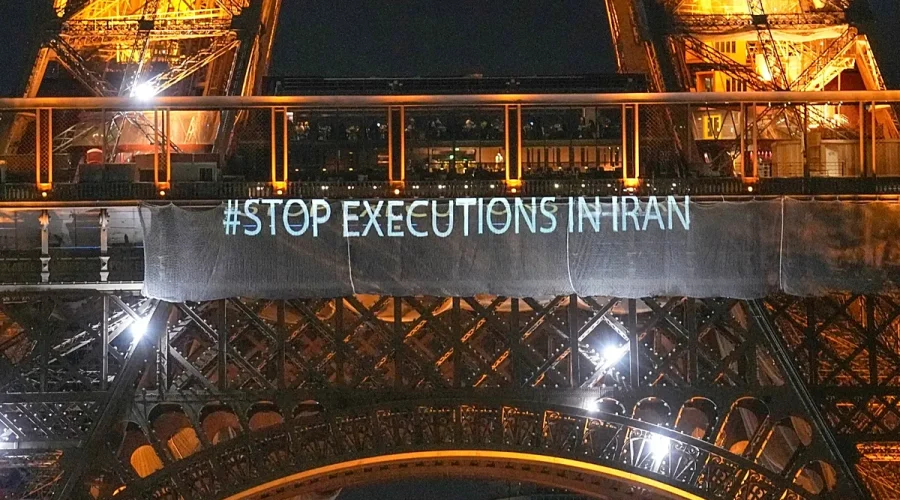
Diplomatic Storm: France and Iran Clash Over Executions and Human Rights
Usagevpn.com – A fierce diplomatic confrontation has erupted between Paris and Tehran, centering on Iran’s escalating use of capital punishment against citizens who have taken to the streets demanding change. The dispute intensified following a coordinated international statement that placed France at the forefront of global criticism, with the French government characterizing Iran’s actions as a campaign of “bloodshed” against its own people.
The exchange of accusations has revealed deepening rifts in relations between the two nations, with each side accusing the other of selective morality and geopolitical double standards. French officials have positioned themselves as champions of human rights, while Iranian leaders have dismissed Western criticism as hypocritical posturing driven by broader strategic interests in the Middle East.
Paris Takes the Lead in International Condemnation
French Foreign Minister Jean-Noël Barrot emerged as one of the most vocal critics of Iran’s judicial response to the ongoing protests. In a pointed message posted on the social media platform X, Barrot connected the current wave of executions to events dating back seven months, when Iranians rose up to demand justice and dignity for their citizens.
Seven months after the widespread atrocities against the Iranian people who rose up to demand justice and dignity, this regime continues its bloodshed by carrying out an increasing number of executions.
The French Foreign Ministry confirmed that Paris played a pivotal role in organizing the international campaign. The initial statement condemning Iran’s use of the death penalty was signed by 26 nations alongside the European Union’s foreign policy chief, Kaja Kallas. As the diplomatic pressure mounted, additional countries joined the coalition, ultimately bringing the total number of signatories to 32.
Tehran Responds with Sharp Rebuttal
Iranian Foreign Minister Abbas Araghchi did not mince words in his response to French criticism. He accused the French government of applying double standards in its approach to international human rights, suggesting that France’s moral authority had been compromised by its foreign policy decisions.
Countries like France should stop lecturing the world about “human rights” and international law. The hypocrisy is blatant and embarrassing.
Araghchi went further, directly linking France’s criticism of Iran to its support for Israel’s military operations in Gaza and its broader stance toward Tehran. He argued that this backing had undermined whatever moral credibility France claimed to possess on the world stage.
Your backing of Israel’s genocide in Gaza—and aggression against Iran—has destroyed whatever moral high ground you imagined you had.
The International Statement and Its Demands
The joint statement published on Wednesday represented a significant diplomatic effort to isolate Iran’s government internationally. Alongside France, the United Kingdom, Canada, Australia, New Zealand, Germany, and Italy all lent their signatures to the condemnation.
The document characterized Iran’s use of capital punishment as a deliberate strategy to suppress opposition and silence dissent within the country. Signatories emphasized that employing the death penalty to intimidate communities and punish citizens for exercising their fundamental rights could not be justified under any circumstances.
The statement called on Tehran to immediately halt all executions and release individuals who had been detained in connection with the protests. It affirmed that the people of Iran must be free to exercise their rights to freedom of expression and peaceful assembly without fear of severe punishment.
From Economic Grievances to Political Uprising
The current wave of arrests and judicial sentences traces its origins to late December of last year, when a protest movement initially focused on economic hardship began to evolve into a broader anti-government demonstration. Runaway inflation, the high cost of living, and rising prices served as the catalyst for what would become one of the most significant challenges to Iran’s political establishment in recent decades.
While Iranian officials have reported that more than 3,000 people were killed during the unrest and attributed much of the violence to “terrorist actions” organized by the United States and Israel, independent human rights organizations have documented substantially higher casualty figures. These groups have stated that security forces opened fire directly on protesters, contributing to the mounting death toll.
Regional Conflict Deepens the Crisis
The security crackdown in Iran has been further intensified by the joint US-Israeli attack on the country on February 28, 2026, which marked the beginning of a new phase of conflict in the Middle East. Observers note that the number of arrests and executions linked to both the military confrontation and the domestic protests has multiplied significantly since that pivotal date.
The United Nations and various human rights organizations have expressed growing concern over the escalation of judicial measures in Iran. They have cited the lack of fair trials and the extraction of forced confessions as particularly troubling developments in the country’s legal response to the unrest.
A Growing Death Penalty Crisis
UN High Commissioner for Human Rights Volker Türk stated earlier in August that Tehran was using executions as a tool to “spread fear and terror” among its population. He reported that since March 19, at least 56 people had been executed on national security-related charges, while more than 100 others remained at risk of facing the same fate.
The scale of Iran’s use of capital punishment places it among the world’s most active practitioners of the death penalty. According to Amnesty International, Iran executed more than 2,150 people last year, positioning it as a distant second only to China in terms of execution numbers globally.
As diplomatic tensions continue to mount, the international community watches closely to see whether the growing pressure will influence Iran’s approach to the ongoing crisis or whether the government will maintain its hardline stance in the face of both domestic and international opposition.
Related Reading
Frequently Asked Questions
What is France accues Iran of bloodshed over?
France accues Iran of bloodshed over is the main topic of this guide. The article explains the context, practical details, and next steps readers should understand.
Why does France accues Iran of bloodshed over matter?
France accues Iran of bloodshed over matters because readers are looking for a useful answer, not just a short summary. Good content should match search intent and help them decide what to do next.