EU trade chief heads to Beijing for crucial import talks
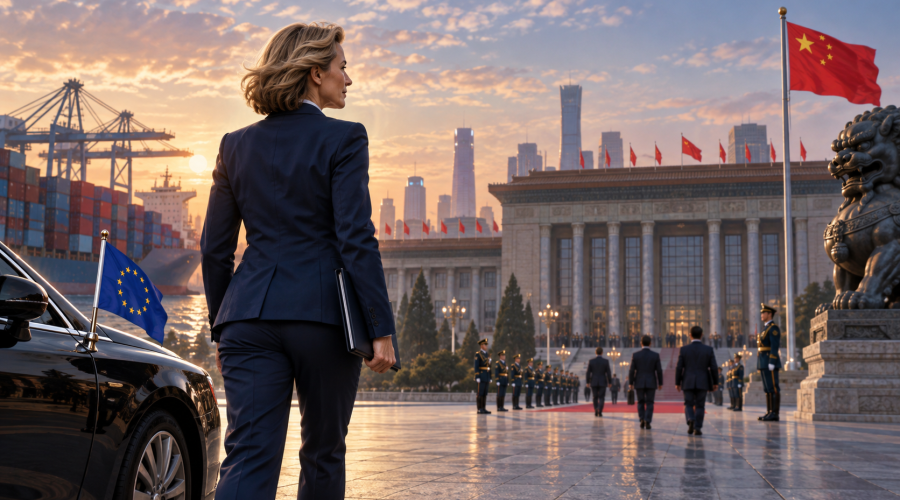
Usagevpn.com – EU trade chief heads to Beijing this week as the European Commission seeks concrete progress on concerns over Chinese imports and the bloc’s widening trade imbalance. Trade Commissioner Maroš Šefčovič is scheduled to hold two days of talks with Chinese Commerce Minister Wang Wentao, with Brussels under growing pressure to show that negotiations can protect European industry while keeping trade channels open.
The visit comes as the EU’s trade deficit with China is estimated at €1 billion a day. European officials argue that the scale of the imbalance, combined with concerns about allegedly trade-distorting conditions, requires a more practical response from Beijing.
Brussels seeks workable solutions on market access
At the centre of the discussions is the impact of Chinese goods entering the EU market at low prices. The Commission has explored product-specific import quotas as one possible option to ease pressure on European producers, but it has yet to secure an agreement from China to reduce export volumes.
China has already rejected an EU suggestion for voluntary limits on electric-vehicle exports. The disagreement highlights the difficult balance facing Brussels: it wants to maintain open trade, but European manufacturers fear that heavily competitive imports could displace domestic production in strategically important sectors.
Every EU country now runs a trade deficit with China, adding to political demands for a clearer strategy. EU leaders are expected to examine the outcome of the Beijing meetings before gathering in Brussels next week, looking for more than a commitment to continued dialogue.
“They [EU27] want to see the direction of travel. They want to even have a concept for the solution of this issue, a pilot scheme,” Šefčovič said in an exclusive interview in early September.
The commissioner said he was pursuing results through negotiations, but stressed that Beijing would need to deliver “very concrete results.” An early pilot arrangement could help demonstrate whether a broader solution is possible.
October deadline increases pressure for action
The EU trade chief heads to Beijing shortly before an October deadline set by the Commission after negotiations with China began in June. If the talks fail to produce tangible progress, EU governments could push the Commission towards tougher measures.
Šefčovič warned that a failure to reach results in October could lead to “a strong political movement” among EU leaders in favour of “harsher measures”.
Germany and France have already called for a new instrument that would allow the Commission to respond more rapidly to economic threats. German Chancellor Friedrich Merz and French President Emmanuel Macron said such a tool could include an “immediate cut-off from the internal market if needed.”
Any decision to limit access to the EU single market would carry significant weight. The bloc remains one of the world’s largest destinations for imported products, and stronger restrictions could reshape commercial relations between Europe and China.
Trade investigations deepen tensions
The Beijing meetings take place amid a series of trade disputes. The Commission has expanded investigations into alleged unfair trading practices linked to Chinese imports and has imposed anti-dumping duties on some Chinese companies.
Anti-dumping duties are intended to address imports sold at prices judged to undercut fair market conditions. However, such measures can also increase friction with trading partners, and China has warned that it could retaliate against further EU restrictions.
Chemicals are another sensitive area. EU member states have delayed investigations that could eventually support safeguard measures, including quotas or tariffs. The sector is especially exposed to competition from Chinese suppliers and may become an important focus of future action.
China opened its own investigation into EU chemicals on Saturday, a move widely seen as a response to European scrutiny of Chinese chemical producers. The reciprocal investigations underline how quickly trade disputes could widen if the latest negotiations do not produce an acceptable outcome.
FAQ: What the Beijing talks mean for Europe
Why is the EU trade chief going to Beijing?
Šefčovič is travelling to discuss the EU’s concerns about Chinese imports, the trade deficit and conditions that Brussels believes may disadvantage European businesses.
What could the EU do if talks fail?
EU leaders could press for stronger trade measures, potentially including quotas, tariffs, anti-dumping action or other restrictions on access to the EU market.
Which industries are most affected?
Electric vehicles and chemicals are among the sectors under close attention, although concerns over low-priced imports extend more broadly across European industry.