EU prepares coordinated response to growing hybrid security threats
Usagevpn.com – European Union foreign ministers meeting in Brussels are working on a new framework intended to help member states react faster when they face suspected sabotage, airspace incursions, cyber pressure or other forms of hybrid interference linked to Russia.
The proposed “emergency security protocol” is designed to improve coordination across the bloc when an incident does not amount to a conventional military attack but still creates a serious security risk. EU foreign policy chief Kaja Kallas and European Commission President Ursula von der Leyen are leading the initiative, which is expected to become a central element of the EU’s broader security approach.
Under the plan, any member state that identifies a hybrid threat could activate consultations with other EU countries. The aim would be to ensure that governments share information quickly, assess the scale of the incident together and agree on an appropriate response rather than acting in isolation.
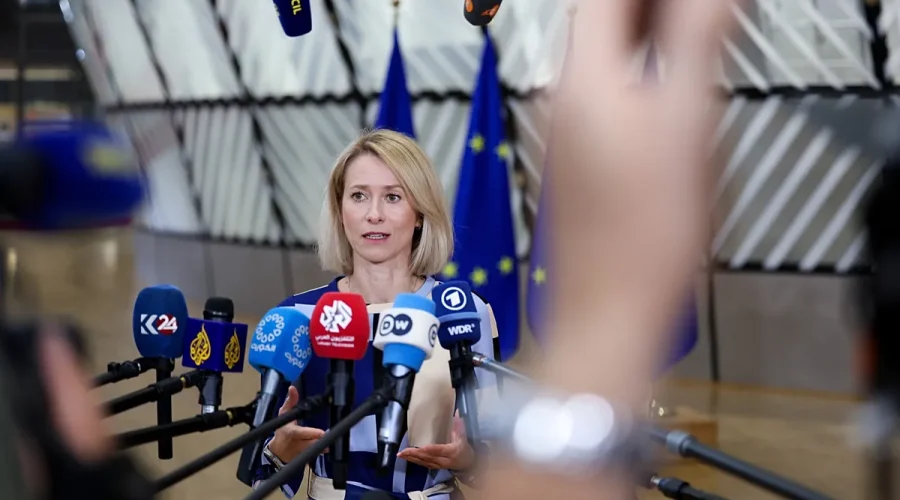
“We need to be vigilant because we see in the intelligence that Russia is planning more sabotage acts,”
Kallas said as she arrived for Monday’s discussions. She argued that such activity is meant to weaken Europe politically as well as physically, by unsettling communities and reducing public support for Ukraine.
“We have to keep this in mind while standing up to these threats,”
The initiative was introduced by von der Leyen during her State of the European Union address in Strasbourg in mid-September. It is intended to deal with incidents that sit below the legal and political threshold of armed aggression, yet may still demand a collective European reaction.
Airspace incident sharpens urgency
The ministers’ meeting follows a recent breach of Finnish airspace by a Russian aircraft over the Gulf of Finland. Finnish and Swedish authorities scrambled fighter jets after the incident on Friday, adding to concerns over security along NATO’s northern flank.
Finnish Defence Minister Antti Häkkänen said the episode should prompt Europe to go further in strengthening its defences and improving cooperation with NATO partners. He stressed that better air protection will require substantial investment as well as joint purchasing arrangements among European countries.
“We need money,”
Häkkänen said.
“We need joint procurements.”
Joint procurement has become a major issue for European defence planning because member states often operate different systems, purchase equipment separately and compete for limited production capacity. Coordinated buying can help countries acquire munitions, air-defence equipment and other urgently needed capabilities more efficiently.
Swedish Defence Minister Pål Jonson said Russia’s hybrid actions were intended to frighten and pressure the countries backing Ukraine. He said the strategy would not change the EU’s commitment to Kyiv or its willingness to tighten measures against Moscow.
“We welcome more measures when it comes to combatting the shadow fleet, when it comes to more sanctions, more visa restrictions, and of course with more support to Ukraine,”
Jonson said.
Threats beyond conventional warfare
Hybrid attacks can take many forms. They may include sabotage against infrastructure, disinformation campaigns, cyberattacks, covert operations, intimidation and disruptions involving aircraft or drones. Such actions are difficult for governments to address because they can be deniable, may cross several national jurisdictions and often fall short of the threshold that would trigger a traditional military response.
The new EU mechanism is therefore intended to create a quicker political and operational link between countries facing these pressures. It could also reinforce the bloc’s ability to show unity when a member state believes it has been targeted, a factor viewed as important in deterring further attempts to exploit divisions within Europe.
Security concerns have intensified after the Danish Defence Intelligence Service warned that the possibility of Russian military action against NATO states was increasing. The agency described a full-scale invasion as highly unlikely, although it said such a scenario could not be completely ruled out.
Concerns have also been raised about possible drone-related operations affecting southern Europe. Spain, France and Italy have all been mentioned in connection with fears that Russia could be preparing such activity, underlining that hybrid pressure is not limited to countries closest to Russia’s borders.
Ukraine support remains central
Estonia’s new Defence Minister Martin Herem said continued assistance for Ukraine remained Tallinn’s principal priority. That support could take place through bilateral measures or through further EU discussions over immobilised Russian assets.
“It’s all despite the fact that the Russian Foreign Minister (Sergey Lavrov) threatened us for that, and the Russian special forces are conducting sabotage acts,”
Herem said.
The question of Russian assets remains politically sensitive, but it is part of the wider European debate over how to maintain support for Ukraine while increasing pressure on Russia. For many EU governments, strengthening Ukraine’s ability to defend itself is closely connected to Europe’s own security, particularly as officials consider the risk of future threats to NATO territory.
Defence readiness under scrutiny
Ministers are also due to consider the EU’s first Defence Readiness Report, an assessment that highlights concerns that the bloc is not rebuilding its military capacity quickly enough to be prepared for a potential threat from Russia by 2030.
Several European intelligence services have identified 2030 as a possible point by which the Kremlin could be capable of launching armed aggression against NATO allies. The date is not presented as a prediction of war, but as a planning horizon that has increased pressure on European governments to close longstanding capability gaps.
Those gaps include air and missile defence, land-combat equipment, naval forces, ammunition reserves and drones. Addressing them will require money, industrial capacity and stronger cooperation between national militaries. The planned emergency security protocol is meant to complement that wider effort by giving the EU a clearer process for responding when hostile activity occurs before a conventional conflict begins.
For European leaders, the immediate task is to ensure that sabotage, intimidation and other hybrid operations do not create uncertainty or division. The Brussels discussions reflect a growing view that security now depends not only on armed forces and alliances, but also on the ability of democratic states to recognise threats early and act together.
Related Reading
Frequently Asked Questions
What is EU ministers plan hybrid threat response?
EU ministers plan hybrid threat response is the main topic of this guide. The article explains the context, practical details, and next steps readers should understand.
Why does EU ministers plan hybrid threat response matter?
EU ministers plan hybrid threat response matters because readers are looking for a useful answer, not just a short summary. Good content should match search intent and help them decide what to do next.