Germany’s youth-language vote heads for a close finish
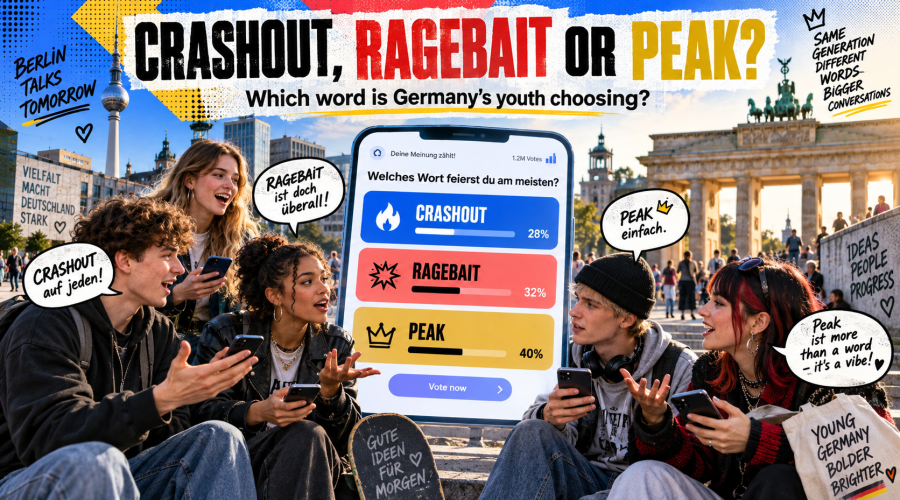
Usagevpn.com – Three internet-driven expressions have emerged as the leading contenders in Germany’s 2026 Youth Word of the Year vote: “Crashout”, “Ragebait” and “Peak”. The annual poll, run by publisher Langenscheidt, invited people aged 11 to 20 to choose the term that best captures the language and culture of their generation.
Each finalist reflects the influence of online communities, short-form video platforms and gaming culture on everyday speech. Together, the three leading terms received 43 percent of all votes, placing them well ahead in a field that also included familiar slang, song lyrics and a Turkish-language expression made famous by a viral clip.
Langenscheidt is due to reveal the winning word on Saturday at the Frankfurt Book Fair. The competition has selected a Youth Word of the Year every year since 2008, documenting how quickly informal language shifts between classrooms, group chats and social media feeds.
What the three frontrunners mean
“Crashout” describes a moment when someone loses emotional control, whether through anger, frustration or dramatic overreaction. The term can be used seriously, but its ironic use is equally important. Young speakers may call a reaction a “crashout” even when the trigger is deliberately insignificant, turning an exaggerated response into a joke.
“Completely losing your composure, freaking out or emotionally exploding.”
That is how Langenscheidt’s jury describes the expression, which has already secured a place in the final three.
“Ragebait” is rooted in the mechanics of online attention. It refers to posts intentionally created to irritate viewers and draw out angry reactions. On platforms such as TikTok and Instagram, provocative opinions, false assertions and extreme claims can invite comments, shares and repeat viewing. Those reactions may help a post travel further through recommendation systems.
“With provocative takes, blatant false claims or completely wild opinions, people try to stir up anger.”
The appeal of the word lies in its usefulness: it gives users a quick label for content that seems designed less to start a genuine discussion than to manufacture outrage.
The third favourite, “Peak”, is a positive verdict. Borrowed from English, it evokes a summit or high point and is used to call something outstanding. A great performance, an especially good idea or an enjoyable experience can all be described as “peak”.
“If something is peak, it is the best of the best – the absolute high point, maximum quality or simply 10/10.”
A surprise result for “67”
One notable trend did not reach the expected heights. “67”, pronounced “Six Seven”, made the top ten but failed to reach the three leading places. The phrase is often paired with a hand gesture and does not depend on one settled definition. Its value is more social than literal, functioning as a signal of shared online references and belonging.
The expression spread through TikTok, basketball memes and the track “Doot Doot (6 7)” by US rapper Skirlla. Langenscheidt’s spokesperson said the publisher had expected it to appear among the final three.
“We were actually sure that 67 would end up in the top three.”
“Once again, it shows how unpredictable and fast youth language evolves.”
The prominence of English-derived vocabulary is less surprising. Anglicisms were already a clear feature of the youth-language selection in 2023, and terms coined or amplified online often cross linguistic borders with little difficulty.
From “Digga” to viral song lines
The top ten also contains expressions with very different origins. “Digga”, a long-established colloquial term used for a friend or mate, was submitted again. Despite its familiarity, it has never won the annual title.
“Du bist gut genug” — “You are good enough” — entered the shortlist after becoming widely shared online. The line comes from a song by KitschKrieg, Shirin David and Blumengarten, and has inspired memes, remixes and parodies. Its spread beyond German-speaking online spaces shows how a short musical phrase can become a flexible piece of digital language.
Other entries illustrate the diverse sources feeding contemporary slang. “Gute Käse” is not normally understood literally; it broadly conveys that something is genuinely good or solid. “Macker” can refer to a boyfriend, a crush, a friend or simply a man, depending on the situation. “Schere”, borrowed from gaming language, can mean “sorry” or “my mistake”.
“Süper”, the Turkish word for “super”, also made the top ten. It became widely recognised after an ultramarathon runner gave the simple answer “Süper” when asked how he felt after completing a race.
Why one proposed term was removed
Langenscheidt’s jury excluded “Mehrzweckeier”, despite repeated submissions. The altered expression grew out of a protest against the return of conscription. A placard at the demonstration initially read “Merz leck Eier”, after which police confiscated it and the protester faced an investigation for slander and defamation.
A Reddit campaign later encouraged users to nominate “Mehrzweckeier” for the 2026 vote. The jury rejected it because it came from an organised campaign and was based on a personal insult, placing it within two of the competition’s exclusion criteria.
A record of changing generations
Germany’s Youth Word of the Year has long served as a snapshot of the language young people use to distinguish trends, humour and identity. The first winner, “Gammelfleischparty”, was chosen in 2008. It described a party for people over 30 and carried a deliberately mocking view of older generations.
Later winners have included “hartzen”, “swag” and “Yolo”, short for “you only live once”. The 2026 shortlist continues that pattern: words now emerge not only from streets, schools and music, but also from algorithms, meme formats, gaming communities and rapidly changing platform culture.
Related Reading
Frequently Asked Questions
What is Crashout Ragebait or Peak?
Crashout Ragebait or Peak is the main topic of this guide. The article explains the context, practical details, and next steps readers should understand.
Why does Crashout Ragebait or Peak matter?
Crashout Ragebait or Peak matters because readers are looking for a useful answer, not just a short summary. Good content should match search intent and help them decide what to do next.