Tracing Water Through Uzbekistan’s Historic Landscapes
Usagevpn.com – Long before modern infrastructure, water shaped human civilization across the vast territories that now comprise Uzbekistan. The region’s hydrological network—comprising over six hundred rivers and streams alongside approximately three hundred lakes, both natural and man-made—continues to sustain communities while drawing increasing numbers of travelers. These waterways have determined settlement patterns, supported agricultural development, and provided rest stops for merchants traversing the legendary Silk Road for centuries.
While eastern Uzbekistan features flowing mountain rivers, the western city of Bukhara developed a different relationship with water. Situated on the Kyzylkum Desert’s edge, Bukhara residents constructed an extensive system of public reservoirs called hovuzs. These stone-lined pools served multiple purposes: supplying drinking water, supporting daily activities, and creating shaded gathering spaces where locals could escape the intense summer heat beneath ancient trees.
Among these historic structures, Lyabi Hauz stands as one of the finest preserved architectural complexes. Built during the sixteenth and seventeenth centuries, this ensemble centered around a massive reservoir that became the heart of community life. The architectural harmony of surrounding madrasas, mosques, and caravanserais reflects how water infrastructure influenced urban development patterns throughout Central Asia.
Mountain Rivers and Recreation
Just beyond an hour’s journey from Tashkent, the Ugam river carves through Western Tian Shan foothills before reaching the Bo’stonliq District. This mountain waterway, nourished by snowmelt and underground springs, represents one of Uzbekistan’s primary alpine rivers. Local communities depend on its waters for irrigation, while the river’s banks have transformed into popular recreational destinations during warmer seasons.
Modern visitors find numerous amenities along the Ugam’s course. Swimming facilities, dining establishments, and designated picnic areas create a welcoming environment for families and outdoor enthusiasts. Ravshan Temirov describes the scene: “Along the Ugam river there is a children’s playground, various pools, special recreational areas where guests can relax, a restaurant, and facilities where people can prepare their own food.”
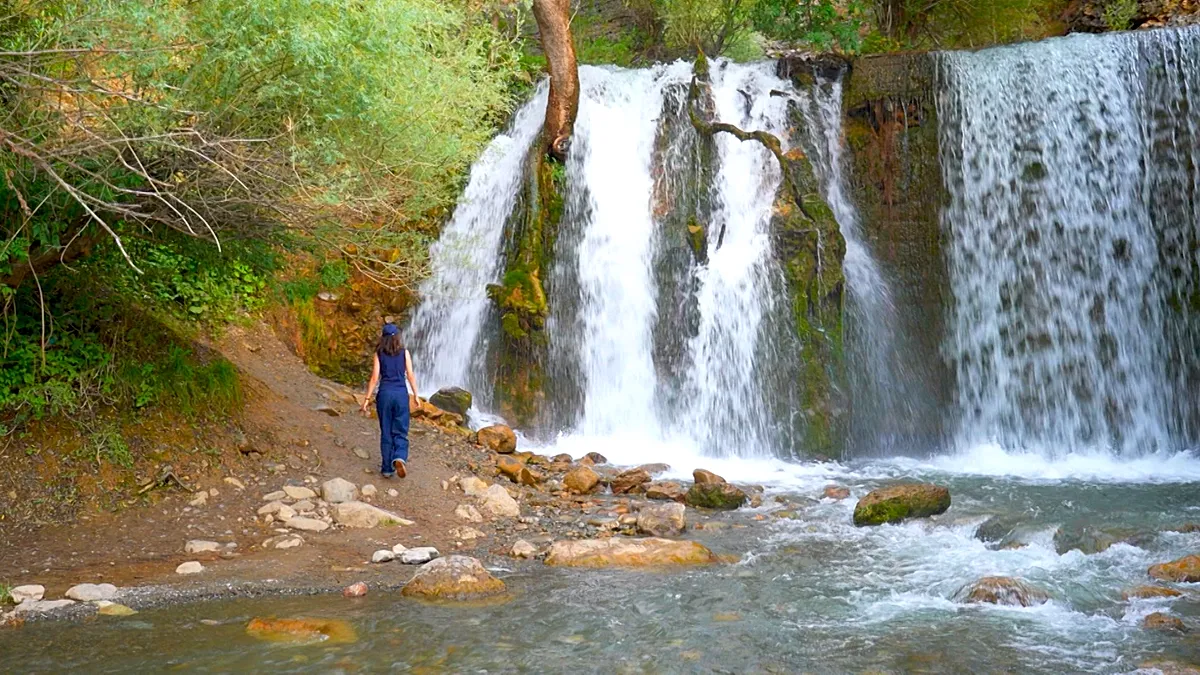
Deeper within the mountain terrain lies the village of Nanay, where an unexpected attraction has emerged. An irrigation canal, originally constructed to nourish household gardens, now generates a picturesque waterfall that draws summer visitors. Dilshod Ashurmetov explains the origin: “This waterfall was created long ago through hashar, community work. We have special vehicles and young men assigned to bring visitors to the waterfall and then take them back. There are tapchans and seating platforms where people can relax, eat food and spend their free time.”
The therapeutic qualities of the location resonate with visitors like Sabohat Zakirova, who shares: “My little grandson had a cough. After coming here, his cough went away. We’ve spent fifteen days relaxing here by the waterfall, and we hope to come again next year.”
Natural Springs and Geological Wonders
Southward in the Jizzakh mountains, the landscape transforms once more. Natural springs emerge from rocky formations, creating year-round streams and cascading waterfalls. Jahongir Shukurov of Baxmal State Forestry notes: “The waterfall you see here is natural. It is formed by springs that gather above and flow down naturally. People living below also use it as drinking water. In winter, this spring water does not freeze.”
Qizilsuv waterfall represents one of the region’s most celebrated natural attractions. Nestled within Bakhmal district forests and surrounded by dramatic cliffs, this site has gained popularity among hikers seeking relief from summer temperatures. Scientific investigation revealed something remarkable about the water’s composition. Akbarjon Qolberdiyev, chief engineer at Bakhmal State Forestry, reports: “We conducted research and laboratory analysis, which showed that Qizilsuv contains a high level of iron.”
Tourism statistics reflect growing interest in the area. The site welcomes between two thousand and three thousand international visitors annually, complemented by thirty to fifty thousand domestic tourists. Yet the appeal extends beyond scientific curiosity. Nargiza Oqilova, visiting for the first time, expresses her appreciation: “This is my first time coming to the stream known as Qizilsuv. What I liked most was the cleanliness of the water, its clarity and its softness.”
Local authorities are currently evaluating proposals to enhance tourism infrastructure, including expanded camping facilities and additional recreational amenities. These developments promise to make Uzbekistan’s water heritage even more accessible to visitors seeking authentic experiences beyond traditional cultural sites.
Related Reading
Frequently Asked Questions
What is Watermarks on the Silk Road?
Watermarks on the Silk Road is the main topic of this guide. The article explains the context, practical details, and next steps readers should understand.
Why does Watermarks on the Silk Road matter?
Watermarks on the Silk Road matters because readers are looking for a useful answer, not just a short summary. Good content should match search intent and help them decide what to do next.