Fortaleza and Recife: Brazil’s Coastal Gems in the Spotlight
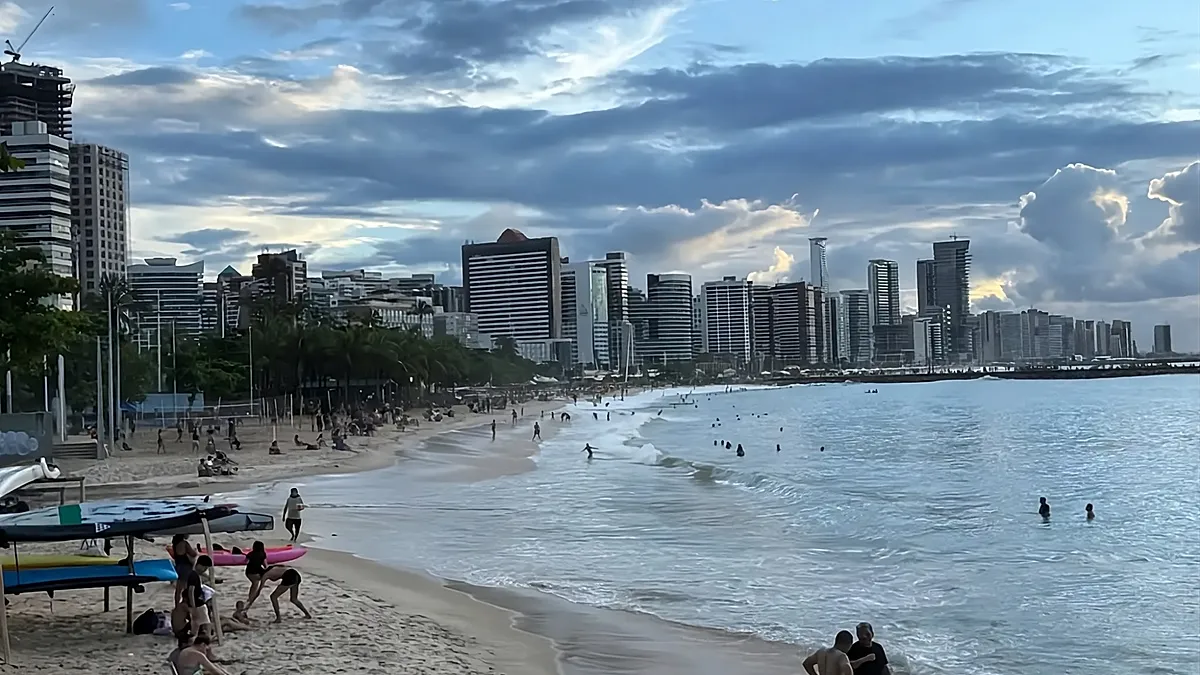
Fortaleza and Recife – Brazil’s two cities most geographically connected to Europe are leveraging their strategic location to draw an increasing number of international tourists. Thanks to direct air routes linking them to European capitals like Madrid, Lisbon, and Paris, these destinations are becoming prime choices for travelers seeking a blend of tropical charm and European accessibility. For instance, Fortaleza, situated less than eight hours from Madrid, offers a skyline of towering skyscrapers that evoke a fusion of Miami’s urban energy and Benidorm’s coastal vibrancy. The city’s towering structures along the seafront create a modern skyline that complements its expansive coastal promenade, Beira Mar, transforming the urban landscape into a dynamic, sun-soaked retreat.
Fortaleza: A City of History and Modernity
With a population of over 2.57 million, Fortaleza is one of Brazil’s most populous cities and serves as the capital of Ceará, a state home to nearly nine million residents. Its historical roots trace back to the colonial conflicts between the Portuguese and Dutch, culminating in the 1649 construction of Fort Schoonenborch by the Dutch. The Portuguese reclaimed the site six years later and renamed it Fortaleza de Nuestra Señora de la Asunción, a name that reflects its role as a symbol of resilience and cultural fusion. In 2026, the city is commemorating the 300th anniversary of its founding, an event that has infused the local atmosphere with a renewed sense of pride and celebration.
“This is a vibrant city with a rich blend of cultures that never sleeps. As early as three in the morning, lots of people are already out on the streets doing sport, running; it’s a city with a great deal of movement,” explains tour guide Castalha.
The next day, visitors can witness this energy firsthand as dozens of amateur runners gather along the Beira Mar promenade, traversing six kilometers of coastline that connects three distinct beaches: Iracema, known for its iconic Bridge of the English; Meireles, where the night-time craft market thrives; and Mucuripe, a hub for near-artisanal fishing. The serene waters of the Atlantic, ideal for canoeing, provide a perfect backdrop for those who enjoy combining physical activity with the sea. Afterward, a visit to the Mercado dos Peixes reveals the local community’s deep connection to the ocean, with fishermen using traditional jangadas—light sailing boats—to navigate the coastal waters.
Exploring the Coastal Beauty Beyond the City
Just 160 kilometers south-east of Fortaleza, the charm of Brazil’s coast takes on a different character in Canoa Quebrada, a small village in the Aracati municipality. This area is renowned for its striking falésias—sand or rock cliffs—dyed red or white by natural elements, and for its wind-sculpted dunes that create a surreal, almost otherworldly terrain. These landscapes, unique to northeastern Brazil, are explored via buggy, light open vehicles that zip across dunes, beaches, and coastal tracks. Tourists often capture breathtaking photos of the crescent moon and star emblem carved into the falésias, a defining symbol of the region.
As a cultural hub, Canoa Quebrada gained popularity in the 1970s among European backpackers and hippies, who were captivated by its untouched beaches, mild climate, and relaxed, free-spirited vibe. The village’s authenticity is further highlighted by Canto Verde beach, located in the Beberibe municipality. This stretch of coastline is celebrated for its genuine, immersive experiences, where travelers can join local artisanal fishers in their traditional boats. The community’s efforts to preserve the area from property speculation and mass tourism have created a sustainable reserve that showcases the region’s cultural heritage.
“We make our living from artisanal fishing and we are promoting community-based tourism,” explains Roberto, a local fisher.
Meanwhile, in Recife, the capital of Pernambuco, the coastal experience takes on a more urban tone. With a population of around 1.5 million, Recife is another major metropolis in northeastern Brazil, distinct from Fortaleza in its character and offerings. While the two cities share a connection to Europe through air travel, their atmospheres diverge significantly. Recife’s streets pulse with a different kind of energy, rooted in its historic port and thriving cultural scene. The city’s architecture, blending colonial influences with contemporary design, and its vibrant street life, including the famous Carnaval and the colorful local markets, create a unique setting for travelers.
Recife’s charm lies in its ability to balance tradition with modernity, offering a mix of historical landmarks and contemporary attractions. From the iconic Pelourinho district, with its colonial buildings and lively squares, to the bustling Cais do Porto digital hub, the city provides a diverse array of experiences. Its proximity to Fortaleza also means that visitors can easily explore both urban and coastal wonders, creating a seamless journey between the two Brazilian jewels. The interplay of these two cities highlights Brazil’s capacity to blend cultural richness with natural beauty, appealing to a wide range of travelers seeking adventure, relaxation, or cultural immersion.
As the 300th anniversary of Fortaleza’s founding unfolds, the city continues to evolve while honoring its past. The fusion of history and modernity is evident in every aspect, from its architectural landmarks to its bustling markets and lively social scenes. Recife, in contrast, represents the more cosmopolitan side of Brazil, where innovation meets heritage. Together, these cities offer a glimpse into the diverse tapestry of northeastern Brazil, inviting visitors to experience its unique blend of European influences, cultural traditions, and natural splendor.