Lisbon Airport Taxi Ranks Under the Microscope: Police Log 67 Offences in Single Sweep
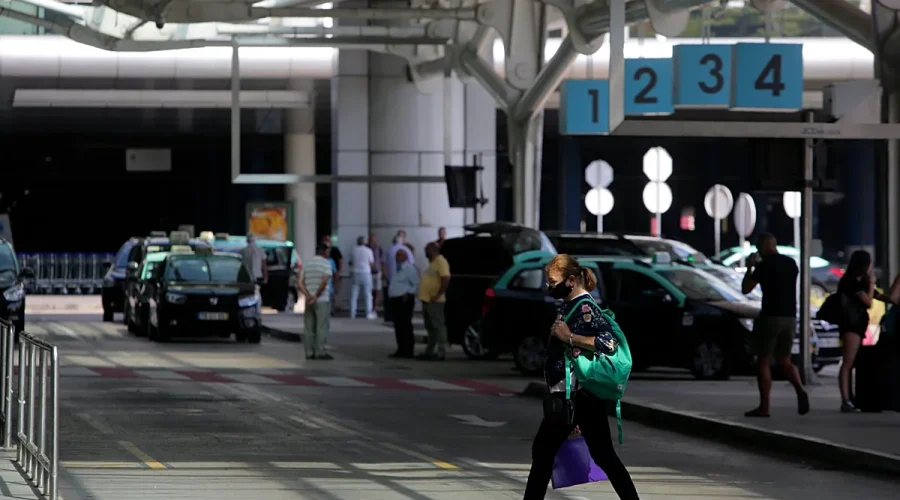
Usagevpn.com – The arrivals hall at Humberto Delgado Airport in Lisbon has long been a flashpoint for visitor complaints about overcharging, phantom detours, and meters that never tick. On Tuesday, the Public Security Police (PSP) turned those complaints into a formal enforcement action, inspecting roughly one hundred cabs parked at the taxi rank and documenting sixty-seven distinct offences tied to taxi operations. The Lisbon Metropolitan Command confirmed the figures in a statement released Wednesday, making the operation one of the most visible policing interventions at the airport in recent years.
What the Inspection Found
The bulk of the infractions centred on the taximeter itself. Thirty-two drivers were cited for what authorities described as “improper positioning of the taximeter” — a category that encompasses meters left switched off, hidden from passenger view, or physically obstructed. A further two offences involved outdated calibration certificates, meaning the meter’s internal weights had not been verified within the legally required interval.
Documentation gaps accounted for another slice of the tally. Eight drivers could not produce a valid CMT (Taxi Driver’s Certificate), the licence that authorises a person to operate a hired car in Portugal. Six more were missing mandatory operational documents, while three vehicles lacked a current roadworthiness inspection. Three additional cases involved the absence of “Group 2” certification, a training module that taxi drivers must complete covering passenger-safety and service-standards topics.
Vehicle-safety and conduct issues rounded out the list: six expired fire extinguishers, two taxis judged to be in poor physical condition, one failure to deploy appropriate restraint systems, one uninsured vehicle, one driver caught operating under the influence of alcohol, and one cab parked inside a private car park rather than the designated rank. The PSP also issued two formal notices compelling drivers to produce outstanding paperwork and opened two external investigative measures against a single driver whose file raised further questions.
A Pattern Tourists Have Been Flagging for Months
The police sweep did not emerge from a vacuum. Social-media threads and travel forums have been accumulating anecdotal evidence of fare manipulation at the airport for well over a year. Josien Nation, a content creator based in Portugal, posted a Facebook video earlier this month walking through two common scenarios she says visitors encounter.
“A trap for tourists,” Nation described the experience in her video, explaining that drivers either negotiate a flat price before departure and leave the meter dark, or simply never activate the meter at all, letting the final fare float at whatever figure the driver chooses when the ride ends.
A Reddit commenter who commutes between the airport and Largo do Rato in central Lisbon offered a different but equally telling account.
“I have been taking taxis regularly for more than 10 years to go from the airport to Largo do Rato. The journey usually costs around 11 euros. Twice this week, the driver tried to pull a fast one on me: either by taking unnecessary detours of several kilometres or by using fake taximeters on their phone. They then present a fare of 19 euros, 21 euros or even more, to be paid in cash.”
Zeynep Tinaz Redmont, a Turkish journalist residing in Portugal, published a first-person account in Diário de Notícias in May describing a return trip from downtown Lisbon in which the driver refused to start the meter and demanded a flat twenty-five-euro fare.
“When we go to the airport, the fare usually does not exceed 14 euros. The return journey is another story,” Redmont wrote. “On one occasion, I politely pointed out to the driver that he had not turned on the meter. He braked sharply just as we left the airport and said: ‘If you want to get out, get out. The journey has a fixed price: 25 euros.'”
After explaining that she travelled frequently and had never encountered such a rate, Redmont said she ultimately settled on twenty euros for the trip.
Industry Pushback: ANTRAL Calls the Operation a “Media Show”
The National Association of Road Transport in Light Vehicles (ANTRAL), which represents the taxi sector, reacted sharply. In a public statement, the association accused authorities of staging a “media show” at the arrivals-area rank, arguing that the inspection effectively paralysed passenger pick-up and left the queue empty during peak hours. ANTRAL characterised the spectacle as projecting a “degrading and frightening” image of Portugal onto arriving visitors.
The association stressed that it had no objection to routine inspections and pointed to its own ongoing efforts to combat illegal touting at the facility. Its grievance lay specifically with the timing, the location, and the method — particularly the practice of inspecting vehicles while passengers were already seated inside. For ANTRAL, executing the sweep at such a strategically visible point “in this manner” suggested aims beyond ordinary regulatory enforcement, to the detriment of both passengers and legitimate drivers.
Why the Airport Rank Matters
Humberto Delgado Airport handles millions of passengers annually and serves as the primary gateway for tourists arriving in Portugal’s capital. The taxi rank at the arrivals level is the first ground-transport decision most visitors make after landing, which makes fare transparency and meter integrity a matter of both consumer protection and national image. Portuguese law requires that every hired car display a functioning, calibrated taximeter visible to the passenger, that drivers carry a current CMT licence, and that vehicles pass periodic safety inspections. The concentration of taximeter-related offences in Tuesday’s sweep — thirty-two out of sixty-seven — suggests that the most common failure mode is not outright theft but a quieter form of opacity: a meter that is present but not properly positioned, switched on, or calibrated, giving the driver room to shape the final figure.
Whether the PSP’s intervention will translate into sustained compliance or simply a temporary tightening of behaviour remains to be seen. What is clear is that the gap between what tourists expect to pay and what they are sometimes asked to hand over in cash has now moved from anecdote into official police records.
Related Reading
Frequently Asked Questions
What is A trap for tourists?
A trap for tourists is the main topic of this guide. The article explains the context, practical details, and next steps readers should understand.
Why does A trap for tourists matter?
A trap for tourists matters because readers are looking for a useful answer, not just a short summary. Good content should match search intent and help them decide what to do next.