UAE Initiative Expands Public Sector Evaluation in Uzbekistan
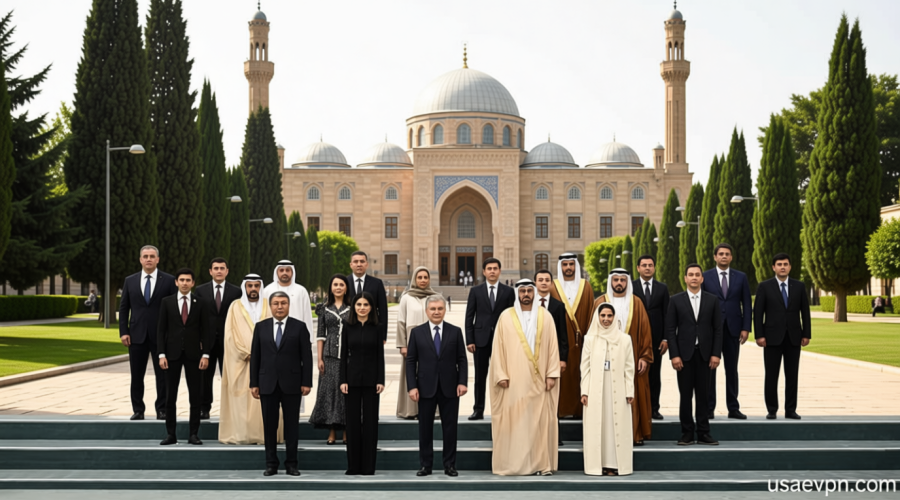
UAE backed programme broadens assessment of public – Uzbekistan has broadened its participation in a UAE-supported initiative designed to evaluate the efficiency of government departments, with 41 ministries, agencies, and committees now undergoing independent scrutiny this year. This marks a substantial increase from the 17 entities assessed in the prior round, reflecting the country’s commitment to deepening reforms in public administration. The assessments concluded with a ceremony in Tashkent, where President Shavkat Mirziyoyev and UAE Minister of Cabinet Affairs Mohammed Bin Abdullah Al Gergawi joined to celebrate the findings.
Measuring Performance Through Innovation
As nations globally shift toward assessing public institutions through metrics like service delivery, digital transformation, and transparency, Uzbekistan has embraced a UAE-based framework to gauge how well its ministries and civil servants meet these standards. The programme, rooted in the UAE Government Excellence Programme, aims to identify systemic improvements and ensure that administrative changes translate into tangible benefits for citizens. By focusing on measurable outcomes, the initiative seeks to redefine how government operations are judged, emphasizing results over procedural adherence.
Abdulla Abdukadirov, Director of Uzbekistan’s Agency for Strategic Development and Reforms, noted that the latest evaluation cycle expanded its reach beyond large ministries to include smaller committees and specialized agencies. “We’ve decided to cover not only the major ministries but also the broader network of government bodies,” he explained during a press briefing. “This ensures that reforms are applied consistently across all levels of administration.”
From Reports to Real-World Impact
During the assessment phase, teams comprising Emirati and local evaluators scrutinized ministries against criteria such as digitalisation, transparency, internal management systems, and service efficiency. Unlike previous cycles, which placed greater emphasis on formal documentation, the current approach prioritised observing how institutions function in practice. “We focused on whether the processes were systematic and digitalised, and whether there were gaps in understanding tasks between different levels,” Abdukadirov said. “The goal is to ensure that improvements are both visible and sustainable.”
One highlighted success was the Ministry of Internal Affairs, which received recognition for enhancing its online service offerings. Deputy Interior Minister Zafar Kurbanov noted that the ministry has transitioned from offering around 20 electronic services in 2020 to providing 55 out of its 62 services through digital platforms. “This allows citizens to access government services within minutes via the national portal,” he stated, underscoring the programme’s role in streamlining administrative processes.
Awards and Recognition for Civil Servants
The initiative has also introduced individual accolades for public sector employees, acknowledging contributions from diverse groups such as young professionals, human resources experts, and women in governance. These awards aim to motivate staff to align their work with the programme’s emphasis on performance and innovation. “We are rewarding not just the outcomes but also the people who drive them,” said an official involved in the evaluation process.
President Mirziyoyev, addressing the ceremony, stressed that the programme’s core principle is to foster a culture of results-driven governance. “Public trust in the state grows when institutions address citizens’ needs promptly and fairly,” he remarked. “We are now prioritising the end goal over bureaucratic formalities.”
“From now on, the principle of working not for the process, but for the result, will become the main criterion in the activities of state institutions,” Mirziyoyev added, reflecting on the programme’s transformative potential.
Officials highlighted the importance of measurable outcomes in shaping future reforms, with weaker-performing ministries facing increased scrutiny in subsequent evaluations. “This ensures accountability and pushes for continuous improvement,” said a representative from the Uzbek government’s reform office.
Collaboration and Shared Vision
The UAE and Uzbekistan have maintained a cooperative relationship since 2019, with the programme serving as a key component of their joint efforts to modernise public administration. UAE Assistant Minister of Cabinet Affairs for Government Knowledge Exchange Mohammed Bin Taliah praised Uzbekistan’s recent launch of the “Zero Bureaucracy” initiative, which aligns with the programme’s objective of eliminating unnecessary procedures. “This initiative demonstrates how political will can transform government operations,” he remarked. “By simplifying access to services, we are making life easier for citizens.”
“What we are witnessing today in the Republic of Uzbekistan under his leadership is a clear example of the results that can be achieved when political will becomes a work culture,” Al Gergawi said during the ceremony. “The programme aims to establish a culture of excellence and innovation in the government sector.”
The collaboration between the two nations has been instrumental in tailoring the UAE model to Uzbekistan’s specific needs. Al Gergawi noted that the programme’s success depends on shared goals, with both countries working to harmonise standards in governance and public service. “This partnership reflects a mutual commitment to efficiency and accountability,” he said.
Transforming Administration for Better Governance
With a focus on reducing bureaucratic hurdles, the programme encourages ministries to adopt agile practices that prioritise citizen-centric solutions. “The key is to make government operations more transparent and responsive,” said a UAE official overseeing the initiative. “By linking performance metrics to real-world impacts, we can ensure that reforms are both effective and equitable.”
Abdukadirov reiterated that the programme’s expansion is a strategic move to create a more comprehensive assessment system. “We want to measure not just how government bodies are structured, but how they function in the daily lives of people,” he explained. This approach has led to greater transparency in key areas, such as the Ministry of Internal Affairs, which has adopted digital tools to streamline service delivery.
The programme’s long-term vision extends beyond immediate improvements, aiming to embed a culture of excellence within Uzbekistan’s administrative framework. By rewarding innovative practices and holding institutions accountable for their performance, the UAE-backed initiative seeks to create a lasting impact on governance. As the country continues to refine its public administration model, the collaboration with the UAE remains a cornerstone of its reform agenda.
Future Implications and Public Engagement
Officials anticipate that the expanded programme will lead to more consistent reforms across all government sectors. “We are now evaluating a broader range of entities, which means more stakeholders will be held to the same standards,” said a government spokesperson. This shift is expected to enhance public confidence in the state’s ability to address pressing issues efficiently. “By linking performance metrics to actual outcomes, we can ensure that government actions reflect the needs of the people,” they added.
As the programme progresses, its focus on reducing bureaucracy and improving service efficiency will likely influence other areas of public policy. The “Zero Bureaucracy” initiative, for instance, is seen as a direct application of the programme’s principles, aiming to simplify administrative processes and reduce citizen burdens. With continued support from the UAE, Uzbekistan is positioning itself as a regional leader in modernising its governance systems.
Overall, the expanded assessment programme represents a significant step in Uzbekistan’s journey toward more transparent and effective public administration. By integrating international best practices with local needs, the initiative not only evaluates performance but also inspires a new era of innovation in government operations. As Mirziyoyev emphasized, the ultimate aim is to ensure that citizens see tangible improvements in their interactions with state institutions.