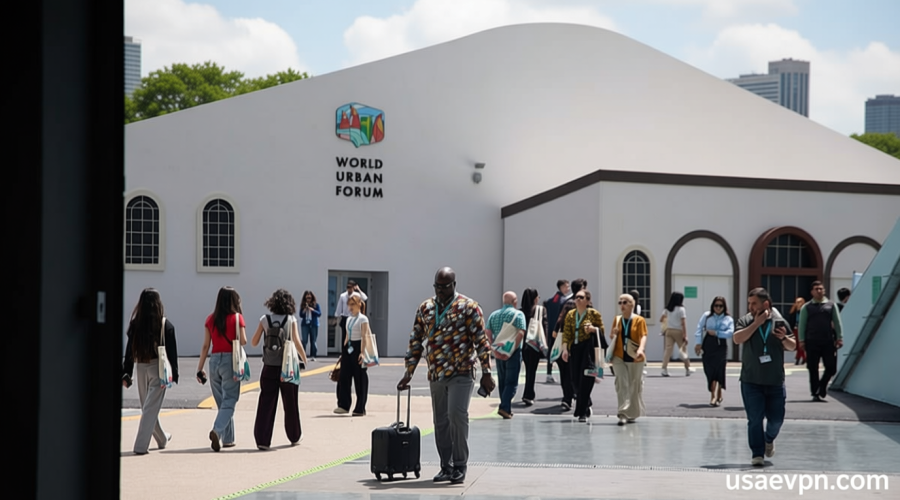
Bigger than ever: WUF13 ends with global call for action
Bigger than ever – The World Urban Forum (WUF13) in Baku concluded with a powerful declaration, framing housing as a “systemic global challenge that shapes inequality, opportunity, resilience, and stability and peace in our cities and societies,” according to Anacláudia Rossbach, the Executive Director of UN-Habitat. Speaking at the event’s closing session on Friday, Rossbach outlined the multifaceted nature of the crisis, citing affordability pressures, displacement, and climate vulnerability as its primary drivers. The Forum’s final statement, known as the Baku Call to Action, underscored the need for integrated solutions that combine land use, financial systems, infrastructure development, and governance to create climate-resilient, inclusive urban environments.
A Global Participation Record
WUF13 attracted an unprecedented number of participants, with over 57,000 attendees from more than 176 nations. Rossbach praised this turnout, noting that “never before has a forum of this scale convened such a broad and diverse global audience.” The gathering highlighted the universal relevance of urban challenges, bringing together policymakers, urban planners, researchers, and activists to address pressing issues. This diversity of voices was crucial in shaping the Forum’s conclusions, which emphasize the interconnectedness of housing, economic growth, and social equity.
Azerbaijan’s National Coordinator for WUF13, Anar Guliyev, echoed this sentiment, stating that the event’s theme placed housing at the forefront of the global urban agenda. He pointed out that “access to adequate, affordable, safe, and resilient housing remains one of the defining challenges of our time,” a statement that aligns with the broader discussion on urban transformation and sustainable development. Guliyev’s remarks highlighted the importance of collaborative efforts, as the Forum sought to bridge gaps between national policies and international best practices.
Displacement and Climate Change: A Looming Crisis
During an interview with Euronews at the Forum, UN Deputy Secretary-General Amina Mohammed sounded a stark warning about the escalating scale of the global housing problem. “We are going to see much more displacement from climate change and from the conflicts that we are not able to solve,” she said. Mohammed stressed the urgency of designing robust financial mechanisms to ensure that every individual has access to a home, emphasizing that “this is not just about a house or a home, it’s about community and it’s about a life of dignity.”
“We are witnessing a shift where housing is no longer merely a physical necessity but a cornerstone of social and economic stability,” Mohammed added. Her remarks were part of a broader conversation about the implications of rapid urbanization, which she described as a “wake-up call” for the international community. She noted that over 70% of the world’s population is projected to reside in cities by 2050, and the next decade offers a critical window to address the root causes of the crisis.
Modifying the way we structure our economies, particularly in terms of inclusiveness, is essential to preventing further marginalization of vulnerable groups, according to Mohammed. “There’s something very wrong in the way we’re structuring our economies,” she said, highlighting the disparity between educational investment and the ability of young people to secure housing. This issue, she explained, is exacerbating anxieties and mental health concerns, as many are forced to live with their parents or in cramped spaces despite their qualifications.
Urban Transformation and the Role of Policy
The Baku Call to Action emphasized the need for proactive urban transformation, urging governments to align their policies with the demands of a rapidly changing world. “We have a chance to lay the foundations by 2030,” Mohammed stated, suggesting that coordinated efforts could allow cities to “leapfrog” traditional models of development. She argued that the current state of urban planning must evolve to address both immediate and long-term challenges, from environmental resilience to social inclusion.
“The world can find solutions to be more resilient and more inclusive,” Mohammed said. “But this requires us to get our ducks aligned, both nationally and globally, to ensure that no one is left behind in the process.” Her comments reflect a growing consensus that housing is not just a local issue but a global one, demanding unified strategies and shared responsibilities.
In addition to economic and environmental factors, the housing crisis also has profound social implications. Rossbach described the breakdown of the social contract, arguing that rising inequalities are undermining democracy and eroding the sense of dignity for many. “When people can no longer afford to live in their communities, the fabric of society begins to fray,” she explained. This perspective adds a human element to the discussion, framing housing as a fundamental right rather than a commodity.
Azerbaijan’s own experience with post-conflict reconstruction was a focal point during the Forum, with Hikmet Hajiyev, the assistant to the president and head of the Foreign Policy Affairs Department of the Presidential Administration, highlighting its significance. “Our efforts to rebuild nine cities and 300 settlements have provided valuable insights for international dialogue on urban development,” Hajiyev said. He described how Azerbaijan’s approach to urban renewal has served as a case study for other nations facing similar challenges.
As the Forum drew to a close, its messages resonated across continents, calling for immediate and sustained action. From the vast participation in Baku to the actionable strategies outlined in the Baku Call to Action, the event marked a pivotal moment in the global fight for equitable urban living. The discussions, driven by a mix of urgency and optimism, laid the groundwork for future collaboration and innovation in addressing the housing crisis.