Ukraine’s President Declares Russian Skies “Effectively Closing” as Drone War Crosses Borders
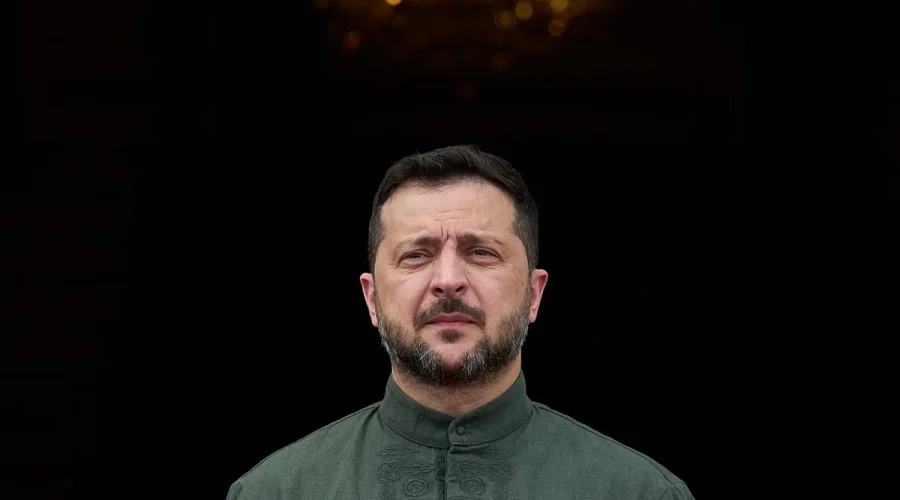
Usagevpn.com – After nearly seven days of unrelenting missile and drone strikes on Kyiv and surrounding regions, Ukrainian President Volodymyr Zelenskyy delivered a message on 1 September that reaches far beyond the battlefield: the airspace above Russia is, in his words, becoming unusable for civilian flight. The declaration, aimed squarely at international carriers, underwriting firms, and foreign governments, marks a sharp escalation in how Kyiv frames the conflict that Moscow ignited more than four years earlier.
“Russian airspace will effectively be closing — the war started by Russia is closing its skies.”
The statement was not merely a rhetorical flourish. Zelenskyy framed it as a practical notice to any airline still routing flights over or into Russian territory, any insurer still covering such operations, and any foreign state whose carriers continue to serve Moscow, St Petersburg, and other major Russian airports. The underlying logic is straightforward: as Ukraine’s long-range unmanned aircraft operations expand in both frequency and reach, the probability of a drone being present anywhere in Russian airspace at any given moment rises sharply enough to make commercial flight there a calculated risk.
A Shift in Moscow’s Air Campaign
The warning arrives against a backdrop of intensified Russian strikes. Over the past week, Moscow has moved away from the pattern of massive overnight barrages — hundreds of drones and missiles launched in a single wave — toward a more grinding approach: smaller groups of jet-powered drones dispatched at intervals across the full daylight and nighttime cycle. The effect is to stretch air-raid alerts across hours rather than minutes, keeping transport networks, commercial activity, and ordinary routines in the capital in a state of perpetual disruption.
Kyiv officials have noted that the jet-powered drones, which travel faster and at higher altitudes than their propeller-driven predecessors, present a particularly demanding challenge for Ukrainian air-defence systems when layered alongside ballistic missiles. The cumulative pressure on interceptors and radar coverage grows with each successive wave, and the tactic appears designed to exhaust defensive capacity over time rather than overwhelm it in one stroke.
What Zelenskyy Said, and Who He Addressed
In his evening address, the president made clear that the escalation he described would not be contained within Ukrainian borders. He traced the origin of the conflict to Russian territory and insisted the consequences would follow the same geography back.
“It was from Russia that the first missiles and the first drones came, and they crossed our country’s border from Russian airspace. This escalation cannot and will not remain confined to Ukrainian territory.”
He then turned directly to the commercial aviation sector:
“Today, we want to warn every airline that uses Russian airspace, every insurer, and everyone who still uses Russia’s key airports: Russian airspace is becoming completely unsafe.”
Zelenskyy was careful to distinguish between threatening civilian aircraft and operating drones at scale. He stressed that Ukraine had no intention of targeting passenger planes, but that the volume of UAV activity in Russian skies would simply have to be factored into risk calculations by anyone flying there.
“Ukraine does not threaten civilian aviation as such — not a single civilian aircraft. There will simply be drones in Russia’s skies on a scale that has to be taken into account.”
The president called on foreign ambassadors stationed in both Kyiv and Moscow to transmit the warning to their respective capitals, and confirmed that Ukraine’s foreign ministry and other agencies would supply international bodies with detailed information on the hazards now present in Russian airspace.
The Asymmetry in Airspace Management
The situation creates a stark contrast between the two countries. Ukraine closed its own airspace to civilian aviation on 24 February 2022, the day Russia launched its full-scale invasion, and has kept it shut ever since. Russian civilian carriers, by contrast, have continued operating throughout the war, though they face growing interruptions: temporary airport closures, reroutings, and delays triggered by Ukrainian drone strikes on airfields and nearby infrastructure.
Ukraine’s long-range operations have focused on military installations and the industrial backbone of Moscow’s war effort — airfields, missile storage and launch units, oil refineries, and other energy facilities. Zelenskyy made explicit that this targeting posture would not change, while adding that Kyiv did not want innocent lives lost in the process.
“We are warning our partners: the safe days in Russia’s skies are over.”
Broader Implications
For the global aviation industry, the warning introduces a new variable into route planning and premium pricing. Airlines that have maintained operations into Russian cities — largely carriers from states that have not imposed broad travel restrictions — now face a formal, presidential-level notice that the risk environment is deteriorating. Insurers, who already price war-risk premiums into policies covering flights over conflict zones, will need to reassess exposure. Foreign governments with carriers still serving Russian airports may find diplomatic pressure to adjust schedules or add contingency planning.
The strategic message Zelenskyy is sending is equally clear: the air war Russia has waged over Ukraine since February 2022 can no longer be treated as a one-directional affair. If Ukrainian drones are now a routine presence over Russian territory, then the airspace above that territory carries a permanent operational hazard that no amount of diplomatic distance can erase. The skies, in the president’s framing, are no longer a neutral corridor — they are part of the theatre.
“Drone-infested skies are no place for civilian aviation.”
Related Reading
Frequently Asked Questions
What is Zelenskyy warns Russian airspace will effectively?
Zelenskyy warns Russian airspace will effectively is the main topic of this guide. The article explains the context, practical details, and next steps readers should understand.
Why does Zelenskyy warns Russian airspace will effectively matter?
Zelenskyy warns Russian airspace will effectively matters because readers are looking for a useful answer, not just a short summary. Good content should match search intent and help them decide what to do next.